By David Mwanje
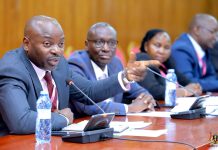
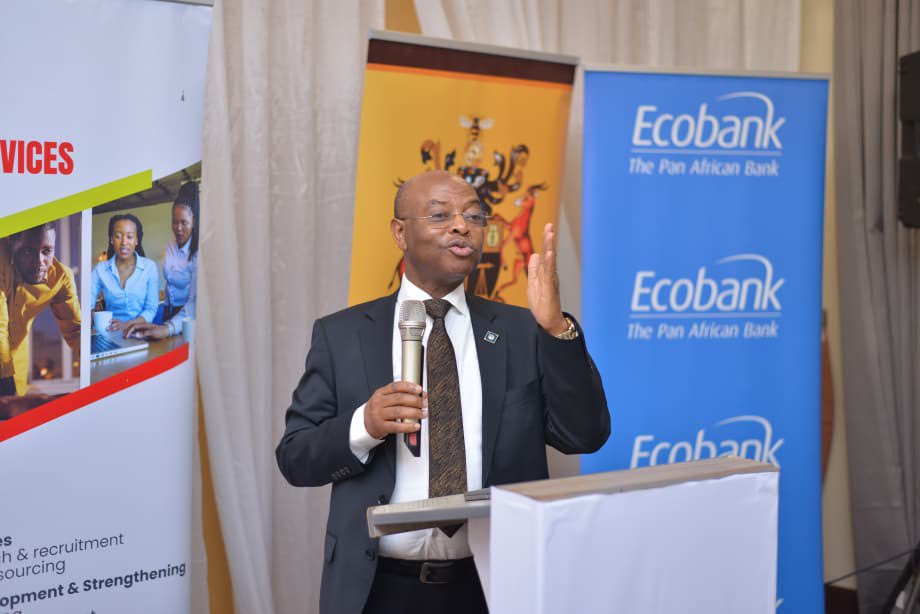
Prof. Augustus Nuwagaba, Deputy Governor of the Bank of Uganda (BoU), has sounded a clarion call for prudent management of foreign capital inflows. Shared on his X/twitter page, he cautioned that unchecked foreign inflows could inflate the shilling and erode export competitiveness, even as they unlock new opportunities for national transformation if channeled wisely.
Uganda recorded a 12.5% surge in foreign direct investment (FDI) to $3.365 billion in 2024, largely driven by oil-related activity. “Large capital inflows bring considerable economic benefits to recipient countries,” Nuwagaba noted, in a statement that has gained traction on social media. “But we must understand these dynamics to make informed decisions.”
The call comes amid strong economic recovery. Uganda’s economy grew 5.2% in FY2023/24 and is projected to rise to 6.2% in FY2024/25 and 7.0% in 2025, according to the African Development Bank. However, the Ugandan shilling’s 4.0% appreciation to UGX 3,605.88 per USD in June 2025 driven by remittances, coffee exports, and offshore investments has raised concern over export competitiveness.
“When capital inflows surge, the currency appreciates, which helps limit overheating and inflation pressures,” Nuwagaba explained. “In addition, they make imports cheaper but potentially hurt exports.”
He urged policymakers to prioritize non-factor services such as tourism, ICT, and logistics sectors that build local value chains—over factor services like profits and interest payments that are often repatriated abroad. “Capital inflows are most beneficial when channelled into non-factor services where value is created locally,” he emphasized.
Uganda’s current account deficit widened by 27.6% to $4.8 billion in 2024, weighed down by oil imports. Yet, rising FDI and export revenues up 22.1% to $8.55 billion have helped cushion the economy. “This influx of capital increases overall employment rates and job quality, particularly in countries with strong institutional frameworks,” Nuwagaba said.
BoU Governor Dr. Michael Atingi-Ego echoed these views, revealing in a Bloomberg interview that the central bank had taken “extraordinary measures” to strengthen reserves by buying $1.5 billion from the market and deploying currency swaps totaling $400 million to date.
Meanwhile, Finance Minister Matia Kasaija, in his August 2025 statement on the economy, said foreign inflows were driving steady currency appreciation and projected that Uganda’s GDP could double to $158 billion by 2030. “In the next five years, it’s projected that Uganda’s GDP is going to more than double,” he said.
State Minister Henry Musasizi, speaking at the World Bank’s Uganda Economic Update in June 2024, stressed that the government is committed to supporting growth through affordable credit. “Through Uganda Development Bank, government is ready to provide affordable credit at an interest rate of not more than 12%,” he noted.
Similarly, Ramathan Ggoobi, Permanent Secretary and Secretary to the Treasury, told investors at the UK-Uganda Business Forum in March 2025 that FDI inflows were projected at $3.8 billion, while tourism and remittances would reach $1.5 billion and $1.4 billion respectively. “The capital account is open; all markets are fully liberalized,” he said, touting Uganda’s access to the EAC, COMESA, and AfCFTA’s billion-strong market.
At the Uganda Manufacturers Association Conference in September 2025, Nuwagaba emphasized strengthening infrastructure reliability and incentivizing green investment. “We must ensure the reliability of our economic infrastructure while incorporating ESG standards, especially in agriculture, manufacturing, and renewable energy,” he urged.
This follows his April 2025 remarks at the Equity Bank Diaspora Exchange Forum, where he credited Uganda’s open policies for attracting stable capital inflows: “Uganda’s open economic policies provide a conducive environment for investment, distinguishing it from other regional markets.”
The debate underscores a crucial tension in Uganda’s economic strategy. With first oil production expected in late 2025 and over $10 billion in midstream projects underway, the sector is forecast to grow 10.4% in FY2027. Yet, without strategic management, Nuwagaba warned, appreciation could undercut non-oil exports such as coffee valued globally at $136 billion, but earning Uganda only $2.1 billion in FY2024/25.
“The relationship between capital inflows and domestic economies is complex,” he concluded. “We must balance attracting foreign investment with maintaining economic stability. This requires careful coordination of monetary and fiscal policy.”
As BoU and the Ministry of Finance align their strategies, analysts see Nuwagaba’s vision as a blueprint for Uganda’s ascent to middle-income status. With inflation steady at 3.9% in June 2025 and reserves improving, Uganda is positioned for sustainable growth if capital inflows are harnessed to propel, not pressure, the economy.