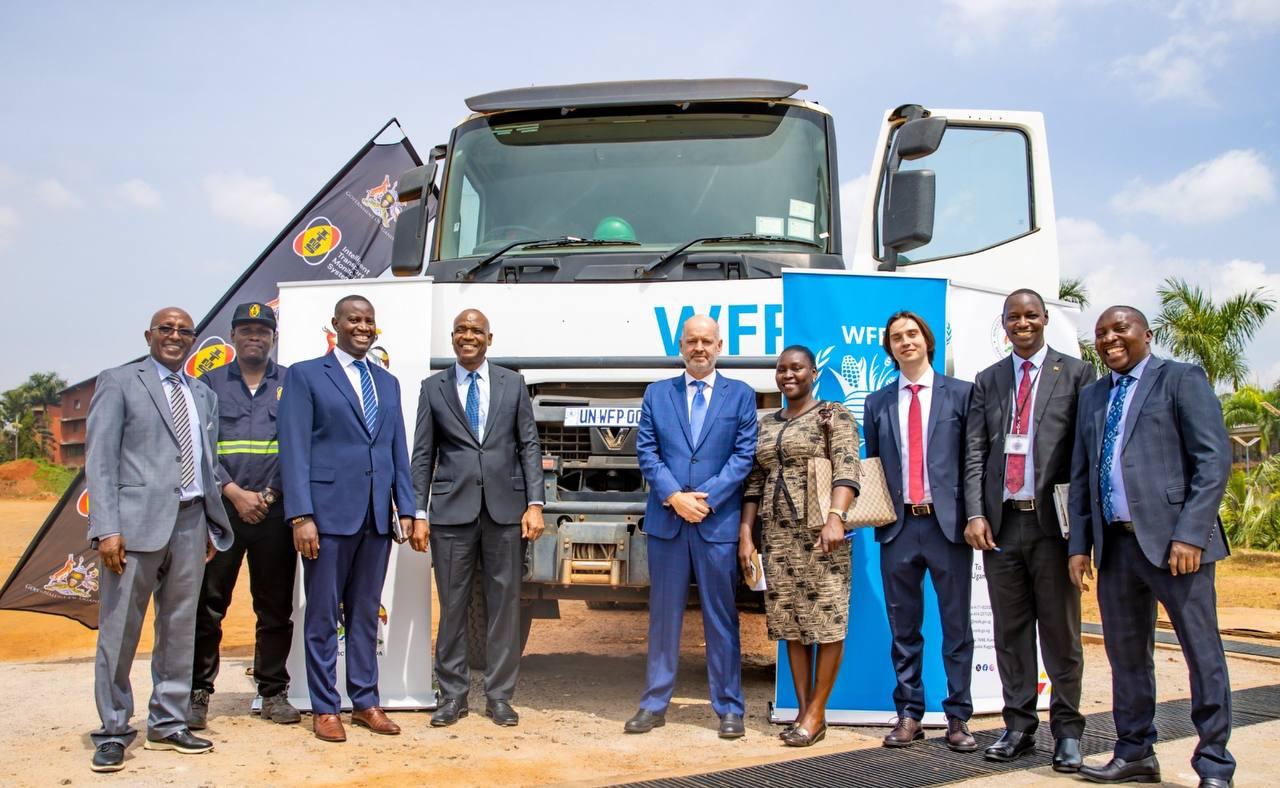
Uganda and the United Nations World Food Programme (WFP) have marked a major milestone in global humanitarian readiness with the official launch of the WFP Global Fleet Hub in Kampala. Speaking at the event, WFP Deputy Country Director Marcus described the hub as a historic achievement that positions Uganda as a central logistics and humanitarian gateway for Africa.
Developed in partnership with the Government of Uganda and the East African Community, the hub will serve as a strategic centre for rapid emergency response across the continent, hosting WFP’s specialized fleet of humanitarian vehicles. As part of the initiative, new WFP license plates were introduced to signify humanitarian neutrality, enabling smoother cross-border movement and faster deployment of aid during crises.
Uganda was selected for this role due to its strong logistics capacity, strategic geographic location, robust infrastructure, and progressive refugee policies. In 2024, WFP Uganda delivered 174,000 tons of food to more than two million people, transported 10,000 tons of relief supplies for partners, and supported regional operations with mobile storage units—underscoring the country’s essential contribution to humanitarian response.
Representing the Minister of Foreign Affairs, Ambassador Charles Ssentongo reaffirmed Uganda’s commitment to partnerships that enhance regional capacity, noting that the hub strengthens skills development, operational efficiency, and inclusive growth. He added that the initiative removes bureaucratic barriers, complements commercial transporters, and further elevates Uganda’s standing as a stable, connected, and investment-ready logistics gateway for the region.