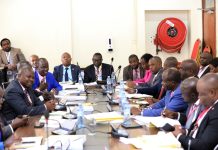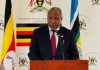

As the 6th Annual National Content Conference entered its final day, Ugandan enterprises supplying or seeking to supply goods and services to the oil and gas sector were urged to broaden their horizons and explore regional markets in emerging oil frontiers.
The call came during a panel discussion on how Uganda’s oil and gas sector can harness regional synergies to accelerate National Content growth. The discussion focused on cross-border investments, joint supplier development, and collaboration across the East African energy ecosystem, positioning the region as a competitive oil and gas hub.
During a keynote address, Mr. Jimmy Mugerwa, Project Manager at the Industry Enhancement Centre, cautioned that opportunities will narrow significantly once Uganda enters the operations and production phase.
“Beyond extraction lies the real opportunity — identifying, preparing for, and capitalizing on what is emerging. To get there, we must change speed, change direction, and rewire our approach. Our success will ultimately be measured by how much value remains here in Uganda,” he said.
Namibia:
Ms. Maggy Shino, Petroleum Commissioner at the Ministry of Mines and Energy, Namibia, encouraged Ugandan companies to participate through joint ventures and partnerships.
“We run an open licensing regime where companies are eligible to apply, and all requirements can be accessed on our website. We also have a mandatory requirement for local participation through joint ventures and partnerships. During the development phase, a wide range of goods and services are expected, including pipeline laying, local fabrication, and refinery development,” she said.
Kenya:
Kenya is reviewing its Field Development Plans for the Lokichar oil basin. Mr. Michael Karanja, Manager Upstream Petroleum at the Kenya Petroleum Regulatory Agency, said:
“The legal regime governing Kenya’s petroleum sector, including the Constitution, National Petroleum Policy, Petroleum Act, Energy Act, and regulations currently being finalised, provides for enhancement of local content through joint ventures and consortiums. Ugandan companies are well-positioned to harness and explore these opportunities.”
Tanzania:
Several Ugandan contractors are already active on both sides of the East African Crude Oil Pipeline (EACOP). Ms. Merian Ahabwe, EACOP National Content Manager, explained:
“The Tanzanian law requires foreign companies to establish an office and enter a joint venture with a local enterprise. There are success stories of Ugandan companies establishing themselves in Tanzania — about five companies so far. EACOP Uganda, through the IEC, has set the stage by providing training, most recently for contractors under Montrac who have gone to Tanzania.”
PAU Strategic Priorities
As Uganda prepares for the production and operations phase, PAU’s Tenfold Strategy focuses on commercialisation of crude oil to maximise export earnings, finalisation of key oil and gas projects, development and commercialisation of petrochemical industry, advancement of the refinery project to drive import substitution, progress on the national LPG project, strengthening backward and forward linkages across sectors such as agriculture, tourism, and manufacturing, attraction and management of foreign direct investment, ensuring compliance with fiscal rules, and driving Uganda toward a US$ 5 billion annual export earnings target.