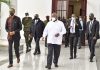
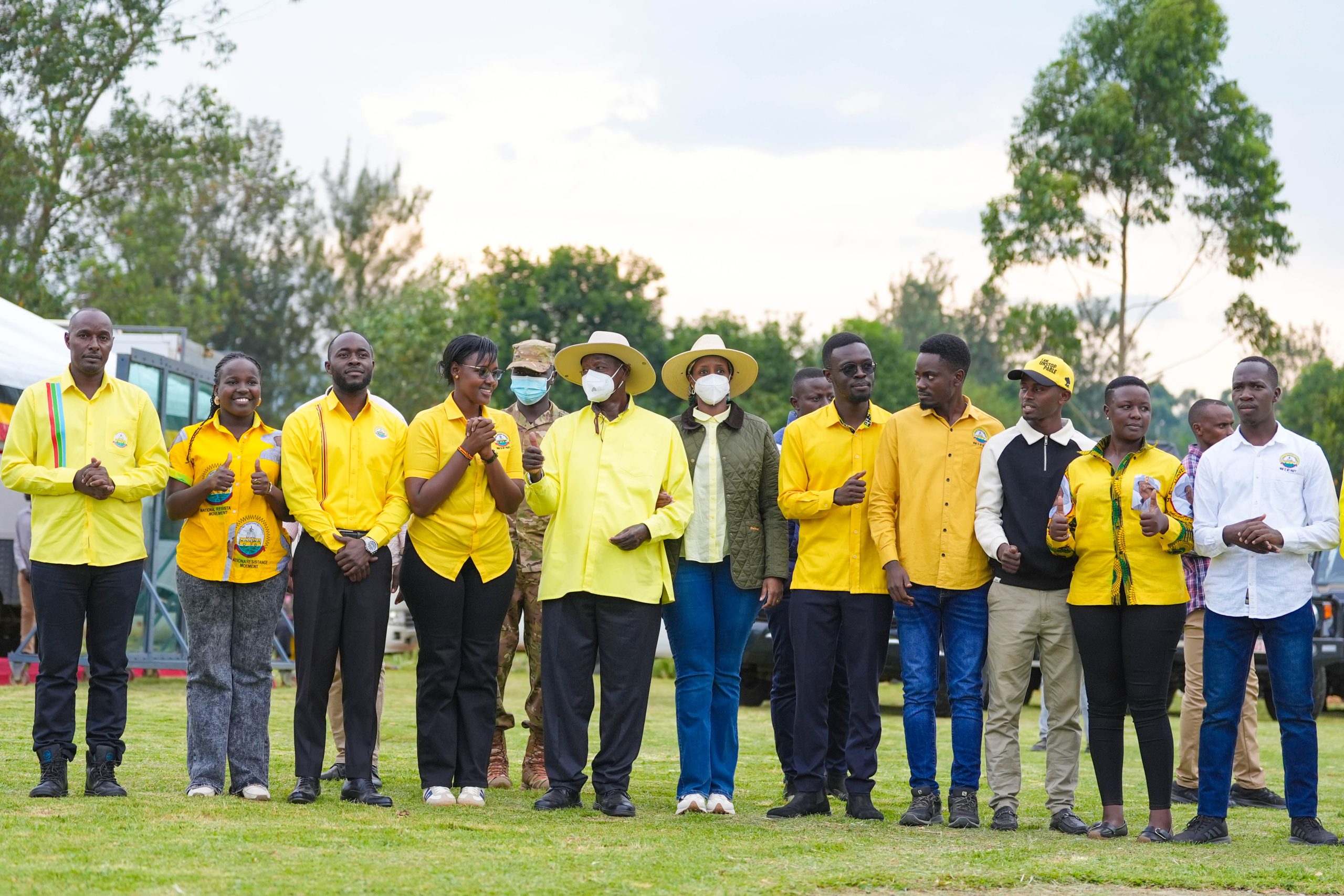
President Yoweri Kaguta Museveni this afternoon held his campaign rally at St. Leo’s KyegobePlayground in Fort Portal City, addressing both Kabarole District and Fort Portal City residents.
President Museveni reiterated the NRM’s core contributions to Uganda, beginning with peace.
He noted that communities in the Rwenzori sub region understand the value of peace because of the instability in the neighbouring Democratic Republic of Congo.
President Museveni emphasised that stability was achieved because the NRM rejected politics of sectarianism based on religion, tribe and gender, enabling the government to build strong national institutions such as the army, police and judiciary.
On development, the President explained that it consists of economic infrastructure like roads, electricity, telecommunications and railway. He highlighted the road network in the region, noting that when the NRM came into government, tarmac roads stopped in Mityana. The NRM extended the Mityana–Mubende–Fort Portal road and constructed several others, boosting socio-economic transformation.
He assured the public that road works—both tarmac and marrum would continue.
President Museveni, however, expressed concern about the poor maintenance of marrum roads, despite the government sending funds, saying some sub-counties either lack adequate resources or mismanage what is allocated. He assured residents that the government will investigate and resolve the issue.
President Museveni further revisited the teachers’ recent demands for salary increments, saying the government had prioritised critical investments such as roads and defence. He explained that soldiers still live in grass-thatched houses because the government prioritised security over accommodation, which enabled Uganda’s stability.
Speaking on the third NRM contribution—wealth creation—the President gave the example of Tumusime Deziranta of Rubirizi, who lived near a tarmac road for 64 years but remained poor, illustrating that development alone does not create individual wealth.
He emphasised the need to separate wealth creation (personal) from development (public). He reminded residents of the 1996 four-acre model for small landholders, encouraging mixed enterprises such as coffee, fruits, pasture, food crops, poultry, piggery and fish farming for those near wetlands.
He highlighted the Minister of State for Transport, Hon. Fred Byamukama as a successful example of the four-acre model and announced that the government will create a revolving fund to help farmers acquire fertilisers for better yields.
The President reported that Uganda’s coffee production has grown to 9 million bags annually, showing that both individuals and the nation are becoming richer.
He also underscored NRM’s fourth contribution—job creation—saying that jobs come from commercial agriculture, factories, services and ICT.
President Museveni welcomed requests for an industrial park in Fort Portal and revealed that the government has already secured 10 square miles in Kyaka for the park.
He encouraged urban dwellers and those not interested in agriculture to embrace skilling programmes to fight poverty and create employment.
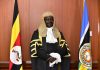
The Speaker of Parliament and Second National Vice Chairperson of the NRM, Rt. Hon. Anita Annet Among thanked the President for giving Fort Portal a city status.
She also appealed to the people of Fort Portal and Kabarole to vote for President Museveni and other NRM flagbearers.
Kabarole District NRM Chairperson, Hon. Victoria Businge Rusoke, thanked the President for the peace ushered in by the NRM, which has enabled development across the region.
She also appreciated the granting of city status to Fort Portal and the establishment of Mountains of the Moon University serving nine districts. She pledged 99% support for the President in the forthcoming elections.
Fort Portal City NRM Chairperson, Mrs. Claire Kasande, hailed the President for the development registered in the area, across sectors such as education, health, water, electricity and others.