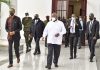
President Yoweri Kaguta Museveni has called on National Resistance Movement (NRM) leaders in the Busoga sub-region to embrace humility, unity, and discipline, warning that persistent divisions among leaders are undermining service delivery and delaying the region’s socio-economic transformation.
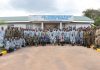
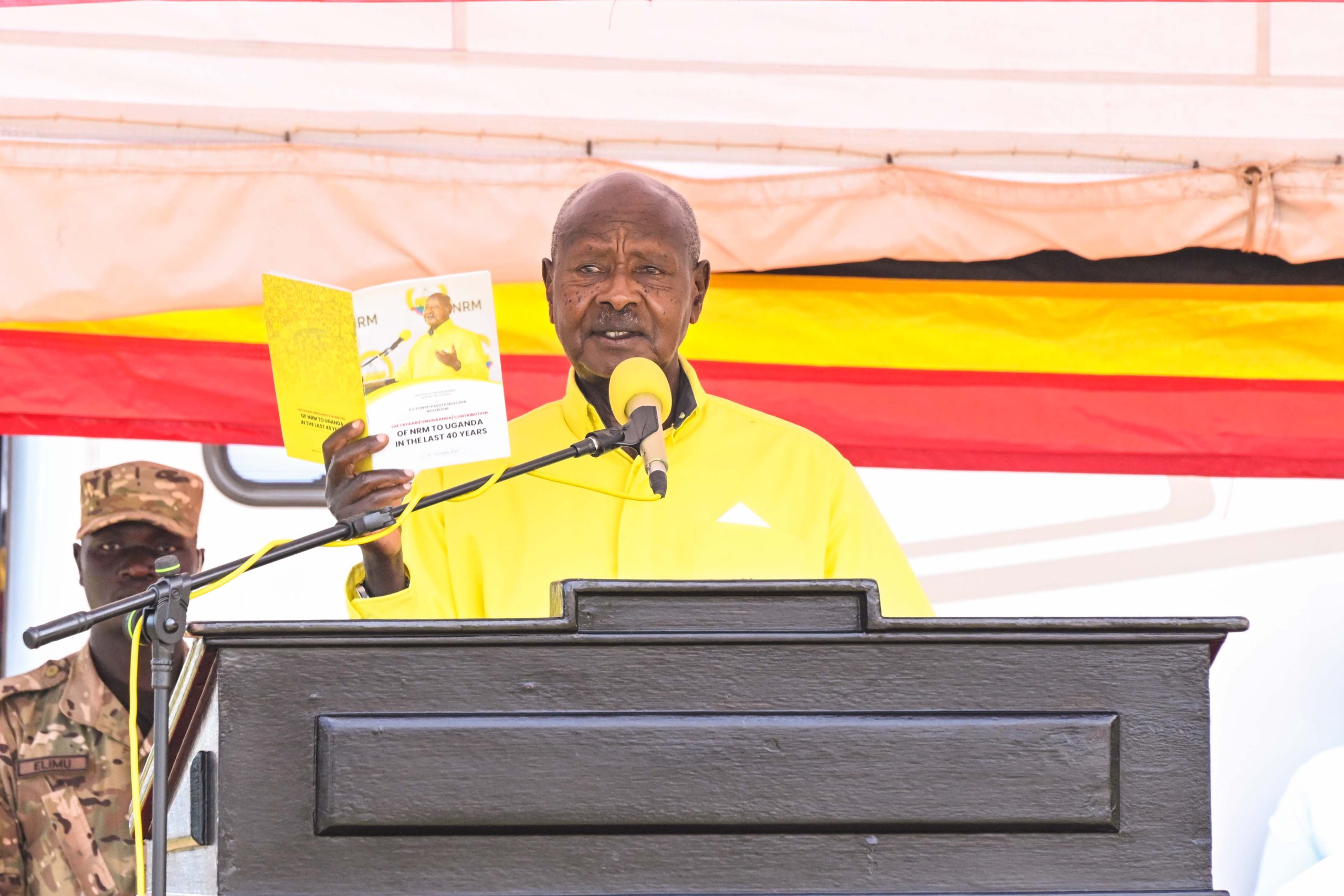
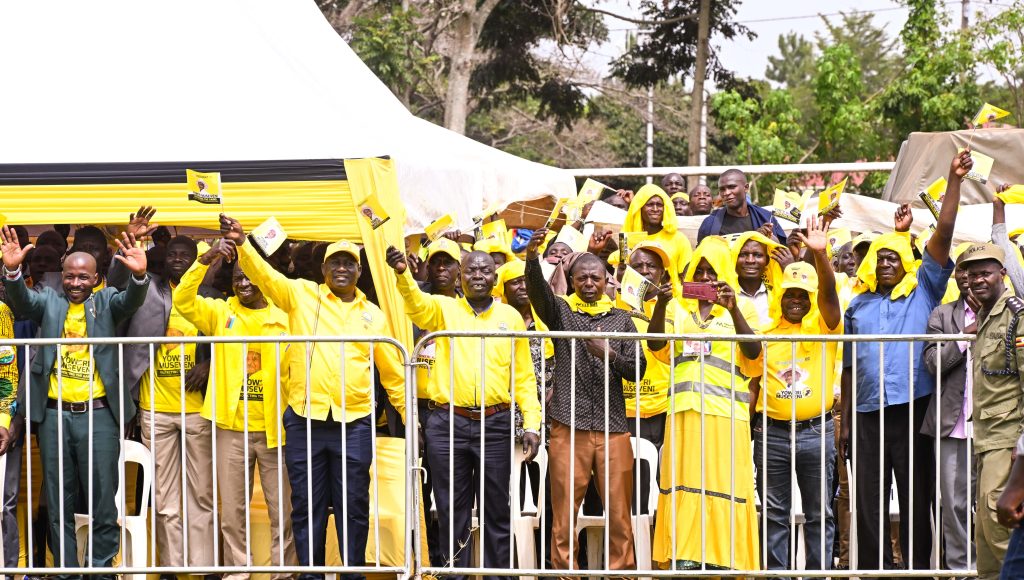
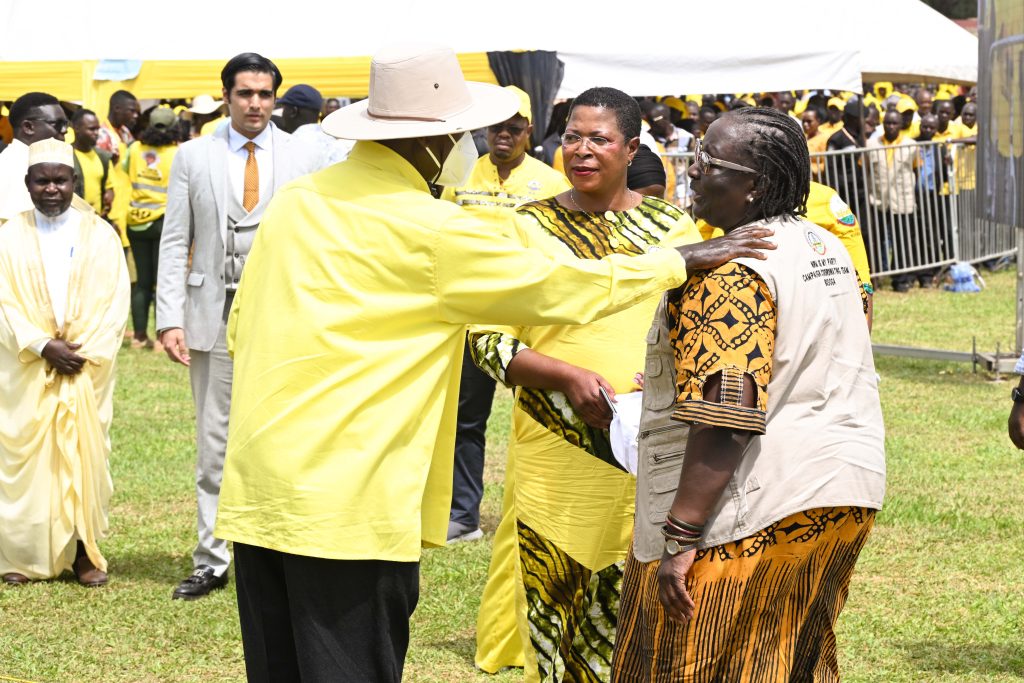
Speaking to thousands of NRM leaders drawn from all Busoga districts at Iganga Girls’ Secondary School on Saturday, January 10, 2026, President Museveni said leadership without humility breeds conflict and ultimately harms ordinary Ugandans, especially the poor.
“So please, I ask you to be humble as leaders. If I were not humble, I would not have managed Uganda,” President Museveni told the gathering, drawing applause from party cadres and local leaders.
The President, who is also the NRM national chairman and the party’s presidential flag bearer for the 2026 general elections, emphasized that unity among political leaders is not a luxury but a necessity for national development.
President Museveni warned that when leaders quarrel, it is not the wealthy who suffer the consequences but the poor, who rely heavily on stable governance and coordinated leadership to escape poverty.
“What I advise you is that poor people need unity among the leaders because you are delaying their coming out of poverty by not working together,” he said.
“The ones who are suffering are the poor people because when the rich are quarrelling, they are in good cars and in their houses. They can afford to quarrel. Every day you stay in poverty, somebody may even die because of poverty.”
His remarks came against the backdrop of long-standing political rivalries in Busoga, which have often pitted senior NRM figures against each other, weakening party cohesion.

President Museveni contrasted Busoga’s internal divisions with other regions where the NRM has held similar mobilization meetings and found greater unity among leaders. He cited Bukedi, Lango, Bugisu, West Nile, and Acholi, where he said leaders had demonstrated a shared commitment to regional development despite political differences.
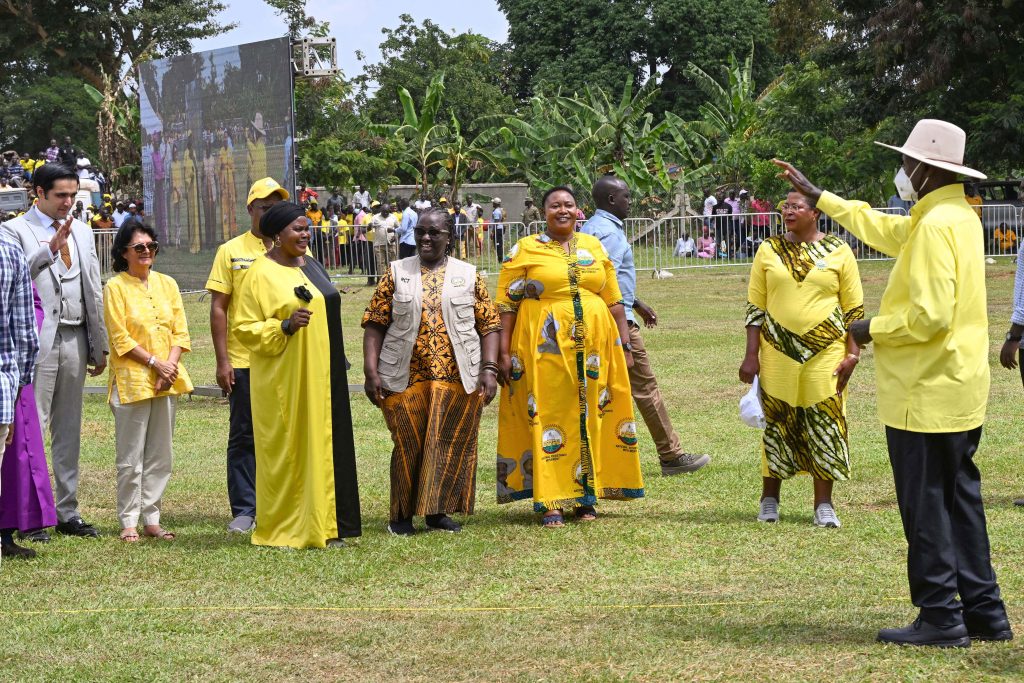
The President revealed that the Busoga meeting itself was convened in Iganga at the request of the State Minister for Lands, Housing and Urban Development, Hon. Persis Namuganza but was later affected by the very divisions it sought to resolve.
“You must cure this problem because it is Namuganza who asked me to bring this meeting here,” President Museveni said.
“When I rang her, she told me we must do it here. I agreed because we don’t have time to hold such meetings everywhere,” he added, expressing disappointment that some prominent NRM leaders from Busoga failed to attend the meeting.
He narrated how he personally intervened to mediate confusion surrounding invitations, particularly involving First Deputy Prime Minister and Minister for East African Community Affairs, Rt. Hon. Rebecca Kadaga.
“I spoke to my young sister Kadaga to ask where she was, and she told me she was not invited,” President Museveni said.
“I then rang the Rt. Hon. Speaker of Parliament to ask why Kadaga was not invited. She told me all flag bearers were invited.”
President Museveni said he called Kadaga again to clarify the matter, but she questioned how the invitation had been communicated.
“She asked, ‘How was I invited? Through the radio or what?’ When I reached here, I asked how you invited Kadaga,” he added.
NRM Chairman for Iganga District Hajji Abubakar Walubi, later told the President that invitations were issued through Resident District Commissioners (RDCs), District Internal Security Officers (DISOs), and party structures down to parish and village levels.
Hajji Walubi said he had also confirmed with Kamuli District NRM Chairperson Mathew Bazanya that all district chairpersons were informed and many had attended.
The meeting was part of a broader NRM strategy to energize grassroots structures ahead of the 2026 general elections, as the ruling party seeks to consolidate its support and renew its mandate for another five-year term.
President Museveni told the leaders that the gathering was meant to equip them with a clear and consistent NRM message, summarized in a party booklet outlining what he described as the movement’s seven historic contributions since coming to power.
He identified peace as the NRM’s most important achievement, arguing that without stability, no meaningful development is possible.
“Even without doing other things, so long as we have peace, everything can be achieved,” President Museveni said, citing areas that were once insecure or abandoned due to conflict but have since recovered, attributing the turnaround to NRM’s ideological clarity.
President Museveni said peace was achieved by rejecting identity-based politics rooted in tribe and religion, which he described as the primary cause of instability in Uganda’s early post-independence years.
“We rejected the politics of identity of tribe and religion. That was the main problem that blocked prosperity,” he said.
Using personal examples, President Museveni explained how national unity enables economic prosperity through interdependence among regions. He described himself as a Munyankore cattle keeper whose wealth depends on markets beyond his home region.
“The Banyankore do not buy my milk, beef, and bananas because they also have them. The people of Kampala and other regions buy what they don’t have. That is why I say patriotism — love Uganda — because you need the whole country for your prosperity.”
He applied the same logic to Busoga’s sugar industry, noting that sugar consumed across Uganda comes from Busoga and other regions.
“The sugar I drink is from Busoga and Banyoro. And I have money in my pocket from other parts of Uganda because they buy my milk and beef,” he said.
Beyond nationalism, President Museveni highlighted Pan-Africanism, particularly the importance of the East African Community (EAC) market. He said Uganda produces about 700,000 tonnes of sugar annually, yet domestic demand stands at approximately 300,000 tonnes, leaving a surplus that would be wasted without regional markets.
Similarly, Uganda produces about 5.3 billion litres of milk annually, while domestic consumption is only about 800 million litres.
“If we didn’t have the East African market, industries for milk, beef, sugar, cement, and steel would have collapsed,” President Museveni said.
He listed infrastructure development — including roads, electricity, water, and schools — as the second major NRM contribution, before delving into wealth creation as the third.
He revisited the four-acre model introduced in the NRM’s 1996 manifesto, aimed at helping small-scale farmers maximize income through integrated farming. The model encourages farmers to divide land for coffee, fruits, pasture for dairy cows, food crops, poultry, and fish farming.
To illustrate its success, President Museveni cited Minister of State for Transport and Bugangaizi West MP Fred Byamukama, whose four-acre farm generates substantial income from eggs, coffee, and livestock.
“He sells 310 trays of eggs per day and gets Shs108 million per month, remaining with Shs55 million as profit,” President Museveni said, adding that this translates to nearly Shs700 million annually from eggs alone.
Another example was Korea Dick Ogira, a mango farmer in Abim District, who earns Shs36 million per acre, despite operating far from tarmac roads.
President Museveni said the NRM government has supported wealth creation through programs such as Entandikwa, NAADS, Operation Wealth Creation (OWC), and now the Parish Development Model (PDM).
Under PDM, each parish receives Shs100 million annually, with additional funding expected as more beneficiaries succeed.
“I know people who were very poor in villages but have used this money to get out of poverty,” he said.
The President identified job creation as the fourth NRM contribution, explaining that jobs emerge naturally from commercial agriculture, manufacturing, and skilled trades.
He cited Johnson Basangwa of Jeka Poultry Farm in Kamuli, whose enterprise employs about 300 people.
First NRM National Vice Chairperson Alhajji Moses Kigongo thanked Busoga leaders for turning up in large numbers, expressing confidence that the region would deliver strong support in the general elections scheduled for January 15, 2026.
Second NRM National Vice Chairperson and Speaker of Parliament, Rt. Hon. Anita Among said the meeting was intended to ensure message discipline at the grassroots level.
“Whereas Museveni is President, you are also presidents of your villages,” she told the leaders.
“Nothing can be done without your input as LC1 chairpersons.”
She announced that NRM leaders in attendance would receive Shs15 million under PDM and revealed plans to increase LC1 chairpersons’ monthly allowance from Shs10,000 to Shs100,000, a move that drew applause.
“In Busoga, we have only Team Busoga and Team Museveni,” Among declared.
The meeting was attended by several senior NRM figures, including former Vice President Dr. Specioza Wandira Kazibwe, Third Deputy Prime Minister, Rt. Hon. Rukia Nakadama, Minister for the Presidency, Hon. Babirye Milly Babalanda, among others.