
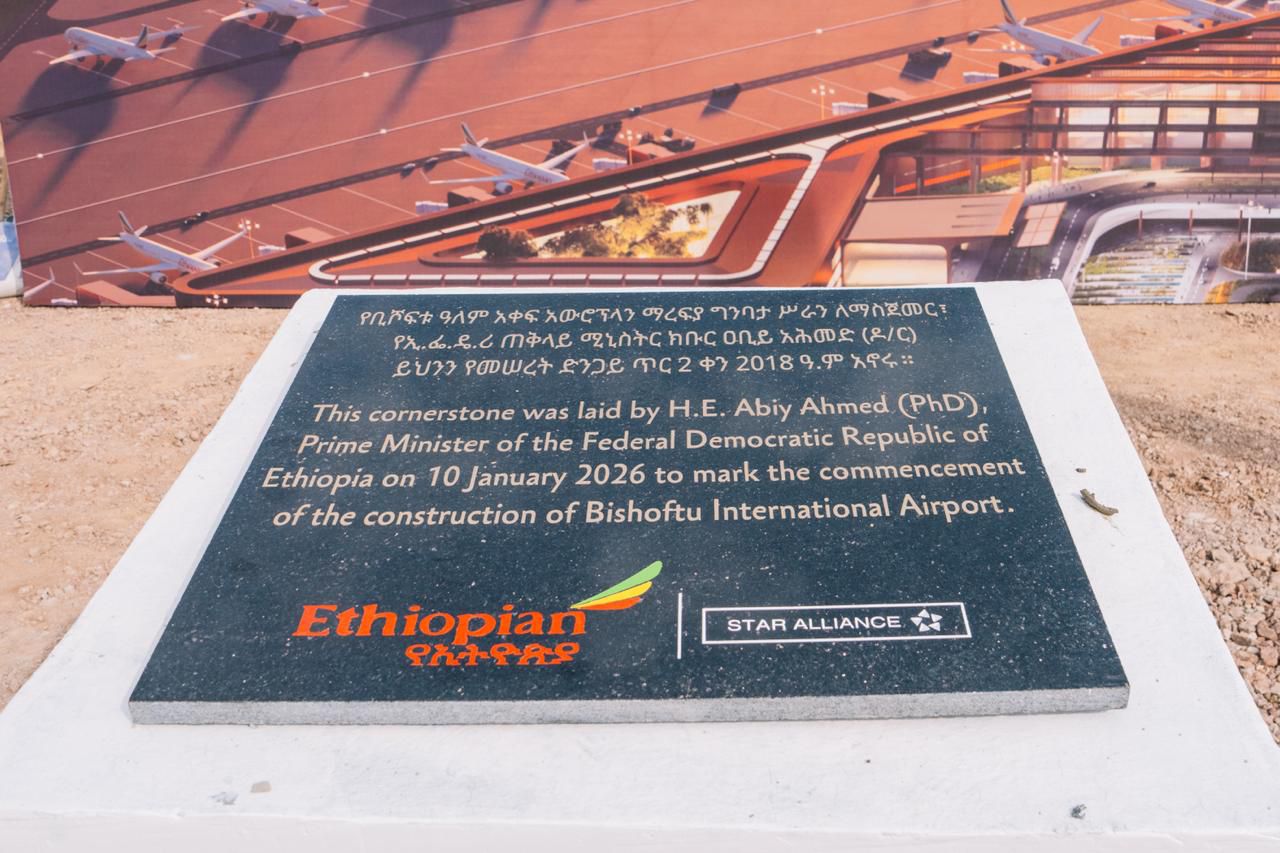
Ethiopia is advancing plans to develop a new mega aviation hub as part of a multi-airport strategy aimed at supporting the country’s fast-growing aviation sector and the continued expansion of Ethiopian Airlines’ global network. The project comes as Addis Ababa Bole International Airport approaches its expanded capacity of 25 million passengers per year, prompting the need for additional infrastructure to sustain long-term growth.
At the centre of this strategy is the proposed Bishoftu International Airport (BIA), set to become the largest aviation infrastructure project in Africa’s history. The development aligns with Ethiopia’s national economic reforms, industrialisation agenda and long-term aviation strategy, while reinforcing the country’s ambition to remain Africa’s leading air transport gateway.

The new airport is expected to significantly strengthen Ethiopian Airlines’ global competitiveness, improve continental and intercontinental connectivity under the African Continental Free Trade Area (AfCFTA), and boost trade and tourism corridors across Africa and beyond. By expanding capacity and efficiency, the project will also position Ethiopia as a premier global transit hub.
Located approximately 40 kilometres southeast of Addis Ababa at an altitude of 1,910 metres, Bishoftu offers favourable conditions for aircraft performance and efficient passenger handling. Its proximity to the capital will allow seamless integration with the existing aviation ecosystem, complementing operations at Bole International Airport.
In its first phase, Bishoftu International Airport is projected to handle up to 60 million passengers annually. Under the long-term master plan, capacity is expected to reach 110 million passengers per year, placing Ethiopia among the world’s top aviation hubs and securing its role in shaping the future of air transport in Africa.