Uganda’s push to deploy the malaria vaccine has taken on new urgency following fresh evidence that malaria infections among children are rising again across large parts of the country.
Findings from the Uganda Malaria Indicator Survey (UMIS) 2024–2025 show that about 21 percent of children aged 6 to 59 months tested positive for malaria, a sharp increase from 9 percent recorded in the 2018–2019 survey. The rebound has raised concern among health authorities and reinforced the need for stronger prevention measures, including the recently introduced malaria vaccine.
The survey, conducted by the Uganda Bureau of Statistics and the Ministry of Health between November 2024 and February 2025, provides the most comprehensive national snapshot of malaria transmission and control efforts in the country.
Vaccine joins existing malaria control tools
According to the report, Uganda’s malaria strategy now combines several interventions: insecticide-treated mosquito nets, indoor residual spraying, testing and treatment, preventive treatment during pregnancy, seasonal malaria chemoprevention, and the malaria vaccine.
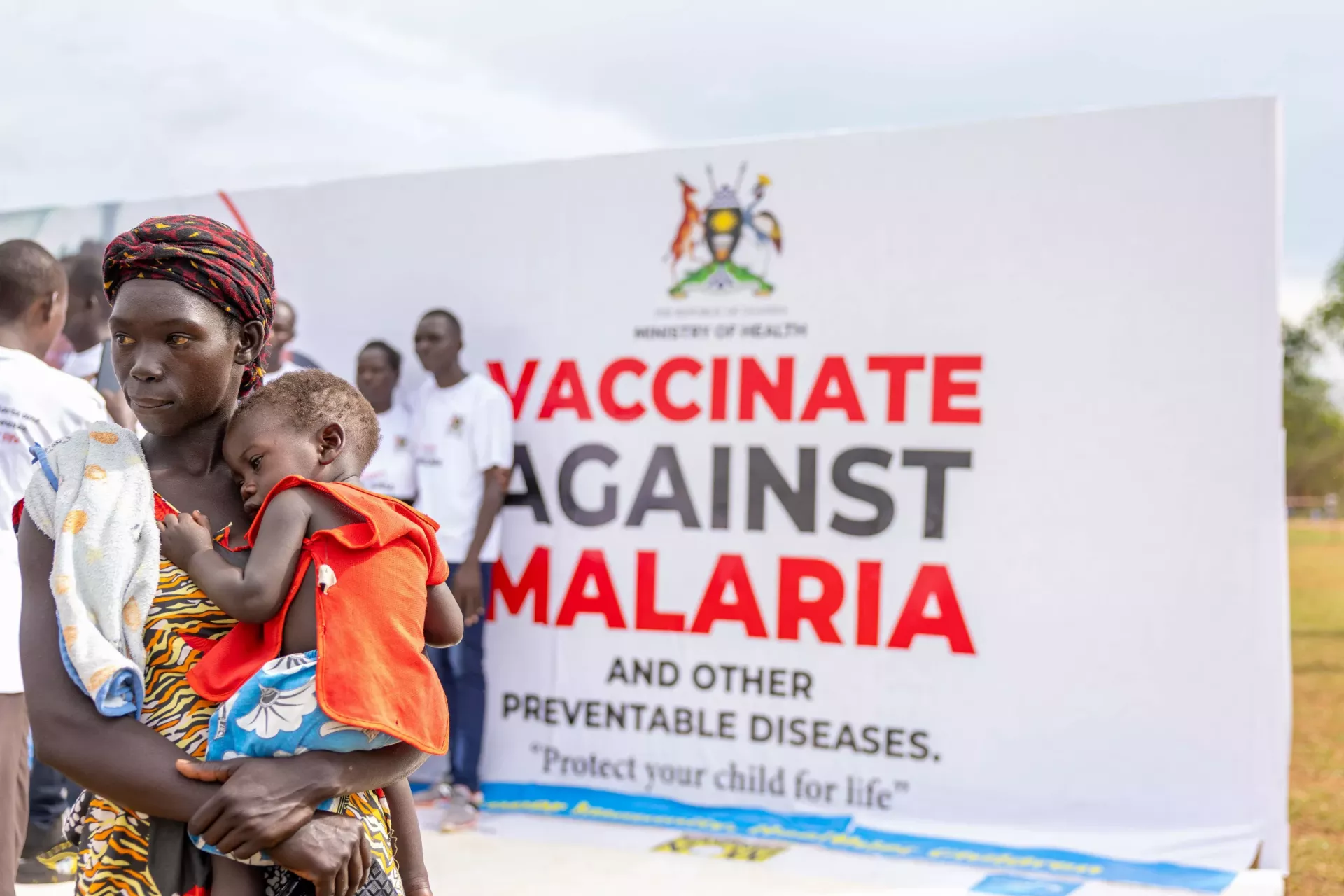
Health officials say the introduction of the vaccine marks a significant step in strengthening protection for children under five, the group most vulnerable to severe malaria and death.
The vaccine is being rolled out as part of a broader malaria elimination plan aimed at reducing infections and eventually eliminating the disease in high-risk districts.
Rising infections strengthen case for vaccination
The survey data reveals that malaria remains deeply entrenched in many regions despite widespread prevention programs.
In some parts of northern and eastern Uganda, the disease remains extremely common among children.
- Lango recorded the highest malaria prevalence at nearly 60 percent among children tested.
- Acholi followed with about 46 percent, while Teso recorded more than 44 percent.
By contrast, urban areas showed dramatically lower infection rates. Kampala recorded less than 1 percent malaria prevalence among children, highlighting the stark regional divide in malaria transmission.
Health experts say such disparities are exactly why the vaccine is being prioritized in high-transmission districts.
Rural and poorer households hardest hit
The survey also shows malaria disproportionately affects children living in rural and low-income households.
- Children in rural areas recorded infection rates of about 26 percent, compared to around 12 percent in urban areas.
- Among the poorest households, 38 percent of children tested positive, compared with just 3 percent among the wealthiest families.
These findings suggest malaria remains closely linked to poverty, housing conditions and access to preventive services.
Public health specialists say the vaccine could play a crucial role in protecting children in these high-risk environments where traditional interventions alone have struggled to fully control transmission.
Part of a broader elimination strategy
The Ministry of Health says the vaccine rollout is part of Uganda’s Malaria Elimination Strategic Plan, which aims to significantly reduce malaria infections and deaths nationwide.
The strategy includes a long-term goal of:
- reducing malaria incidence across all districts,
- achieving zero malaria deaths, and
- eliminating malaria in at least 15 districts by 2030.
Officials say the data from the new survey will guide where resources and interventions, including vaccination campaigns, should be concentrated.
A critical moment in Uganda’s malaria fight
For decades, malaria has remained one of Uganda’s biggest public health challenges, particularly for young children.
The new survey suggests that while prevention tools have expanded, the disease is still evolving and resurging in some regions.
Health authorities believe the malaria vaccine could become a critical new layer of protection, especially in districts where mosquito control measures alone have not been enough.