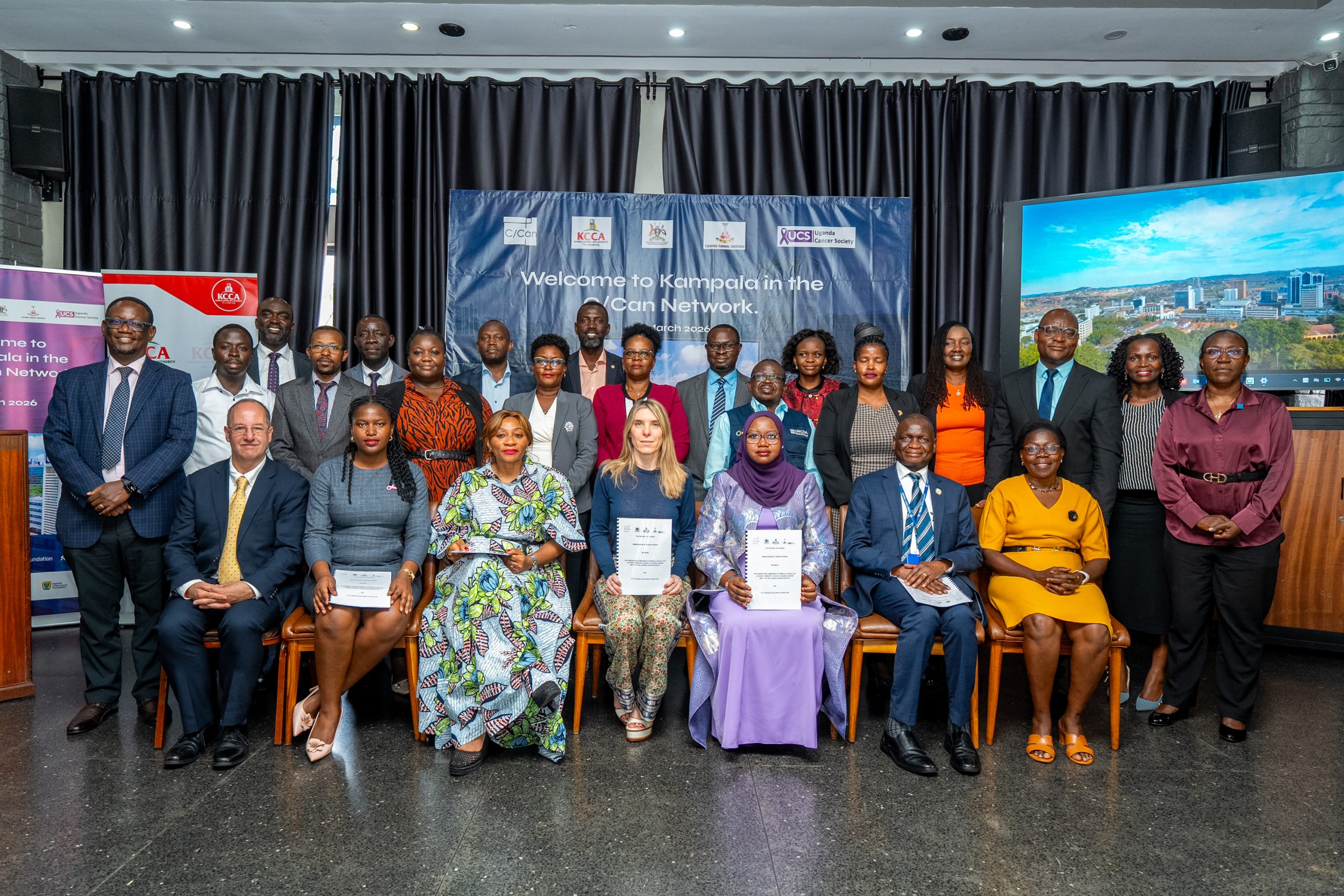
Kampala has officially become part of the global City Cancer Challenge (C/Can) network, marking a significant milestone in efforts to improve access to timely and quality cancer care in one of East Africa’s fastest-growing cities.
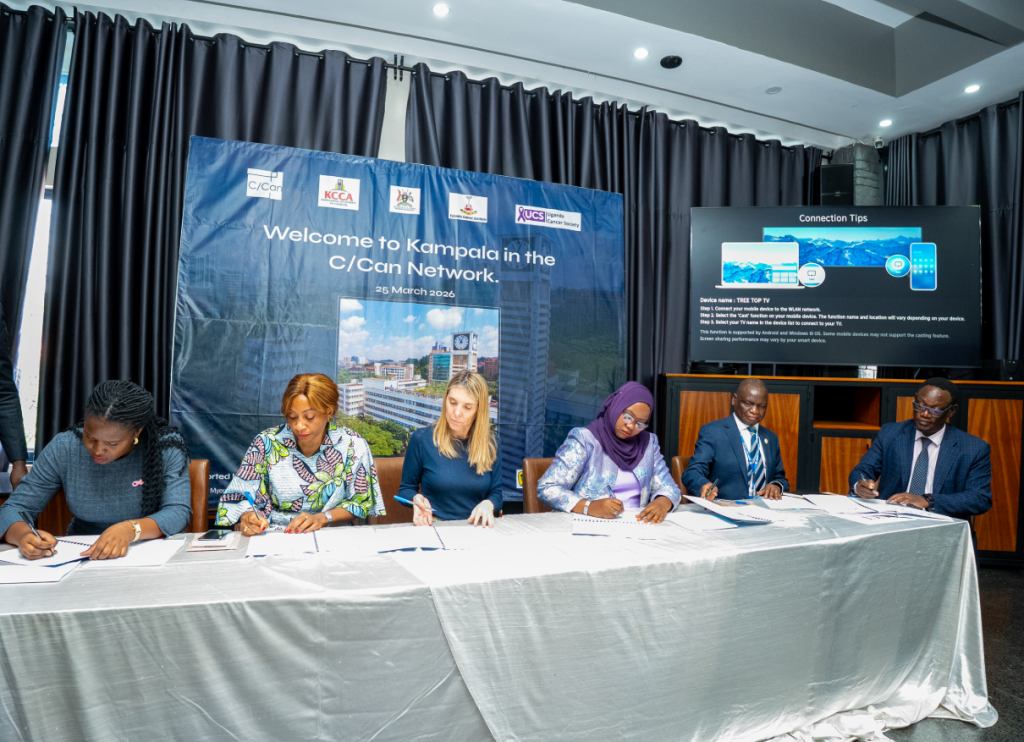
The launch event, held at the Fairway Boutique Hotel, brought together leaders from Kampala Capital City Authority (KCCA) and officials from C/Can, who signed a five-year memorandum of understanding to steer joint efforts aimed at strengthening cancer diagnosis, treatment, and care systems across Kampala.
With this development, Kampala becomes the 18th city globally and the sixth in Africa to join the initiative led by the City Cancer Challenge Foundation, which supports cities in low- and middle-income countries to enhance cancer care through partnerships and resource mobilisation.
“This is about clearly understanding why this initiative begins here,” said KCCA Executive Director Sharifah Buzeki. “Kampala serves as the referral centre for cancer care in Uganda. If we get it right here, we strengthen the country’s overall response.”
In 2024, Kampala registered at least 5,600 new cancer cases, with cervical and prostate cancers among the most common. Nationwide, Uganda records an estimated 35,000 new cases annually, reflecting a wider global burden affecting over 43 million people living with cancer.
“Cancer remains a major challenge,” Buzeki noted. “Our aim is to support prevention and improve access to quality care, ultimately boosting productivity among our population.”
Stakeholders highlighted early detection as a major gap. “There is no reason to lose lives to cancer when it can be prevented,” Buzeki added. “A cancer diagnosis should not be a sentence of despair.”

The initiative brings together city authorities, health institutions, and international partners to address gaps across the entire care continuum from diagnosis and treatment to palliative care using a systems-based approach.
“Cancer is complex,” said Isabel Mestres, CEO of the City Cancer Challenge. “This calls for strong data, robust systems, and collaboration. No single institution can address it alone.”
She added that the network focuses on supporting cities to develop sustainable, locally driven solutions.
Ugandan health leaders welcomed the partnership as a boost to existing national efforts.
“The fight against cancer requires collective action; it cannot be handled by one entity alone,” said Jackson Orem, Executive Director of the Uganda Cancer Institute. “We welcome C/Can to complement government efforts.”
Officials also highlighted tangible improvements achieved through collaboration, including infrastructure upgrades around the Uganda Cancer Institute to safeguard sensitive equipment and support expansion.
Patience Asiimwe of the Uganda Cancer Society described the initiative as “another important step” toward ensuring equitable access to treatment and palliative care.
At the city level, public health leaders emphasized the urgency of awareness and screening.
“This is a critical issue that can be prevented early, yet many people remain unaware,” said Sarah Zalwango, noting that cervical cancer continues to pose a major risk to women in Kampala.
Through the partnership, stakeholders aim to expand screening services, strengthen the health workforce, improve access to essential medicines and technologies, and enhance data systems to support informed decision-making.