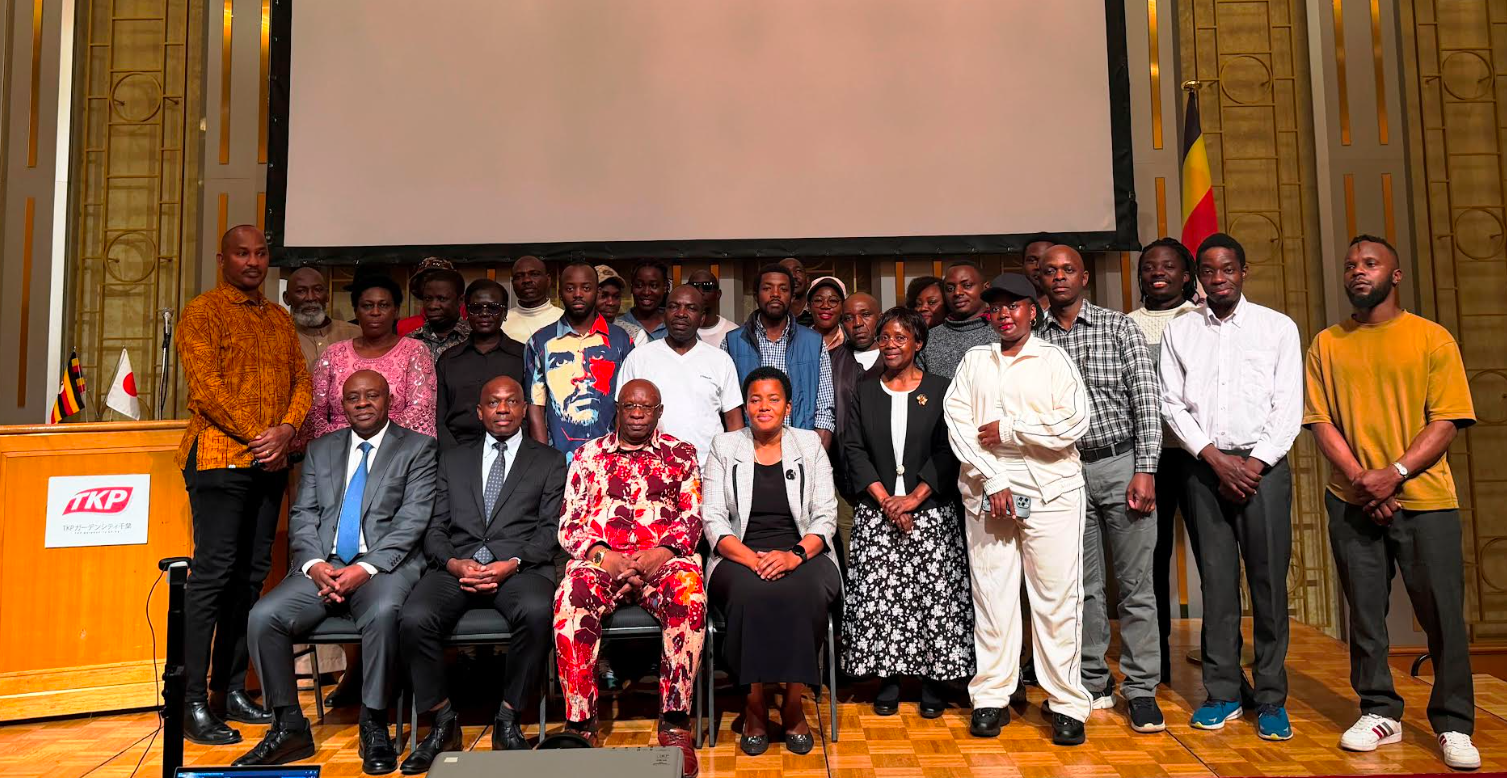
The Government of Uganda, through its Diaspora Services Department in collaboration with the Embassy of the Republic of Uganda in Tokyo, convened an outreach engagement with members of the Ugandan community in Japan to advance consultations on the formulation of a National Diaspora Policy. The dialogue, held on 29 March 2026 at TKP Garden City Chiba, forms part of a broader global effort to align diaspora contributions with Uganda’s long-term socio-economic transformation agenda.
The session brought together Ugandan professionals, students, and entrepreneurs residing across Japan, offering a platform for structured dialogue on the policy’s scope and priorities. Officials underscored that the emerging framework seeks to create a coherent mechanism through which Ugandans abroad can be more effectively engaged, empowered, and enabled to contribute to national development processes.
Leading the delegation, Ambassador J. M. Muhindo outlined the Government’s strategic approach, noting that the policy is intended to institutionalize diaspora participation in key sectors, including investment, skills transfer, and innovation. He highlighted plans for a comprehensive skills-mapping exercise aimed at identifying expertise within the diaspora and linking it to domestic development needs. This initiative, he explained, is expected to strengthen knowledge exchange, address critical skills gaps, and enhance Uganda’s competitiveness in an increasingly globalized economy.
Ambassador Muhindo further encouraged members of the Ugandan community in Japan to maintain active registration with the mission, emphasizing that accurate data facilitates efficient consular support and strengthens coordination between the diaspora and government institutions. He also called for greater cohesion within the community, noting that organized diaspora networks such as those observed in other global contexts have proven instrumental in leveraging economic and professional opportunities in host countries.
In her remarks, Amb. Tophace Kaahwa reaffirmed the mission’s commitment to supporting Ugandans in Japan through responsive consular services and targeted engagement initiatives. She highlighted ongoing efforts to deepen economic and commercial diplomacy, including promoting Uganda as a destination for trade, investment, and tourism within the Japanese market. The Ambassador underscored the critical role of the diaspora as partners in advancing bilateral relations and facilitating market linkages.
Participants contributed perspectives and recommendations to inform the policy drafting process, reflecting a shared interest in ensuring that the framework responds to the practical realities and aspirations of Ugandans abroad. The engagement concluded with a consensus to institutionalize regular diaspora dialogues in Japan, including the proposal to convene an annual Uganda Diaspora Convention on a rotational basis across major cities. he hybrid format of the outreach enabled broad participation, allowing members unable to attend in person to engage virtually and submit their views. The consultation in Japan marks a significant step in Uganda’s inclusive approach to policy development, reinforcing the role of its global diaspora as an integral partner in national progress.