There’s been a wave of reaction following the Uganda Airlines Johannesburg–Entebbe incident, much of it driven by one question: how does a bird strike happen nearly 45 minutes into a flight, and why didn’t the aircraft just turn back immediately?
Both questions come from a misunderstanding of how aviation actually works.
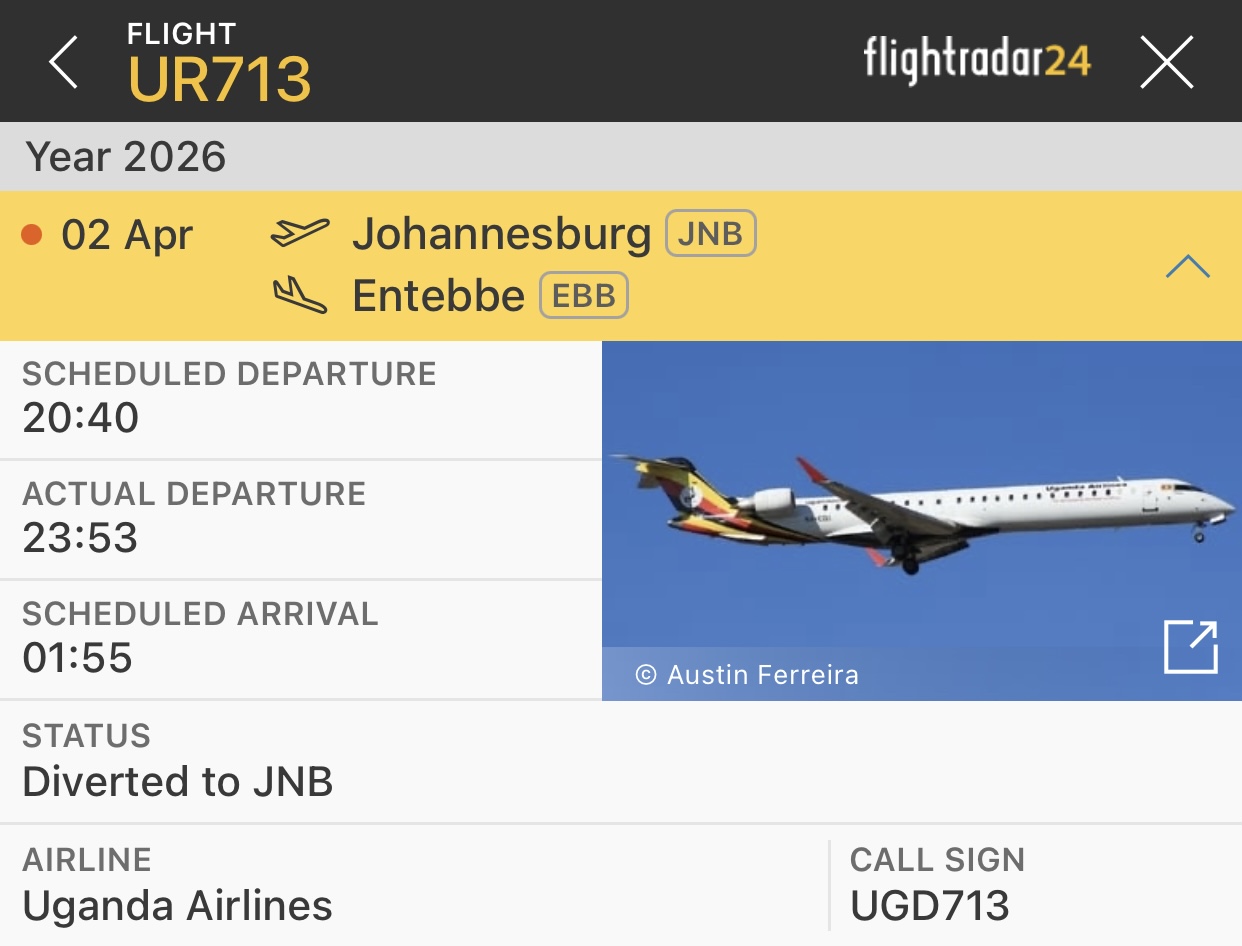
Uganda Airlines confirmed that flight UR713 returned to Johannesburg after a bird strike damaged the cockpit windscreen. The aircraft landed safely. That outcome matters more than the noise around it.
But what has added important context is firsthand accounts from passengers on board. Among them, Simon Kaheru, who described the moment one side of the windscreen shattered mid-air, noting the calm handling of the situation by the flight crew.
He specifically credited Capt. Tonny Tebajanga for maintaining control and composure, saying the aircraft was flown back steadily even as passengers sensed something was wrong. He also pointed to the cabin crew, who remained composed and followed procedure throughout.
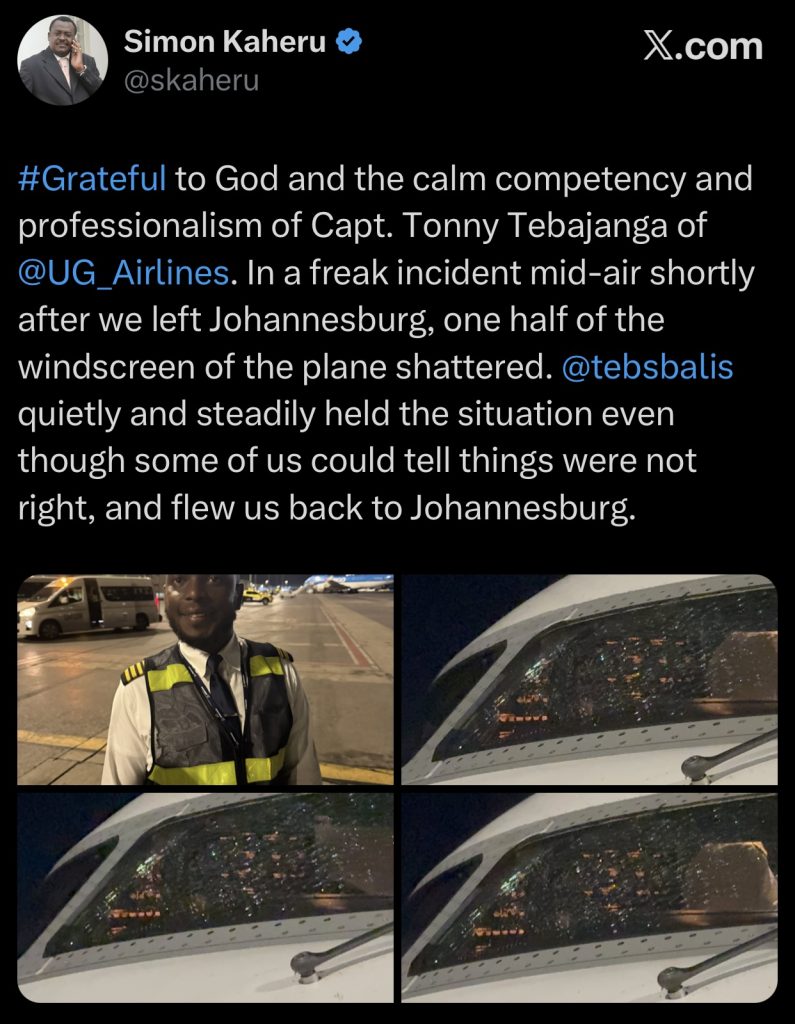
That aligns with what trained crews are expected to do.
Now to the timing. The claim that the strike must have happened at cruising altitude misses a key point.
A bird strike can happen during climb, well below cruise level. The damage may not be immediately critical. Windscreens are layered and designed to absorb impact, but cracks can spread under pressure as the aircraft continues climbing or stabilizes.
So “45 minutes into the flight” could simply be when the damage became significant enough to act on.
Then there is the idea that the aircraft should have “just turned back.”
Aircraft don’t operate like that.
A turnback is a process, Pilots must first assess the situation, confirm the aircraft is stable, and run the necessary checklists. They then coordinate with Air Traffic Control, which manages traffic separation and approves routing.
Only after that can the aircraft be vectored back.
There are also operational considerations. The aircraft may need to level off, adjust speed, or position itself safely before descending.
The flight data in this case reflects that. The aircraft climbed, stabilized, then initiated a controlled return to Johannesburg.
Bird strikes are a known and managed risk in aviation. What matters is how they are handled.