By Samuel Ssenono
Long before the killings began in Kibale National Park, something else was already breaking down. A chimpanzee community that had lived, fed and moved together for years started pulling apart quietly, its members avoiding each other, relationships thinning, and familiar bonds giving way to mistrust. By the time the violence came, the split had already taken hold.
That conclusion comes from a long-running study by researchers led by Alexander A. Sandel, John C. Mitani, Kevin E. Langergraber and David P. Watts, who have tracked the Ngogo chimpanzees for nearly three decades. Their work draws on 30 years of behavioural observation, 24 years of social network data and 10 years of GPS tracking, making it one of the most detailed records of chimpanzee social life ever compiled.
What has drawn global attention is the scale of the violence that followed. But the study argues the real story lies in how a stable group fractured in the first place.
Researchers say the break was not driven by anything resembling human cultural divisions such as ethnicity or ideology. Instead, it grew out of shifting relationships inside the group itself. The findings support what the study describes as the “relational dynamics hypothesis” — that changing social ties and local rivalries can divide a community and lead to organised violence on their own.
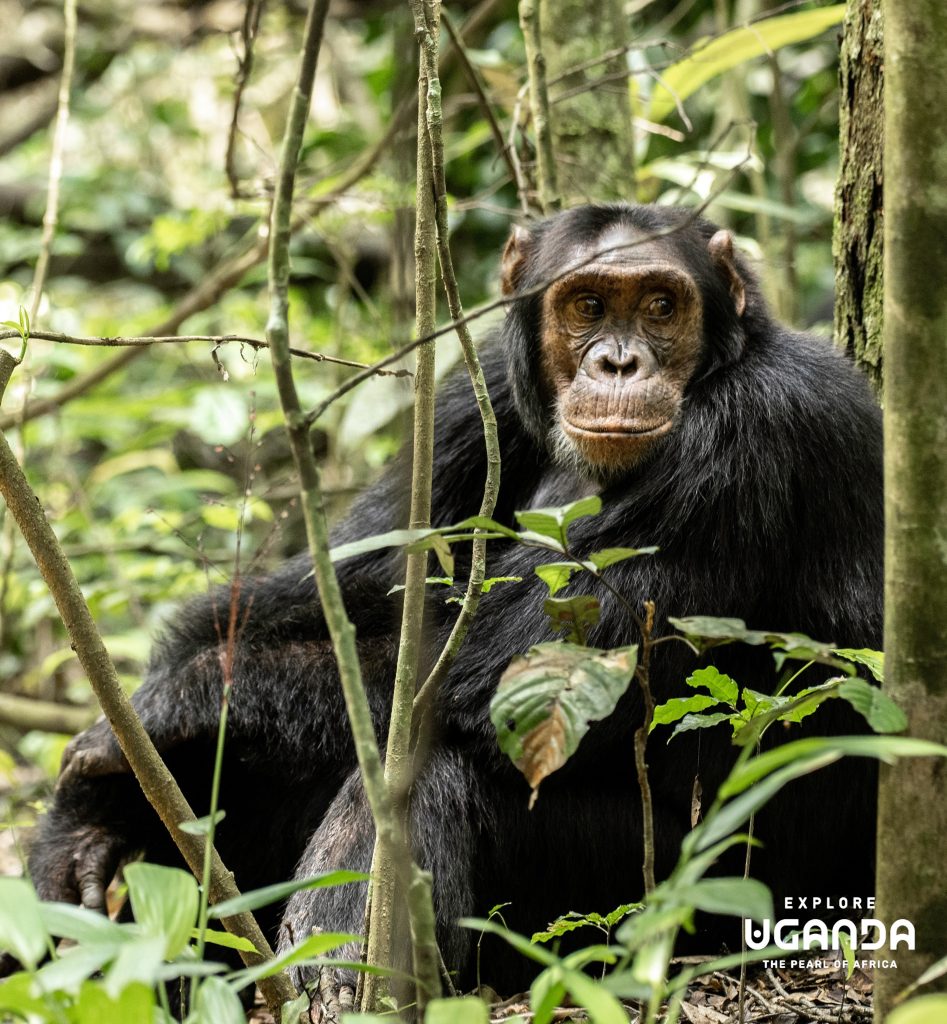
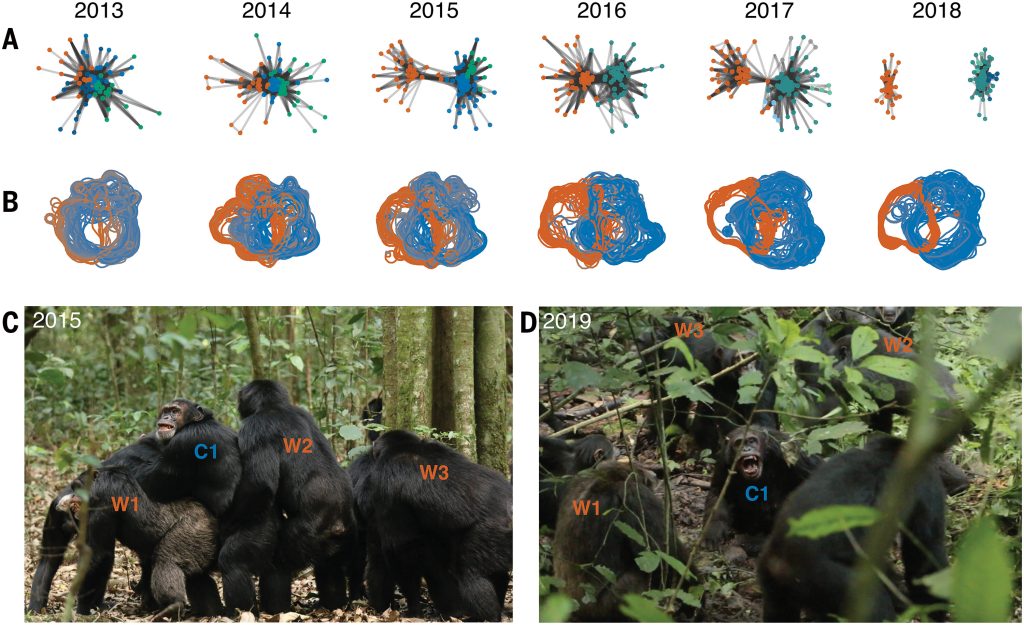
For years, the Ngogo chimpanzees lived as one of the largest known groups in the wild. Internal clusters existed, but they remained connected. Individuals mixed freely, shared territory and reproduced across those lines. The study notes that 44 percent of infants conceived between 2004 and 2014, where both parents could be assigned to clusters, came from males and females in different clusters — a sign that divisions had not yet hardened.
The turning point came in 2015.
On June 24 of that year, chimpanzees from what would later become rival factions met near the centre of their territory. Instead of merging, one group fled and the other gave chase. What followed was a six-week period of avoidance — something researchers say had not been observed before. Later analysis identified 2015 as the most significant structural shift in the group’s social network over 24 years.
The study points to a combination of pressures behind the split.
The size of the group is one factor. With nearly 200 individuals, including more than 30 adult males, the Ngogo community had grown unusually large. Researchers say this may have strained social bonds and increased competition, even in a territory with abundant food that still fluctuates over time.
Reproductive competition also appears to have played a role. The report shows that reproductive separation began before the final break. By March 2015, the last known offspring from parents who would later belong to different groups had been conceived. After that, reproduction took place only within the emerging factions.
Loss of key individuals may have further weakened the group.
In 2014, five adult males and one adult female died, representing more than 10 percent of the mature males. Some showed signs of illness. Researchers say these losses may have disrupted connections across clusters and contributed to the sharp rise in polarization the following year.
A leadership change added to the strain.
A new alpha male emerged in 2015, at the same time the first sustained separation was observed. While not the sole cause, the shift in dominance may have intensified tensions in an already fragile social network.
Disease also played a part.
In January 2017, a respiratory outbreak killed 25 chimpanzees, including four adult males and 10 adult females. The study says the outbreak came after the split had begun, but likely accelerated the final separation by removing individuals who still linked the two sides.
As the divide deepened, behaviour changed with it.
By 2016, the group that would become the Western faction had begun territorial patrols targeting the Central group. In 2017, Central chimpanzees responded. That same year, Western chimpanzees attacked and severely injured a Central male who had once belonged to their own cluster. At the same time, the shared territory was splitting. By 2017, what had once been common ground had effectively become a border.
By 2018, the split was complete.
The Western group counted 10 males and 22 females aged 12 and above, while the Central group had 30 males and 39 females. After that, there were no social ties between the two groups and no reproduction across the divide.
The violence came next.
Between 2018 and 2024, the Western group carried out repeated raids into Central territory, killing adult males and infants. Researchers recorded multiple lethal attacks, with killings averaging one adult male and two infants per year.
What makes the case striking is that the victims were not outsiders.
They were individuals who had once lived, fed and patrolled together. The study says this cannot be explained by simple hostility to strangers, but by a shift in group identity that redefined who belonged and who did not.
The smaller Western group led the attacks despite being outnumbered, suggesting that cohesion within the group may have outweighed numbers.
For the researchers, the Ngogo case offers a rare look at how conflict can grow from within.
Their conclusion is that the roots of violence may lie not in fixed divisions, but in the gradual breakdown of relationships inside a community that once held together.