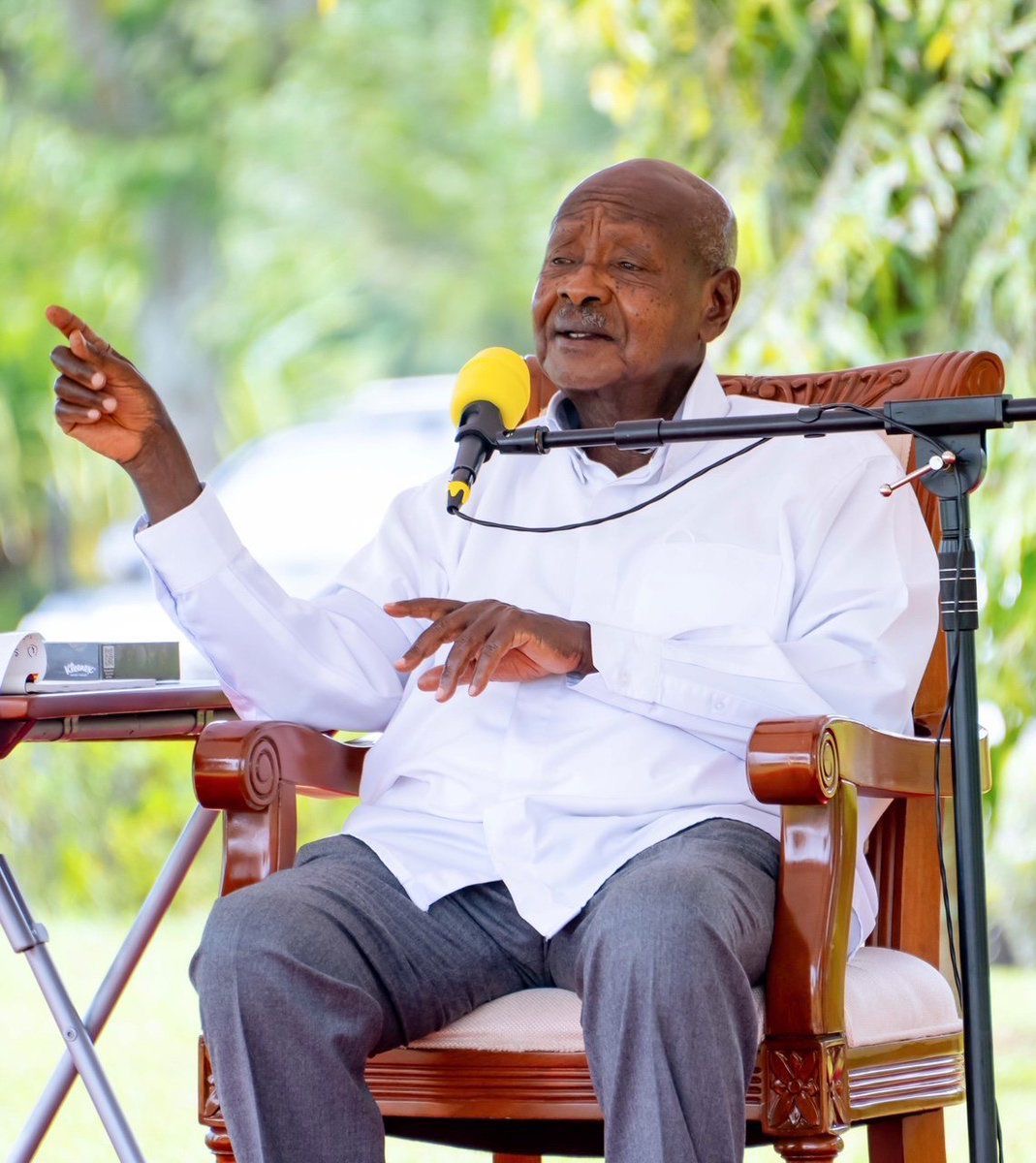
President Museveni has clarified the intent of the Sovereignty Bill, saying the version he initiated was never meant to stop foreign direct investment, remittances, support to religious bodies or private money transfers.
In a statement addressed to Ugandans, especially the Bazzukulu, Museveni said he had noticed “a lot of orwaari” around the Bill, with claims that it would interfere with money legally sent into or out of Uganda.
“Really!! That is not the Bill I initiated,” Museveni said.
The President said the Bill he initiated was intended to protect Uganda’s right to make its own policy decisions without external interference.
He said the sovereignty Uganda fought for is about decision-making on political, social, economic and diplomatic matters, including issues such as representation in Parliament, social policy, privatisation, property questions and Uganda’s position on international conflicts.
“As Mwalimu once said, Independence means the right to make our own mistakes if necessary and learn from them,” Museveni said.
He added that Uganda exercises sovereignty through elections and referenda, citing Article 1(4), Article 59 and Article 68 of the Constitution.
Museveni warned against external influence through “word, action or money,” saying policy and ideological decisions can make or break countries.
He said Uganda had previously suffered because of identity politics based on tribe, religion and gender chauvinism, instead of politics based on interests, including markets for wealth creators.
The President also defended Uganda’s free economy, saying the NRM and Ugandans had made clear choices over the last 40 years.
“None of them says: Do not send to Uganda or take out of Uganda money you have earned legally anywhere in the World; do not send church donations to or from Uganda; do not receive or send out remittances from Ugandans working abroad. We run a free economy,” Museveni said.
He added that forex is bought and sold in privately run forex bureaus, describing this as one of the strengths of Uganda’s economy.
Museveni said the freedom of the private sector has helped Uganda overcome the obstruction of corrupt or non-patriotic public servants and political opportunists.
He cited the example of Ankole cattle, saying he privately defended and revived the breed despite experts once dismissing it as unsuitable for beef or milk.
He also saluted South African President Cyril Ramaphosa for helping promote Ankole cattle after acquiring 43 cows from Kisozi.
Museveni said the NRM cannot support interference with the free movement of capital and money into or out of Uganda, describing it as an insurance against corrupt public servants and a key instrument for growth and social-economic transformation.
He said he had spoken to Hon. Hamson Obua and the chairpersons of relevant parliamentary committees to ensure the Bill focuses on sovereignty in policy decision-making.
“I have talked to Hon. Hamson Obua and the Chairpersons of the relevant Parliamentary Committees to make the Bill concentrate on the Sovereignty of policy-decision-making and not to meander in the areas of the freedom of Private enterprise transfers or private money transfers or church donations,” Museveni said.
The President also cautioned those seeking to influence others, urging them to do so by example rather than coercion or manipulation.
“Influence People by example and not by coercion or manipulation,” he said.