Paris, France
France has announced partial curfews in Paris and several other cities following violent demonstrations over rising living costs that left thousands arrested, hundreds of security personnel injured and businesses extensively damaged.
The government announced the restrictions on Monday after weekend protests descended into some of the worst street violence witnessed in France in recent years.
Prime Minister Sébastien Lecornu said restoring public order remained the government’s priority and did not rule out declaring a state of emergency if the unrest continued.
Authorities imposed curfews in Paris, Lille and Lyon, with restrictions running from Monday evening into Tuesday morning. In Paris, the curfew begins at 11 pm, while public demonstrations are prohibited from 8 pm.
The measures follow Saturday’s nationwide demonstrations, which attracted an estimated 500,000 people protesting against the rising cost of living.
The protests, which began four weeks ago with students demanding better conditions in secondary schools, have since developed into a broader movement against rising prices.
Although initially peaceful, Saturday’s demonstrations turned violent in several cities as masked groups clashed with police, vandalised public buildings, looted shops and set vehicles on fire.
Interior Minister Laurent Nuñez acknowledged that police had lost control of the situation in some areas.
More than 2,500 people were arrested during the unrest, while nearly 1,000 members of the security forces sustained injuries. Several protesters were also injured, including one who lost a hand after being struck by a police crowd-control grenade.
Justice Minister Gérald Darmanin said more than 2,513 people had been taken into police custody, with 67 jailed and dozens of criminal investigations opened.
Authorities estimate that at least 3,000 shops were damaged, with losses running into hundreds of millions of euros.
The government has also moved to prevent the sale of goods stolen during the riots. Digital Minister Anne Le Hénanff called on online resale platforms, including Vinted and eBay, to remove listings suspected of involving looted merchandise.
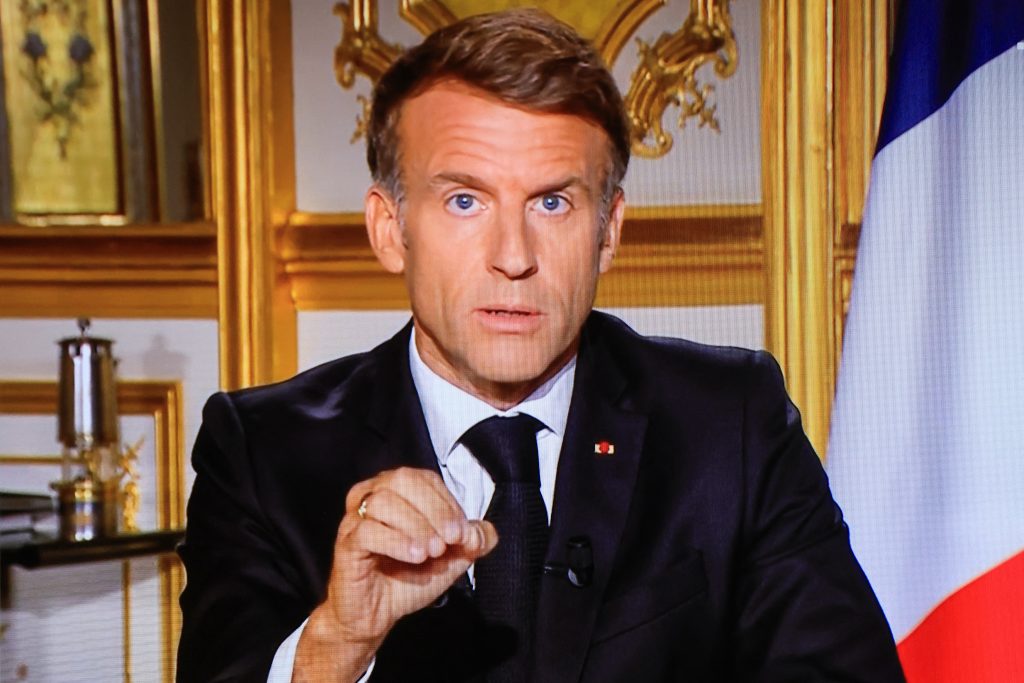
President Emmanuel Macron acknowledged shortcomings in the government’s response despite the deployment of approximately 60,000 security personnel during Saturday’s demonstrations.
In a televised address on Sunday, Macron condemned the violence and pledged to restore order.
The unrest also disrupted tourism in Paris on Monday after a small group of student protesters blocked access to the Louvre Museum, forcing its closure.
The United States embassy advised American citizens to avoid demonstrations, while Germany and China issued travel warnings urging their nationals to exercise caution.
The European Union condemned the violence but emphasised that the right to peaceful protest must be protected.
The demonstrations come six months before France’s presidential elections, scheduled for April and May 2027, when voters will choose a successor to Macron.
The government has accused ultra-left groups of encouraging violence ahead of the elections, while far-right politician Marine Le Pen has been performing strongly in opinion polls.
Protest organisers have called for another round of nationwide demonstrations next Saturday, raising concerns about further unrest.
Similar cost-of-living protests have spread to other European countries. Police used tear gas and water cannon to disperse demonstrators in Belgium, while clashes were reported in Milan, Italy.
In Spain and Portugal, protesters have established encampments in major cities, including Madrid, Lisbon and Porto, to demand action on rising housing costs.
French security and intelligence officials were expected to meet on Monday evening to assess the situation and consider additional measures to prevent further violence.