
New Lancet Oncology Commission report calls for greater investment in cancer treatment, early diagnosis and stronger health systems across 56 Commonwealth countries.
Annual new cancer cases worldwide are projected to reach 35 million by 2050, representing a 77 per cent increase from 2022, according to a new report launched at the 2026 Commonwealth Heads of Government Meeting (CHOGM) in Antigua.
The report, prepared by The Lancet Oncology Commission in partnership with the Commonwealth Secretariat, warns that the growing cancer burden threatens public health, economic productivity and the financial stability of health systems.
Launched during a side event on cancer control and health systems strengthening, the report follows three years of research involving experts and institutions working across the Commonwealth’s 56 member countries, which have a combined population of approximately 2.7 billion people.
The Commission estimates that comprehensive investment in cancer control could generate returns of between US$16 and US$24 for every dollar invested, depending on national income, geography and the method used to assess the benefits.
It identifies the expansion of cancer treatment services, medical imaging and improvements in the quality of care as some of the most effective measures for reducing cancer-related deaths.
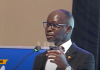
Presenting the findings, Chair of The Lancet Oncology Commission, Professor Rifat Atun, said investment in cancer services would also deliver substantial economic benefits.
“A comprehensive scale-up of treatment, imaging, and quality of care will deliver benefits of between $140 and $793 billion, a return of between four dollars and twenty dollars on every dollar invested,” Professor Atun said.
He noted that spending on cancer control contributed an estimated US$82.9 billion in gross value added across Commonwealth economies in 2022 through direct and indirect economic activities.
According to the Commission, improved cancer services would help reduce premature deaths, protect household incomes and support national productivity.
The report also introduces the Commonwealth Observatory for Health Systems and Cancer Control, a database containing approximately 800 variables covering health systems, cancer services, population trends, disease patterns and economic indicators.
The database is intended to help governments assess gaps in cancer care, compare national responses and develop policies informed by reliable information.
Jennifer Namgyal, Officer-in-Charge of the Social Development, Youth and Gender Division at the Commonwealth Secretariat, said cooperation among member countries would be important in addressing inequalities in cancer care.
“The Commonwealth’s strength lies in partnership and collective action. We bring member countries, experts and strategic partners together around shared priorities, connecting evidence, policy and implementation to support country-led solutions,” Namgyal said.
She added that the Commission’s findings demonstrated how research and cooperation could support stronger health systems and improve access to cancer services.
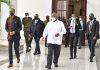
The launch was attended by researchers, medical professionals, government officials, civil society representatives and more than 14 First Ladies and spouses of Commonwealth Heads of Government.
Among those present was Cyril Laryea, spouse of Commonwealth Secretary-General Shirley Botchwey.
Participants called on First Ladies and spouses, many of whom are involved in cancer awareness and advocacy, to use their influence to promote early diagnosis, treatment and greater public understanding of the disease.
The opening session was chaired by Antigua and Barbuda’s Minister of Housing and Works, Maria Vanessa Bird-Browne.
During discussions, ministers, diplomats and health officials identified six priority areas for improving cancer control across Commonwealth countries.
These include expanding access to affordable cancer technologies, improving treatment services, accelerating research and innovation, involving patients in policy decisions, strengthening the cancer care workforce and improving national health information systems.
The Commission also called for comprehensive national cancer control plans supported by adequate financing and sustained political commitment.
It warned that progress would depend on governments working with medical institutions, researchers, civil society and development partners to improve the availability and quality of cancer services.
Preliminary findings from the Commission were presented at the inaugural Commonwealth Health Coordination Forum in Geneva on 16 May 2026.
The launch at CHOGM brings the findings before Commonwealth leaders as governments consider how to address rising cancer cases while strengthening healthcare systems and managing the economic costs of the disease.