
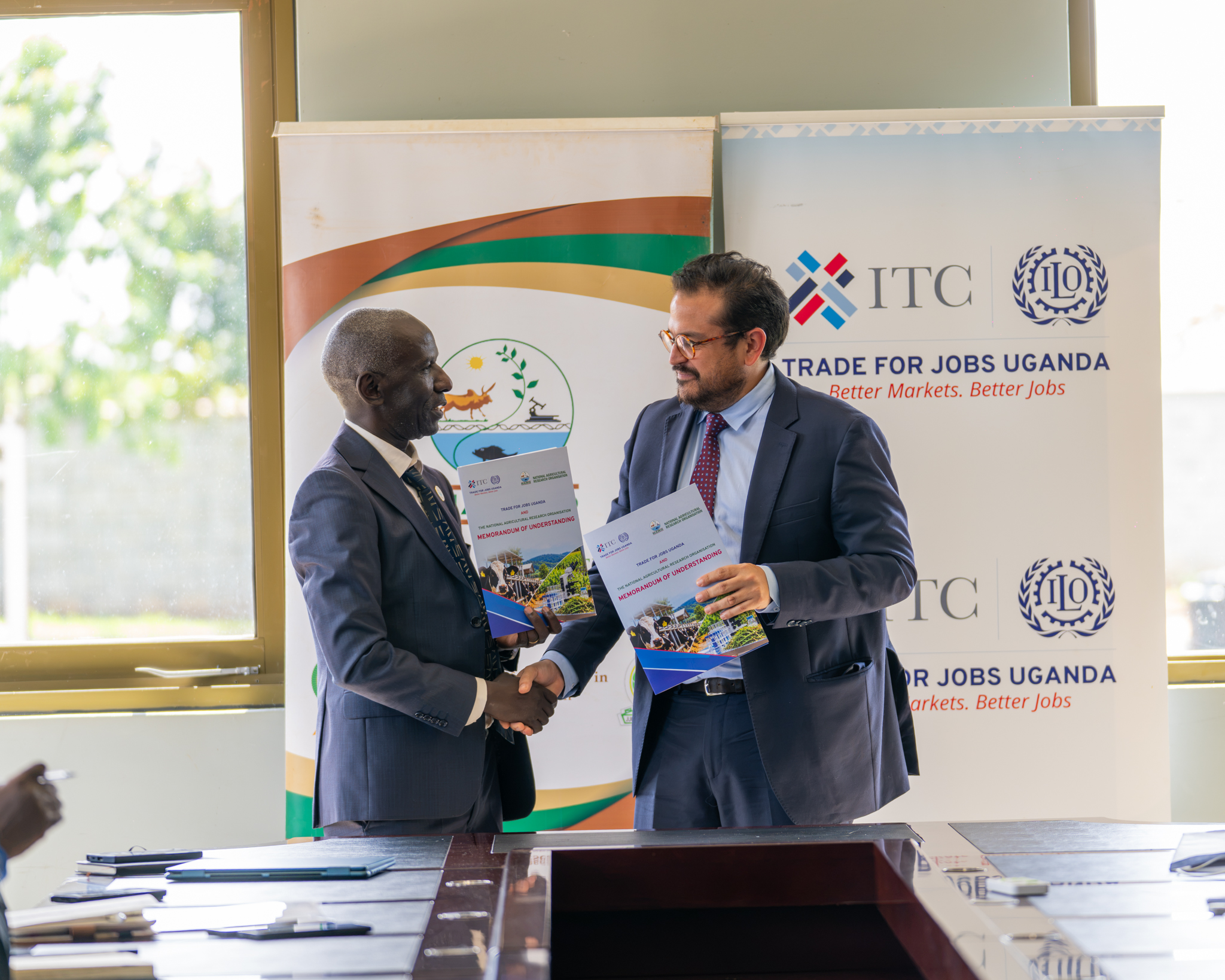
The partnership seeks to connect agricultural research with farmers, dairy processors and businesses to improve milk production, expand markets and create employment.
The National Agricultural Research Organisation (NARO) has signed a Memorandum of Understanding with Trade for Jobs Uganda to promote the adoption and commercialisation of agricultural technologies in Uganda’s growing dairy industry.
The agreement, signed on 2 November 2026 at NARO’s National Livestock Resources Research Institute (NaLIRRI) in Nakyesasa, Wakiso District, seeks to address the gap between agricultural research and the practical application of innovations by farmers and businesses.
Under the partnership, the two organisations will work with dairy processors, cooperatives, milk collection centres and agricultural input dealers to improve access to technologies that can increase productivity, reduce production costs and strengthen the competitiveness of Uganda’s dairy products.
The agreement comes amid continued growth in Uganda’s dairy industry, which has become an important source of household income, employment and export earnings.
According to figures from the Ministry of Agriculture, Animal Industry and Fisheries, Uganda’s annual milk production doubled from 2.7 billion litres in 2020 to 5.4 billion litres in 2024.
During the same period, the value of milk and dairy product exports increased from US$264.5 million in 2023 to US$285.4 million in 2024.
Despite the increase in production, access to improved technologies and their commercial application remains a challenge for some farmers and businesses operating within the dairy value chain.
NARO Director General Dr Yona Baguma said Uganda had invested considerably in agricultural research, but greater attention was needed to ensure that the technologies developed reached their intended users.
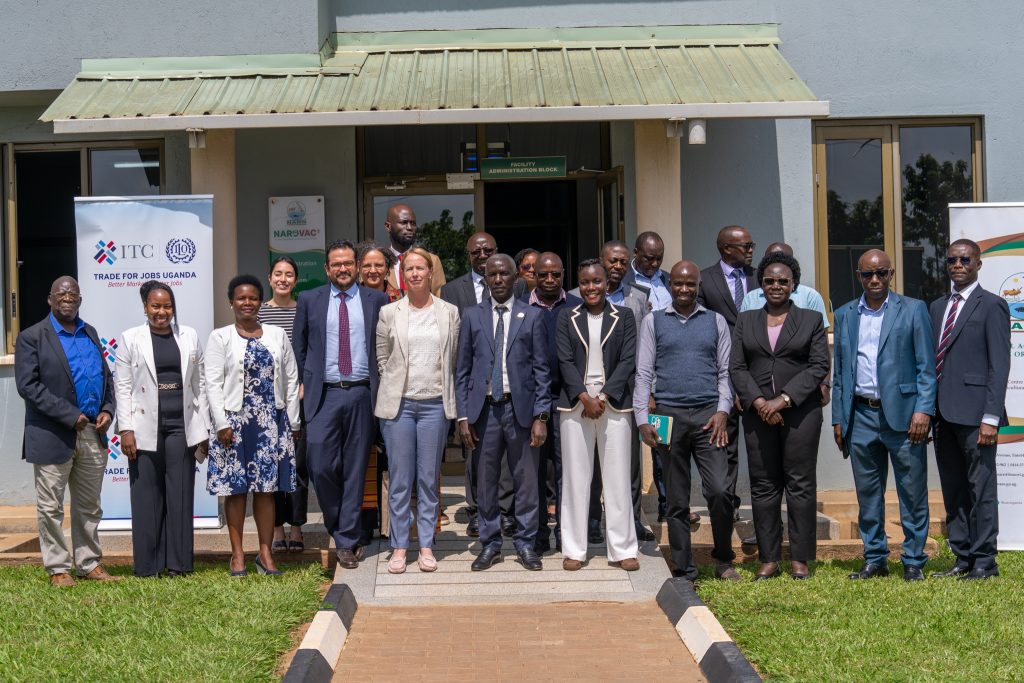
“Uganda has invested significantly in agricultural research and technology development. The opportunity now is to ensure that technologies generated through research reach farmers, businesses and other actors who can use them to improve productivity and incomes,” Baguma said.
He said the organisation was seeking to increase the practical contribution of its research to agricultural production, employment and household incomes.
“We must now move from being catalytic to being truly impactful. Uganda’s dairy subsector is transforming rapidly and presents tremendous opportunities for individuals and enterprises to secure sustainable livelihoods,” he added.
Baguma cited the NARO anti-tick vaccine among the technologies developed to address challenges affecting livestock production.
The vaccine, which is already being rolled out, is intended to support livestock health and productivity while creating additional economic opportunities along the livestock value chain.
Under the agreement, NARO will identify technologies suitable for wider adoption, provide technical expertise and facilitate access to research findings and information.
The organisation will also coordinate strategies for commercialising innovations in accordance with its existing policies and procedures.
Trade for Jobs Uganda will provide technical assistance to develop, test and expand approaches that enable farmers and private businesses to access and use agricultural technologies.
The collaboration will also focus on strengthening links between research institutions and commercial operators to ensure that technologies respond to actual market needs.
A major component of the partnership involves developing business models through which private-sector companies can participate in technology distribution and adoption.
The two organisations will also strengthen data collection, knowledge sharing and stakeholder engagement to assess the effectiveness of the interventions.
Fernando Martinez Cure, Chief Technical Advisor at Trade for Jobs Uganda, said the agreement would bring together agricultural research expertise and experience in employment creation and market development.
“This partnership brings together two complementary strengths: NARO’s expertise in agricultural research and technology development and Trade for Jobs Uganda’s expertise in decent work, market systems and inclusive economic growth,” Martinez Cure said.
He added that the collaboration would help translate research findings into practical applications that support businesses and improve livelihoods.
The agreement follows a sector assessment by Trade for Jobs Uganda that identified dairy and tourism as industries with considerable potential to expand trade and employment.
The project seeks to address barriers affecting business growth and access to markets, with particular attention to women, young people and people living in poverty.
The partnership will also support NARO in developing approaches to technology transfer that can continue operating through public institutions and commercial channels.
Both organisations will hold periodic review meetings to assess implementation, identify challenges and consider adjustments to their activities.