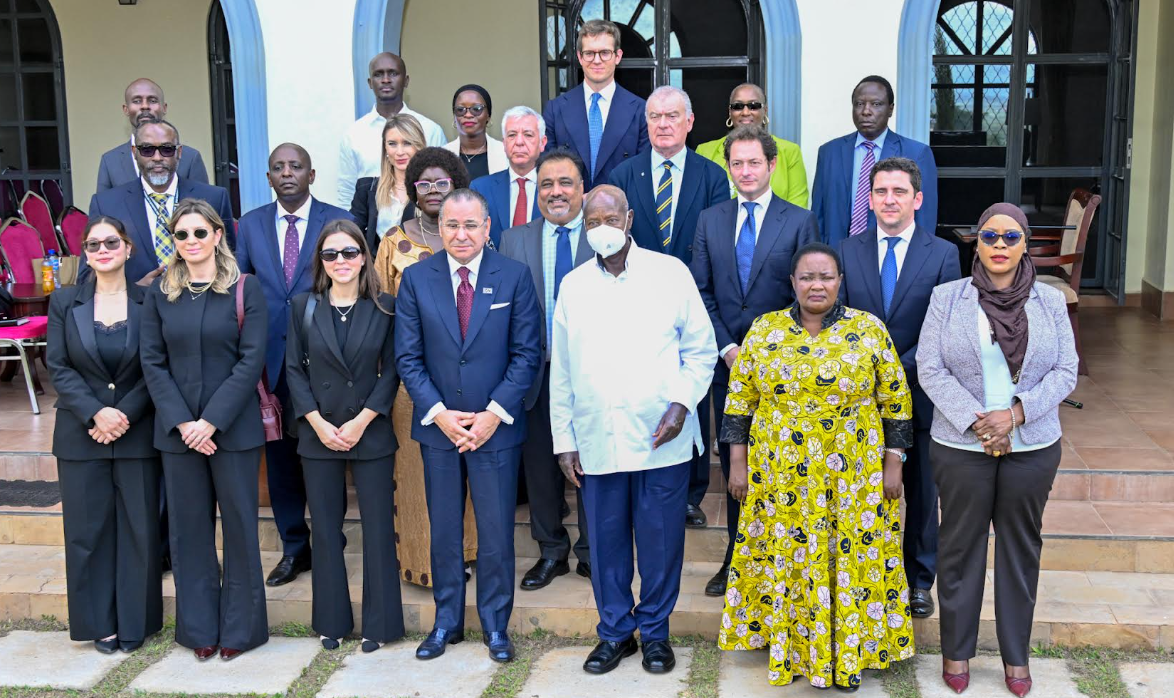
President Yoweri Kaguta Museveni has urged Italian investors seeking business opportunities in Uganda to prioritise manufacturing, electricity generation and affordable transport infrastructure, saying these are critical to accelerating industrialisation and transforming the country’s economy.
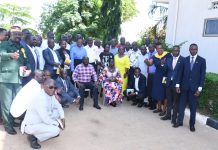
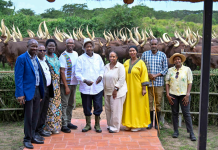
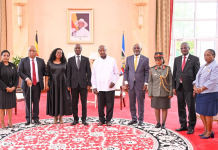
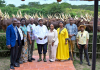
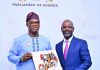
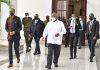
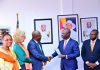
The President made the remarks today during a meeting with a delegation of Italian investors led by Kamel Ghribi, Chairman of GKSD Group, at his Kisozi farm, Gomba District.
The meeting focused on attracting foreign direct investment into Uganda, particularly in manufacturing, infrastructure, healthcare and value addition.
President Museveni emphasised that Uganda’s immediate economic priorities should be addressing the high costs of electricity, transportation and financing, which he identified as major obstacles to industrial growth.
“So, before the hospitals, I want factories and power stations,” the President told the delegation.
He noted that Uganda had for years struggled to add value to its agricultural produce, including coffee, fruits, milk and bananas, resulting in the export of largely unprocessed commodities.
“We have been struggling for a long time to add value to items like coffee, fruits, milk, bananas, among others, especially in the agricultural sector. As you are aware, I banned the export of unprocessed raw materials and minerals from Uganda,” he said.
The President said the country must shift from exporting raw materials to establishing industries capable of producing finished goods for both domestic consumption and international markets.
He also identified high transportation costs as a major challenge to Uganda’s competitiveness, particularly given its landlocked position and dependence on regional transport corridors to access seaports.
“We are 1,000 miles from the ocean. So we need cheap transport, rail transport, cheap electricity and cheap credit for manufacturing and services,” President Museveni said.
On railway infrastructure, the President cautioned against adopting expensive systems that could increase the cost of doing business and make locally manufactured products less competitive.
“For the railway, we have a number of offers, as long as we remember that the railway should not be very expensive because we want transport to the ocean to be cheap,” he added.
President Museveni further distinguished between businesses that can withstand high borrowing costs and strategic sectors such as manufacturing and tourism, which require affordable financing and operating costs to remain competitive.
“I don’t mind about traders who get expensive loans to import perfumes from China. I have no problem. They will afford to pay back. But for manufacturing and some of the services like tourism, we need low-cost electricity and low-cost transportation of cargo,” he said.
The President also singled out lithium as a strategic mineral Uganda should exploit to develop a domestic battery manufacturing industry, supporting the country’s emerging electric vehicle sector.
“With the minerals, the one I want most is lithium. I want to start making batteries to support electric cars that we are manufacturing here in Uganda,” President Museveni said.
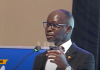
Mr. Ghribi pledged to work with the Ugandan Government to translate the President’s economic vision into practical investments, particularly in industries that would add value to the country’s agricultural and mineral resources.
“We are going to work. You guide us. We are going to work with your Government and your team to put into practice what you are saying. I am a very concrete person,” Mr. Ghribi told the President.
He said GKSD Group has business interests in several countries, including Italy, Libya and Tunisia, and is interested in expanding its investments in Uganda.
Mr. Ghribi also highlighted the group’s interests in real estate, infrastructure and healthcare, revealing that it operates two hospitals in Libya. He cited his business and political engagements in Egypt, Libya and other countries as part of his international experience.
He agreed with President Museveni on the importance of affordable energy in driving industrialisation and value addition.
“I agree with you about transforming other products in the country. We get cheap energy because, with cheap energy, you create added value for produce and more manufacturing,” he said.
On agricultural value addition, Mr. Ghribi specifically highlighted coffee, saying processing the commodity within Uganda would create more economic opportunities, strengthen local industries and attract further investment.
He reaffirmed his commitment to coming to Uganda and supporting President Museveni’s vision of transforming the country’s economy through manufacturing and value addition.
Prime Minister, Rt. Hon. Robinah Nabbanja, who also attended the meeting, said her relationship with Mr. Ghribi dates back to 2023, when President Museveni authorised her to represent him at an event in Rome, Italy.
She explained that the President personally prepared the speech she delivered at the function, which focused on agricultural production and diversification, including fish and beef, as part of efforts to strengthen Africa’s food production capacity.
According to Rt. Hon. Nabbanja, the address attracted Mr. Ghribi’s attention and laid the foundation for their subsequent engagements.
She added that Mr. Ghribi later invited her to another international event in New York, where she also interacted with Kenyan President William Ruto.
The meeting was also attended by the Minister of Trade, Industry and Cooperatives, Hon. Sanjay Tanna; the Minister of State for Investment and Privatisation, Hon. Amina Mukalazi, among other government officials.