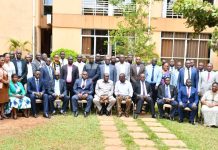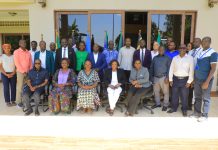
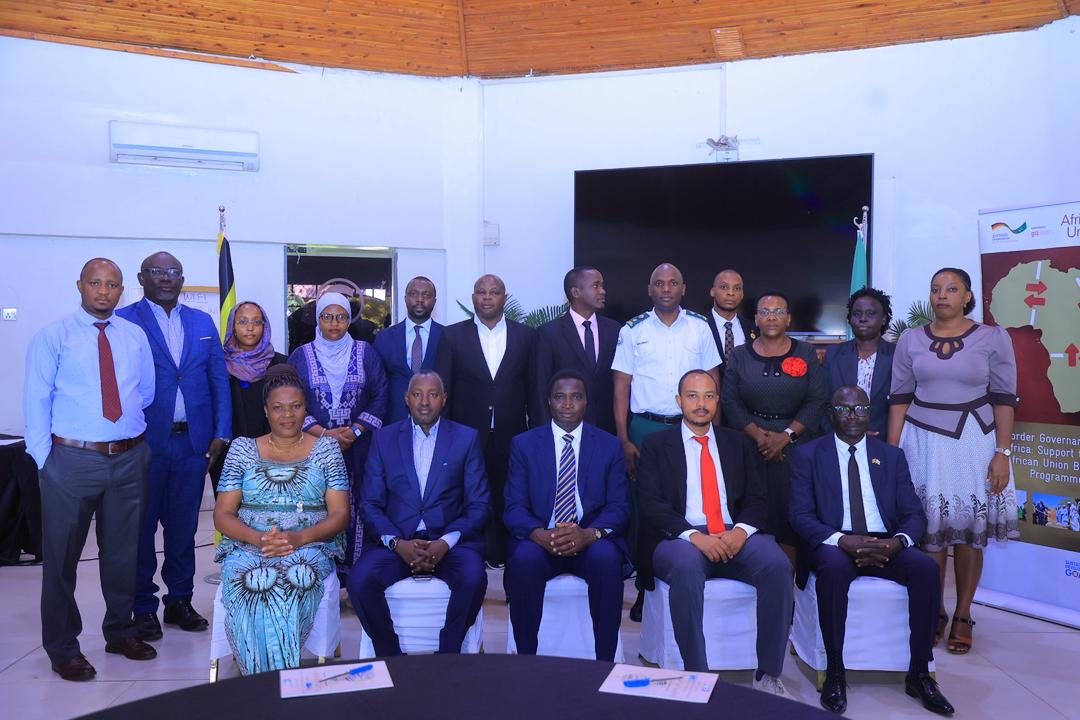
A consultative meeting on the ratification of the Niamey Convention has taken place at Fairway Hotel, Kampala, from 2-3 December 2025, bringing together key stakeholders from government ministries, regional bodies, and development partners to advance Uganda’s commitment to improved border governance and cross-border cooperation.
Adopted in 2014, the Niamey Convention aims to transform African borders from historical barriers into avenues of cooperation and development. It provides a legal framework for African Union Member States to resolve border issues peacefully, promote socio-economic growth, and strengthen cross-border collaboration. Its core objectives include promoting cross-border cooperation, transforming border areas, facilitating delimitation and demarcation, enabling peaceful dispute resolution, improving border governance, and advancing peace and stability across the continent.
The Convention prioritizes several key areas: socio-economic development, security, border management, institutional strengthening, and cultural and sports cooperation.
Delivering his opening remarks , Mr. Abraham Pekelye, the GIZ representative to the African Union Border Programme (AUBP) on behalf of the programme’s Regional Coordinator, reflected on GIZ’s long-standing support to border governance initiatives. “Since 2008, GIZ support to the African Union Border Programme has focused on working closely with the African Union, the Regional Economic Communities, and Member States to enhance border governance across the continent,” he said.
Mr. Pekelye further highlighted that the sensitization and consultation workshops on the African Union Border Governance Strategy held in October 2023 for EAC Member States and in May 2024 for IGAD Member States, both in Uganda, demonstrated strong regional commitment to integration and frameworks that nurture cooperation. He shared that GIZ remains fully committed to supporting the African Union and its Member States in realizing the objectives of the AUBP.
Representing the Permanent Secretary of the Ministry of Foreign Affairs(MoFA), Ambassador John Leonard Mugerwadelivered remarks emphasizing the importance of cross-border cooperation and Uganda’s readiness to move toward ratification and alignment with continental border governance frameworks. Hepresented aspects of the constitutional framework, legal procedures, and practical steps involved in transforming international instruments into domestic law within Uganda’s legal system.
He further highlighted Uganda’s treaty-making framework and how it underscores the need for transparency and clear institutional responsibility, a principle reflected in the conclusion that all treaties ratified by the cabinet must be promptly presented to parliament, with the Minister of Foreign Affairs responsible for signing, sealing, depositing, and serving as the official depository for all treaties.
In her presentation, Dr. Edith Nsubuga, acting head of regional peace and security department at the Ministry of Foreign Affairs, explained in depth, Uganda’s border evolution, border dynamics, and the potential of borders as bridges for cooperation and development. She highlighted the linkage between the Niamey Convention, the AU’s Agenda 2063 (The Africa We Want), and Uganda’s National Development Plan IV (NDP IV). She also emphasized the Convention’s alignment with Uganda’s foreign policy and its contribution to regional peace and security. “Its importance lies in two main dimensions. First is the legal mandate, which shifts the focus from simply demarcating borders to jointly managing them. Secondly, it aligns with Agenda 2063, which envisions a peaceful and integrated Africa with seamless borders,” stated Namutebi.
Day two of the meeting featured an in-depth presentation by Ms. Allen Bucyana, a representative from the Ministry of Justice, on the steps for cabinet approval of the ratification of the convention and constitutional alignment, as well as how to align legal frameworks with these developments. Notably, a representative from Kenya’s Office of the Attorney General, Ms. Nelly Lodian, shared reflections on the experiences of the Kenyan ratification process, providing the audience with valuable insights.
The consultative process demonstrates that strong government cooperation, particularly among MDAs, regional bodies, and partners, is crucial for effective border governance. Notably, these discussions emphasized that treaty ratification must follow transparent legal processes, and borders should not be viewed as barriers but as opportunities for development, peace, and collaboration. The meeting also emphasized the importance of aligning national policies with continental frameworks, such as Agenda 2063, learning from regional frameworks, and demonstrating strong political will to advance integration and stability.