District leaders from across the Lango sub-region have expressed support for President Yoweri Kaguta Museveni’s 4-Acre Model after touring a demonstration farm established at the Lango Zonal Presidential Industrial Skilling Hub in Lira.
The visit, organised by State House, aimed to equip local leaders with practical knowledge on modern farming methods and encourage them to mobilise communities to adopt commercial agriculture as a pathway to increased household incomes and improved livelihoods.
The leaders toured the President’s 4-Acre Model demonstration farm, an integrated agricultural project established alongside the Presidential Industrial Skilling Hub to showcase profitable enterprises that can be replicated by smallholder farmers.
The initiative follows President Museveni’s directive that every Presidential Industrial Skilling Hub should establish a demonstration farm to complement vocational skills training and promote modern agriculture on small pieces of land.
The Presidential Industrial Skilling Hubs were established to provide vocational training to vulnerable and unemployed youth who missed out on formal education, enabling them to acquire practical skills, create jobs, and improve their livelihoods. The accompanying model farms are designed to demonstrate how families can generate wealth through organised agricultural enterprises.
At the Lango Zonal Presidential Industrial Skilling Hub, the demonstration farm features a range of enterprises, including coffee, bananas, fish farming, dairy cattle, and other income-generating activities based on the principles of the 4-Acre Model.
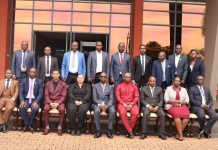
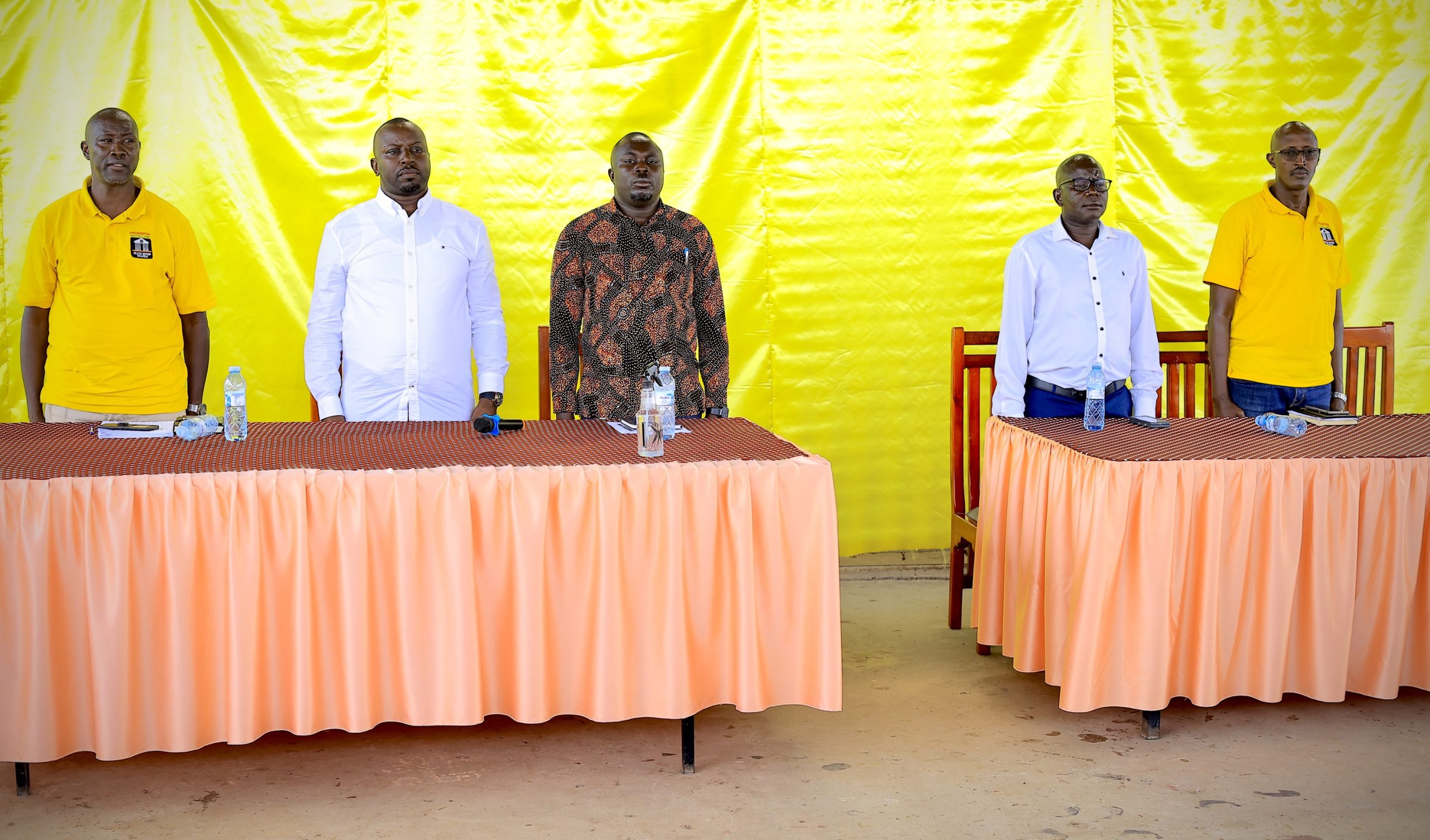
State House invited district chairpersons, Resident District Commissioners (RDCs), District Internal Security Officers (DISOs), commercial officers, youth leaders, women leaders, and other local government officials from across Lango to learn from the farm and promote the adoption of modern agricultural practices in their respective areas.
The delegation was guided through the various enterprises by Dr. Morris Ochen, Head of the President’s Farms, who explained the vision behind establishing the demonstration farms across the country.
Dr. Ochen said the President intentionally established the Lango demonstration farm to challenge misconceptions that certain high-value crops, particularly coffee and bananas, cannot thrive in the region.
He said the knowledge and practices demonstrated at the farm are freely available for communities to adopt.
“The President wanted the people of Lango to see for themselves that coffee and bananas can grow and perform well here when modern farming methods are applied,” Dr. Ochen said.
The visit changed the perceptions of several leaders, including Oyam District LC V Chairperson, Mr. Nelson Adea Akar, who admitted that he previously believed coffee and bananas could not succeed in Lango.
“I have always believed that coffee and bananas could not grow in Lango, but after seeing this farm, I have changed my mind. I have seen today that, given land and time, the President’s 4-Acre Model can make us rich. I will now go back and teach our people that these enterprises are possible and profitable,” Mr. Akar said.
Kwania District Commercial Officer, Ms. Catherine Akello commended the initiative, saying the demonstration farm had transformed leaders’ understanding of modern agriculture.
She noted that the district has previously brought farmers to the farm for learning visits, with many returning after being impressed by the possibilities of adopting similar enterprises.
Ms. Akello added that the experience inspired her to implement the same practices at her own home, where she has since become a model for other community members.
“This model farm has transformed the way we think about farming in Lango. It proves that with the right knowledge and management practices, farmers can diversify into enterprises that many believed were impossible in this region,” she said.
Meanwhile, Amolatar District LC V Chairperson, Mr. Morris Ogwal Omara praised President Museveni for establishing the demonstration farms but called for additional government support, particularly in irrigation infrastructure.
“We appreciate the President for this initiative, but farmers also need support with irrigation technologies because that is key to sustaining modern agriculture, especially during prolonged dry spells. Amolatar District is surrounded by water, but its potential has not been fully utilised for production due to limited irrigation schemes,” Mr. Ogwal said.
After touring the demonstration farm, the leaders visited the Lango Zonal Presidential Industrial Skilling Hub, where they inspected vocational training facilities and interacted with trainees.
Speaking after the tour, Eng. Raymond Kamugisha, Director of Presidential Projects and Industrial Hubs at State House, urged leaders to actively support the programme, describing it as a key intervention in addressing unemployment and poverty.
“I urge all leaders to support this programme because it is one of the most effective interventions for improving the livelihoods of vulnerable youth and transforming household incomes through skills development and modern agriculture,” Eng. Kamugisha said.
He added that combining vocational training with demonstration farming is intended to ensure communities acquire practical skills while embracing commercial agriculture as a means of wealth creation and socio-economic transformation.