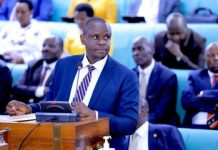
The Minister of Defence and Veteran Affairs, Kiryowa Kiwanuka, has called for stronger international partnerships and Africa-centred security cooperation to address the growing links between armed conflict, terrorism and organised crime.
Kiwanuka said lasting peace could not be achieved through military interventions alone, but required strong state institutions, economic development and cooperation among countries.
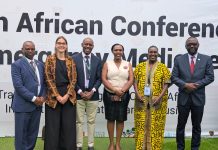
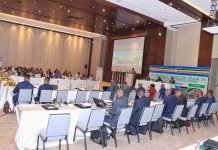
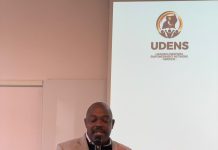
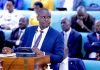
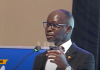
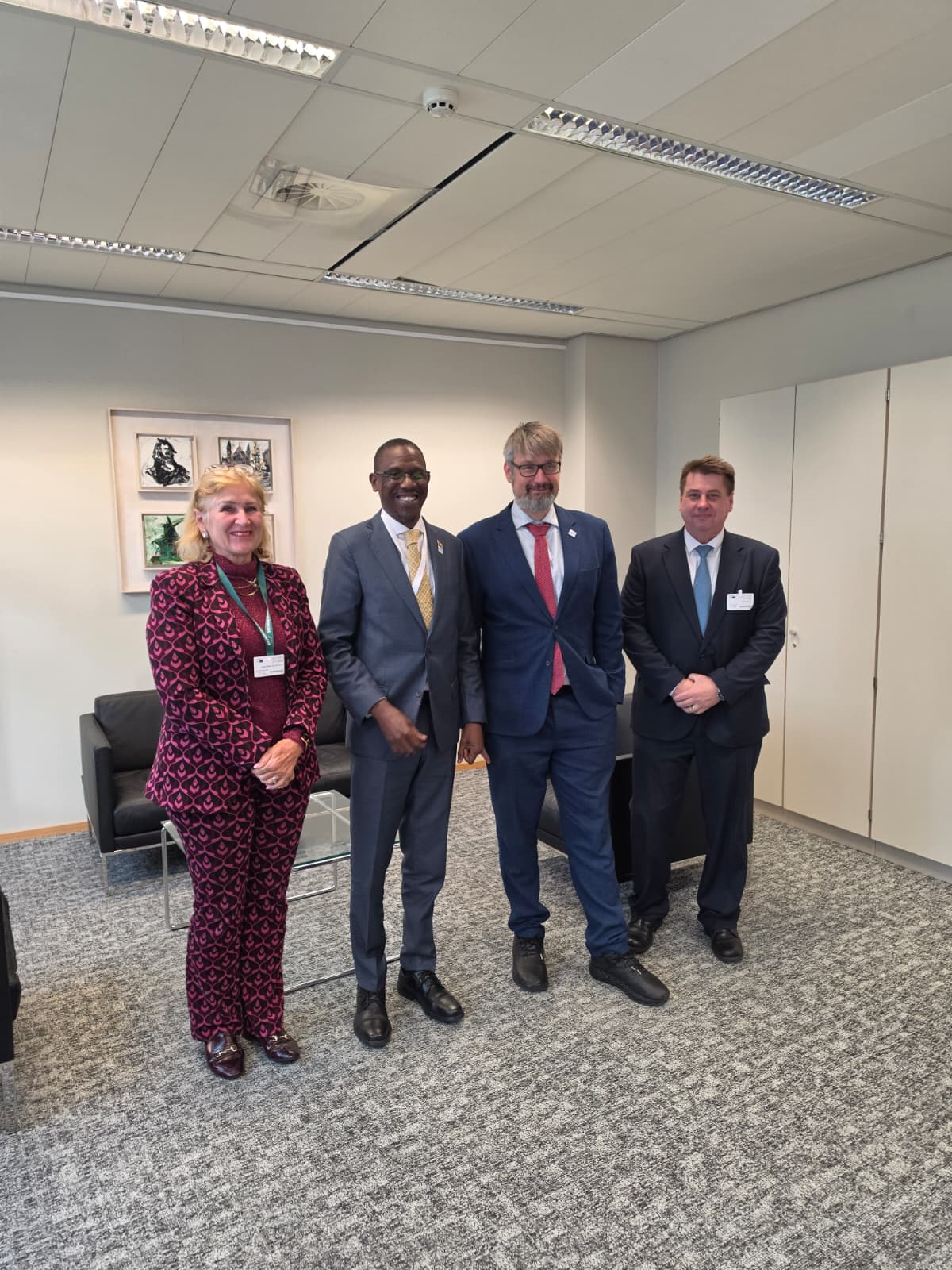
He made the remarks on November 18, 2026, during the European Union’s Schuman Security and Defence Forum 2026 in Brussels, Belgium, where he participated in a roundtable discussion titled “From Conflict to Terror: Understanding an Evolving Security Nexus.”
Drawing on Uganda’s experience with conflict and insurgencies over the past four decades, the minister observed that conflicts do not always end but can evolve into new forms of insecurity.
He cited the Lord’s Resistance Army (LRA) and the Allied Democratic Forces (ADF) as examples of rebel movements that developed into transnational security threats by adopting tactics, networks and narratives associated with international terrorism.
“The ADF today is an affiliate of the Islamic State. The LRA operated across Uganda, South Sudan, the Democratic Republic of Congo and the Central African Republic. This is no longer a national rebellion. It is a transnational nexus,” Kiwanuka said.
He attributed the growth of such threats partly to weak state institutions and governance challenges in neighbouring countries, including Sudan, South Sudan, the Democratic Republic of Congo and Somalia.
According to the minister, gaps in public services, employment opportunities and security institutions create conditions that can be exploited by terrorist groups, human traffickers, illegal miners and disinformation networks.
Kiwanuka also highlighted Uganda’s role in regional stability, noting that the country hosts more than 2.1 million refugees, making it Africa’s largest refugee-hosting country.
He pointed to Uganda’s contribution to peace operations in Somalia, where it became the first country to deploy troops under the African Union Mission in Somalia (AMISOM) in 2007. Uganda subsequently maintained its presence through the African Union Transition Mission in Somalia (ATMIS) and the African Union Support and Stabilization Mission in Somalia (AUSSOM).
He said Uganda’s nearly two decades of involvement in Somalia had demonstrated that conflict, terrorism and organised crime are interconnected and must be addressed through coordinated approaches.
On lessons from Uganda’s experience, Kiwanuka stressed the importance of public support, dialogue and addressing the root causes of insecurity.
“The population is the strategy. Our doctrine relies on the support of the people. War is never an end in itself,” he said.
He further called for investment in strong institutions, youth skills development, household wealth creation and public trust, arguing that military operations alone cannot eliminate terrorism and organised crime.
“You cannot bomb your way out of the nexus. You must build your way out,” he added.
The minister warned that unresolved civil conflicts could develop into terrorism, organised crime and cyber warfare, calling for comprehensive and long-term responses.
He also urged the international community to give Africa a central role in multilateral security arrangements, saying the continent should be recognised not only as a region facing security challenges but also as a source of solutions.
“A strong multilateral system is not a favour to Africa — it is a necessity for global security,” Kiwanuka said.
He called for sustainable partnerships between Africa and Europe based on trust, shared responsibility and long-term commitment, noting that no country could independently address the interconnected threats.
The third edition of the Schuman Security and Defence Forum brought together senior decision-makers from more than 85 partner countries and European Union member states, alongside EU representatives, international and regional organisations, think tanks and academics.