By Sarah Mawerere
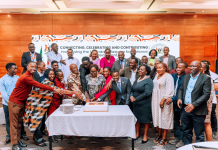
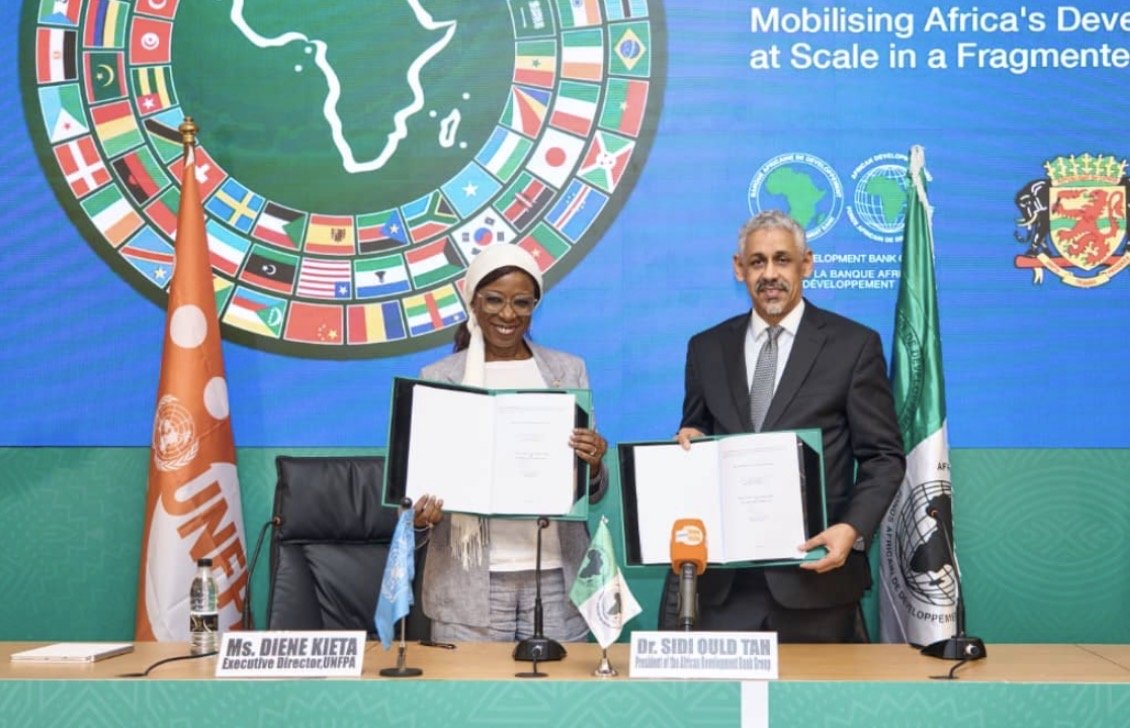
UNFPA (United Nations Population Fund, has signed a Memorandum of Understanding with the African Development Bank (AfDB), to position maternal health and demographic resilience as central pillars of Africa’s economic transformation.
Signed at the African Development Bank annual meeting this week, the agreement considers maternal health not only as a health issue, but as an investment in economic growth, productivity, resilience and human capital development.
It will further enable countries across Africa to harness their demographic dividend. This shift occurs during a nation’s transition from high to low birth and death rates, opening a temporary window of opportunity for increased productivity and savings
According to World Bank, a Demographic Dividend is the accelerated economic growth that occurs when a country’s working-age population (ages 15–64) outnumbers its dependent population (children and the elderly). This shift occurs during a nation’s transition from high to low birth and death rates, opening a temporary window of opportunity for increased productivity and savings.
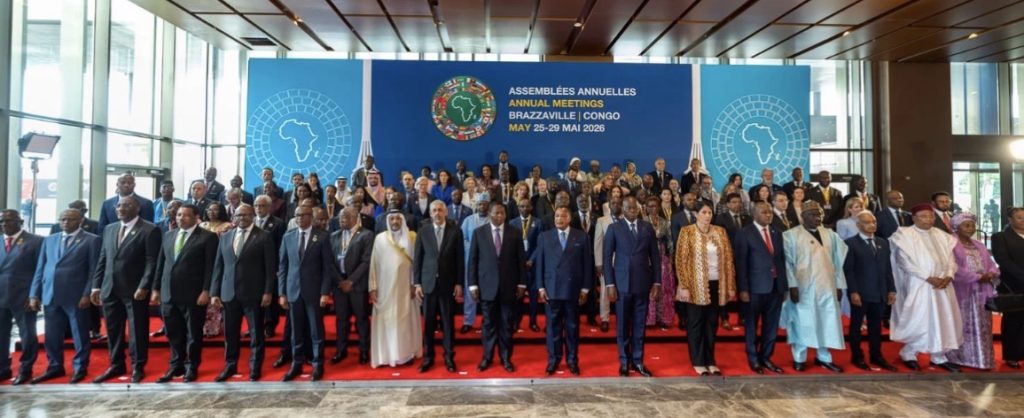
Africa has made huge progress in reducing maternal mortality, but still with challenges of unequal access to quality health services, and financing gaps.
Executive Director-UNFPA Ms. Diene Keita noted that this renewed partnership, reflects the shared commitment to put maternal health and human capital development at the heart of Africa’s economic transformation agenda.
“Immense opportunity is within Africa if we make strategic investments in women and young people”. She said. “Economic progress for Africa is only possible if we prioritize women’s health and address one of the continent’s most pressing development challenges: preventable maternal deaths”. Ms. Keita further noted.
In his remarks, Bank President Ould Tah said for decades, the world looked to Asia as the primary engine of global growth; but today, “Africa is experiencing comparable growth.”
He said major transformation is underway across Africa, with a new generation of entrepreneurs building companies with continental, and increasingly global ambitions, and using digital tools to solve socio-economic problems.
However, African innovations tend to remain local or marginal, because the financial architecture surrounding the continent has not evolved to mobilise finance at the speed and scale required for the continent’s transformation, Dr. Ould Tah said.
UNFPA will work with the AfDB to ensure that demographic transition roadmaps sit at the heart of national financing strategies, ensuring that investments in health and rights are recognized as smart investments for Africa’s future.
As part of the partnership, UNFPA and the African Development Bank will explore innovative financing and implementation mechanisms to help countries unlock investment potential in women are the drivers of Africa’s growth.
Priorities include; investments to modernize the health workforce through digital training; strengthening, local procurement systems; upgrading climate-resilient health infrastructure; and supporting the digitization of health information systems, among others.
Experiencing this population shift is not an automatic guarantee of wealth. The economic boost only materializes if the country actively invests in key areas.
Since 1992, UNFPA and the AfDB have worked together to advance health systems and data-driven development across Africa. Just a few of the many achievements from this collaboration include:
● Modernization of population data in the Government of Côte d’Ivoire’s most recent census, enabling projections on fertility, mortality, migration and other key areas.
● Improved access to Emergency Obstetric and Newborn Care services across 11 health districts of Cameroon, bringing antenatal care coverage to 90% in targeted areas and bringing the modern contraceptive prevalence rate to far above the national average.
● Awareness raising and behavioral change activities linking water, sanitation and hygiene with reproductive health and gender across eight rural regions of
Madagascar.
● Integrating gender equality, sexual and reproductive health and protection considerations into climate adaptation planning across 10 countries of East and Southern Africa.
UNFPA, the United Nations Population Fund, is the sexual and reproductive health agency of the UN, working to uphold the rights and choices of women, girls and young people across more than 150 countries and territories. It reaches millions of women, girls and young people with essential health services, protection from violence, and with vital information about their bodies and rights. It also helps governments plan for changing population needs so people can thrive today and in the future, regardless of fertility trends.
Within the Framework of media, the African Media Network for the Promotion of Health and Environment (REMAPSEN)-a Pan-African network of journalists and media professionals dedicated to improving public health, environmental protection, and the well-being of women and children across Africa, in its media framework takes Centre stage to promote Africa development Agenda through partnerships.