By Samuel Ssenono
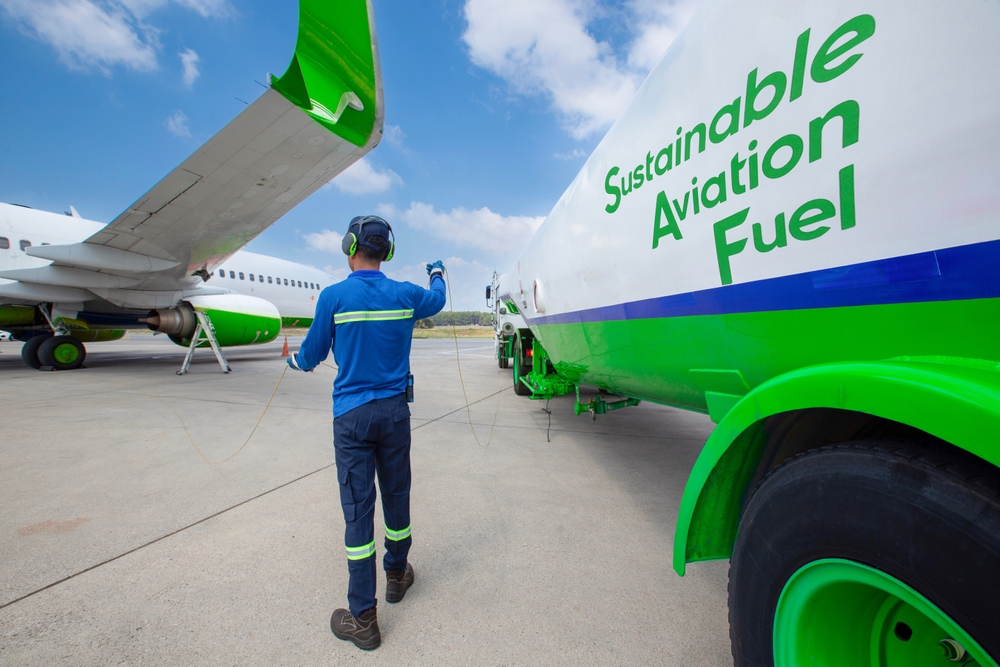
The International Air Transport Association has warned that global Sustainable Aviation Fuel production remains far below what airlines need to meet the industry’s net zero target by 2050.
IATA estimates that global SAF production will reach about 2.4 million tonnes in 2026. That will account for only 0.8% of total aviation fuel use, while costing airlines an estimated $4.3 billion.
IATA Director General Willie Walsh said the figures point to another weak year for SAF production, five years after the airline industry committed to reaching net zero emissions by 2050.
“It looks to be another disappointing year for SAF production. Five years after committing to achieve net zero by 2050, SAF production will only account for 0.8% of airline fuel use this year,” Walsh said.
He warned that the path to meeting 65% of aviation’s fuel needs through SAF by 2050 is becoming harder because of poorly sequenced government policies and limited interest from oil companies.
“The path to meeting 65% of our needs in 2050 is growing more difficult with each year of ineffectively sequenced government policies and oil companies’ manifest lack of interest,” he said.
Walsh said the current energy shock should have added urgency to the development of renewable energy, including SAF, but that urgency has not yet translated into the incentives required to build a viable market.
“The current energy shock should add even more urgency to the development of renewables, including SAF. But we have yet to see either the energy shock, the need to develop energy independence and jobs, or the urgency to mitigate climate change materialize in the incentives needed to create a viable SAF market,” Walsh added.
IATA says the scale-up of SAF requires coordinated action across four areas.
The first is the expansion of renewable energy supply to support SAF production and ensure enough feedstocks and clean energy are available.
The second is open access to fuel infrastructure, including pipelines, storage facilities and airport fuel systems, to allow fair competition and efficient distribution.
The third is stronger policy support, with production incentives and investment frameworks put in place before mandates are imposed. IATA says such sequencing would give investors certainty and reduce risk.
The fourth is the creation of a global SAF market with enough volumes at commercially viable prices. IATA says this is critical for airline financial and economic sustainability.
The association is also calling for a book-and-claim system to help move SAF from a local market to a global one. Such a system would allow airlines and SAF producers to access the market regardless of where they are based. IATA says a global SAF market must also be backed by harmonised standards, stable rules and fair competition.
The e-SAF Challenge
Alongside SAF produced from biofuel sources, IATA says electro-SAF, also known as e-SAF, will play a growing role in aviation’s decarbonisation.
E-SAF is produced through a power-to-liquid process that converts renewable electricity into fuel. Unlike biofuel-based SAF, it does not require biomass or waste oils. However, it needs large amounts of renewable electricity, green hydrogen, water and carbon dioxide.
The European Union and the United Kingdom have mandated e-SAF production of about 0.6 million tonnes by 2030.
But IATA says current global production capacity that is operating or under construction stands at only about 0.02 million tonnes. There is only one production site in operation.
According to IATA, achieving the mandated volume would require about 20 commercial-scale refineries. The association also says no new final investment decisions for e-SAF facilities have been made over the past year.
Marie Owens Thomsen, IATA’s Senior Vice President Sustainability and Chief Economist, said the 2030 e-SAF targets set by the UK and EU are not realistic under current market conditions.
“The 2030 e-SAF targets by the UK and the EU are beyond unrealistic – they are utterly detached from reality,” she said.
She warned that imposing mandates before production is enabled will only push up prices and divert money away from actual emissions reductions.
“It is a reckless energy market creation strategy to impose mandates before production is enabled. Such a strategy will only drive up the price. Coupled with penalties, it diverts scarce resources from being allocated to actual CO2 emissions reductions,” she said.
Owens Thomsen also questioned Europe’s approach, noting that the region already has the highest renewable energy prices in the world.
“The strategy is also bewildering given that Europe has the highest renewable energy prices in the world. A serious strategy would first scale renewable energy production to drive its price down and build the e-SAF production capacity on sound economics. Only at that point can mandates achieve the desired results,” she added.
Passengers Still Back Aviation Decarbonisation
IATA’s latest passenger survey, conducted in April 2026, shows strong support for efforts to decarbonise air transport.
According to the survey, 89% of passengers believe the aviation industry should continue cutting emissions even if governments scale back their own climate efforts.
A similar share of passengers also said flying remains essential and should be made sustainable, rather than restricted.
The survey also shows that passengers are willing to contribute to the transition. About 66% said they are willing to pay more to compensate for emissions, while nearly 88% expect ticket prices to rise because of sustainability investments.
Passengers also favour direct decarbonisation measures over taxes. About 25% said funds should be used for SAF, while 23% preferred investment in emissions-reduction technologies. Only 10% prioritised taxes.
Sustainability is also beginning to influence passenger choices. Nearly half of travellers, 48%, said they look at carbon emissions when choosing flights.
Among those who check emissions, more than 85% said the information affects their decision. Around three-quarters said they prefer airlines with stronger environmental performance.