By Samuel Ssenono
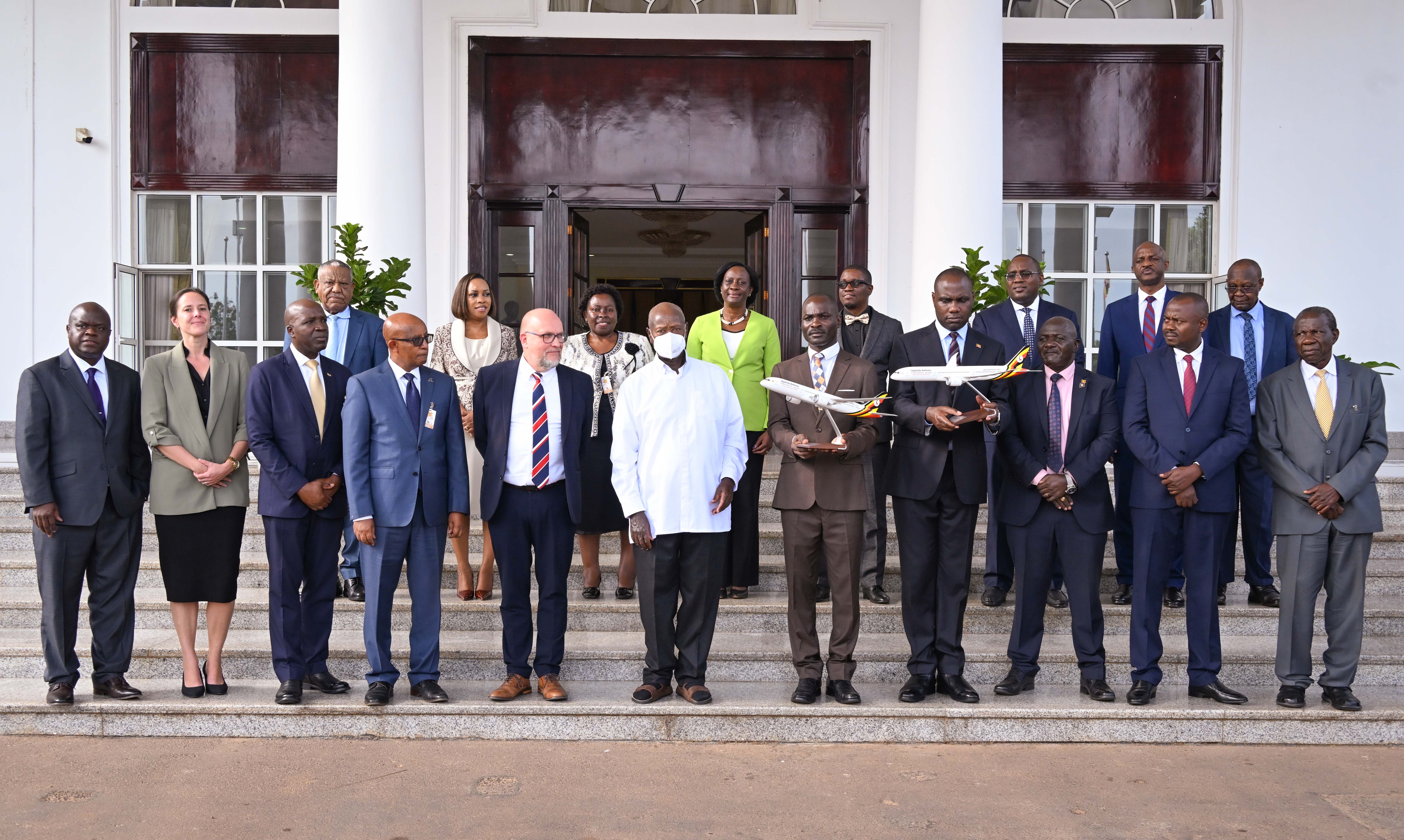
President Museveni has witnessed the signing of a Shs3.7 trillion aircraft acquisition agreement between Uganda Airlines and Boeing, in a fleet deal that points to a major change in the national carrier’s long-haul, regional and cargo operations.
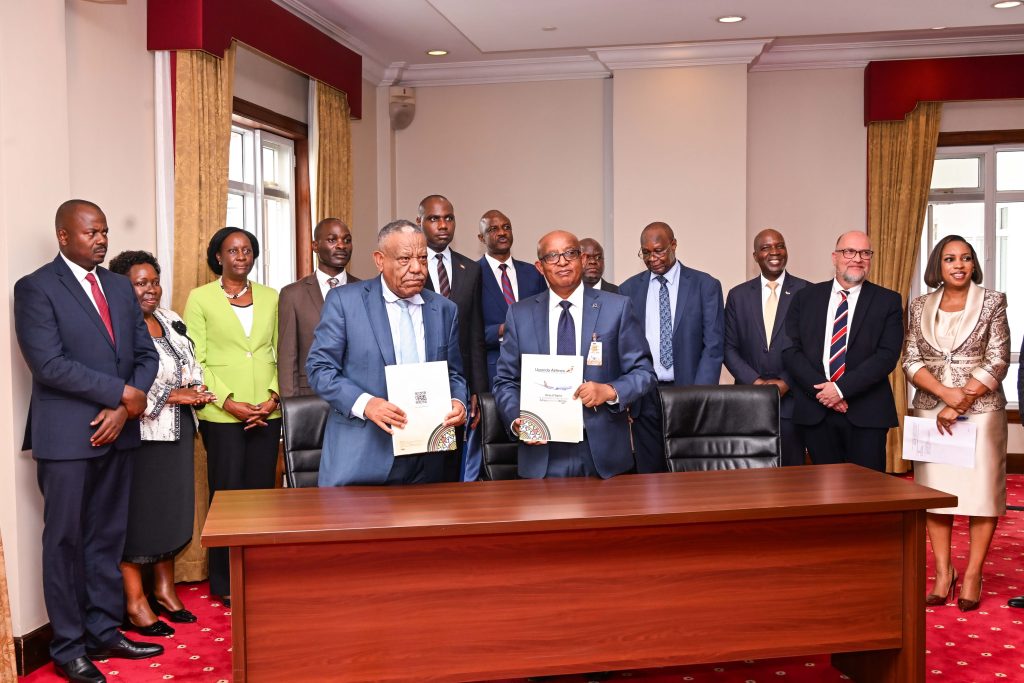
The agreement was signed at State House Entebbe by Uganda Airlines Acting Chief Executive Officer Girma Wake and Boeing Vice President of Sales for Africa, Anbessie Yitbarek, in the presence of senior government officials, Uganda Airlines board members and Boeing representatives.
Uganda Airlines is set to acquire 10 Boeing aircraft under the arrangement. These include four Boeing 787-9 Dreamliners, four Boeing 737 MAX 8 passenger aircraft, a Boeing 767 wide-body converted freighter, and a Boeing 737 Boeing Converted Freighter.
The order gives Uganda Airlines a wider fleet plan built around long-haul flying, medium-haul African routes and dedicated cargo operations out of Entebbe.
On the sidelines of the signing ceremony, Yitbarek said Boeing would support Uganda Airlines beyond aircraft supply, including technical expertise, training and capacity-building programmes.
According to reports, the support package is expected to cover pilot type-rating training, technical support, assistance towards equipping Soroti Flying School, and the development of aircraft maintenance capacity, including construction of an Approved Maintenance Organisation facility.
The possible support to Soroti Flying School is important because Uganda’s aviation expansion will require more than aircraft. A larger national carrier needs pilots, engineers, technicians, dispatchers and maintenance systems to support the aircraft once they enter service.
The Boeing agreement comes as Uganda Airlines continues to manage pressure on its wide-body fleet.
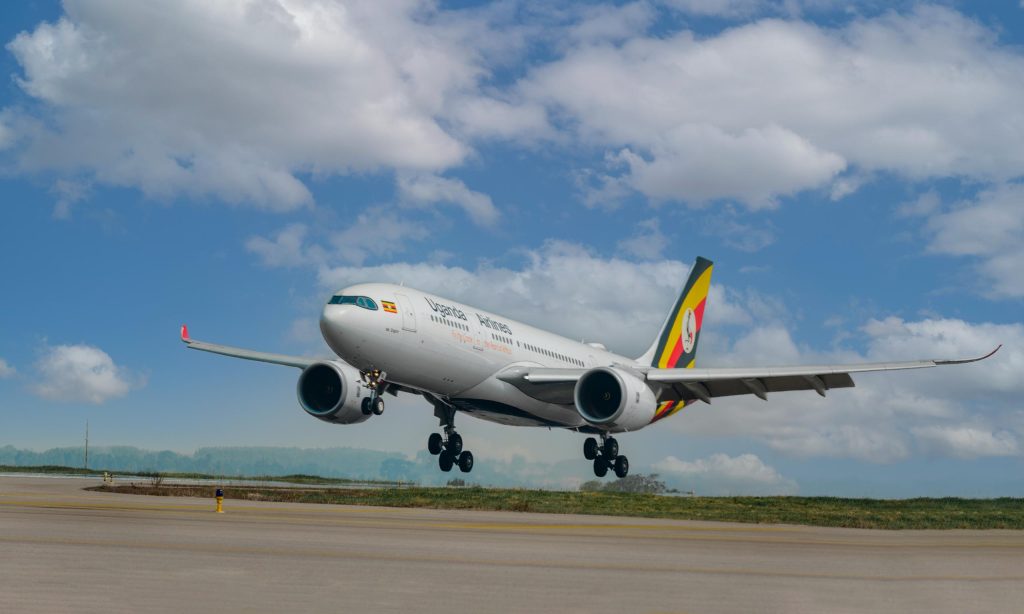
The airline entered long-haul operations with two Airbus A330-800neo aircraft, giving it the range to open intercontinental routes. However, both aircraft have faced technical issues in the past, testing the carrier’s schedule planning and exposing the limits of operating a small wide-body fleet.
One of the aircraft, 5X-CRN, remains grounded at Entebbe International Airport. The other, 5X-NIL, is currently carrying the long-haul programme, with available flight data showing it operating the Entebbe-London route and services to India.
That leaves Uganda Airlines heavily reliant on a single active wide-body aircraft for key international rotations.
The A330-800neo is a modern aircraft, but it remains one of the less widely used wide-body variants globally. For a young airline with only two of the type, that means a smaller operator base, limited spares depth and fewer options when specialist maintenance or engine support is required.
The aircraft are powered by Rolls-Royce Trent 7000 engines and are covered under a Rolls-Royce TotalCare agreement. TotalCare is designed to support engine maintenance over the life of the aircraft, often linked to flying hours.
The challenge for Uganda Airlines is that engine cover does not replace lost aircraft capacity. When one aircraft is on ground, the airline still has to deal with schedule gaps, route disruption, passenger reaccommodation, wet-lease costs and reduced long-haul flexibility.
This is where the Boeing 787-9 order becomes central to the carrier’s next phase.
With four Dreamliners planned, Uganda Airlines would gain more long-haul depth and reduce the pressure created by depending on two Airbus wide-bodies. The 787-9 would give the airline range, payload flexibility and a wider global support base for intercontinental operations.
The Boeing shift is already visible in the airline’s current operations. Uganda Airlines is set to receive two Boeing 737-800 aircraft on lease from Ethiopian Airlines, with one aircraft already having joined the fleet as the airline awaits the second.
For the network, the 737-800 gives Uganda Airlines more seats and better range than the CRJ900 on routes where demand has grown beyond regional jet capacity but does not yet justify a wide-body. It also helps the airline match aircraft size more closely to demand on key African and Middle East routes.
The cargo component is also significant.
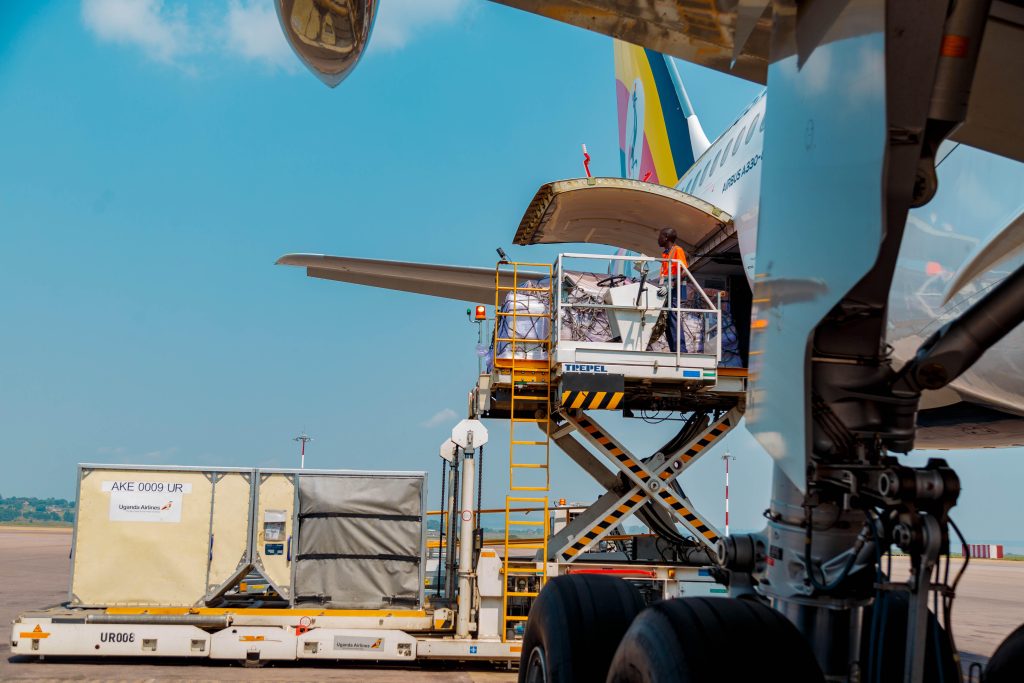
Uganda Airlines is set to acquire a Boeing 767 wide-body converted freighter and a Boeing 737 Boeing Converted Freighter, moving the carrier closer to dedicated freight operations instead of relying mainly on belly cargo.
For Uganda’s export market, dedicated freighters would support fresh produce, flowers, fish, pharmaceuticals and other time-sensitive goods that require reliable air cargo lift. The 767 freighter would serve longer-haul cargo markets, while the 737 freighter would support regional freight movement.
According to Uganda Airlines Cargo and Logistics Services Manager Maurice Ongwech, the carrier has been facing cargo capacity shortfalls, largely because of the limited belly-hold space on the CRJ900 regional jets.
Ongwech said Uganda Airlines began uplifting cargo in 2021 as part of efforts to support the export of Ugandan products at competitive rates. Since then, cargo volumes have grown in double digits, driven by demand for airlift of fresh produce, perishables and other time-sensitive exports.
He noted that the planned freighter acquisition would give the airline dedicated cargo capacity, allowing it to move beyond the limitations of passenger aircraft belly cargo and better serve Uganda’s export market.
Minister of Works and Transport Fred Byamukama said the aircraft acquisition fits within the wider government plan to strengthen Uganda’s aviation sector, expand Entebbe International Airport and complete Kabalega International Airport in Hoima.
Byamukama said the new fleet would improve Uganda’s direct air links, support tourism and trade, and reduce the country’s dependence on foreign transit hubs.
He also said government intends to grow domestic air services after stabilising international operations, with possible flights to Gulu, Kotido, Kidepo and Mbarara.
The minister credited President Museveni for pushing investments aimed at placing Uganda more firmly on the regional and international aviation map.
The ceremony was attended by Minister of Finance, Planning and Economic Development Henry Musasizi; former Works and Transport Minister Gen. Katumba Wamala; former Finance Minister Matia Kasaija; Permanent Secretary in the Ministry of Works and Transport Waiswa Bageya; and Permanent Secretary and Secretary to the Treasury Ramathan Ggoobi.
Uganda Airlines Board Chairperson Priscilla Mirembe Sseruka, Company Secretary Susan Batuuka and board members also attended, alongside Boeing Commercial Sales and Marketing Africa representative Herb Wallen and Chargé d’Affaires of the United States Embassy in Uganda, Mikael Cleverley.