By Sharon Kyomugisha
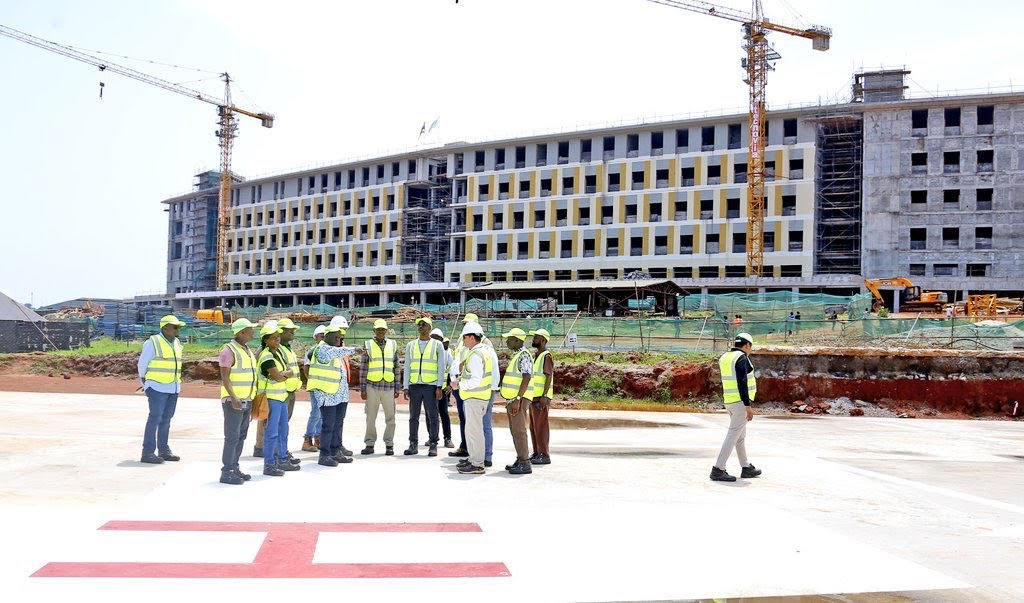
The International Specialised Hospital of Uganda at Lubowa is 75 percent complete and is expected to be finished in December 2027, according to the 2026/27 Budget Speech.
The project returns to the centre of the health budget at a time government is putting more money into specialised treatment, medicines, newborn care, diagnostic equipment and emergency response.
Finance Minister Henry Musasizi said the health sector will receive Shs5.23 trillion in the 2026/27 financial year. The money will go to maternal and child health, nutrition, immunisation, non-communicable diseases, essential medicines, specialised healthcare, emergency response and steps towards Universal Health Coverage.
Lubowa has been one of the most watched health projects in the country because of its cost, financing and delays. In this Budget, government presents it as part of the wider plan to reduce medical referrals abroad and build capacity for treatment that Ugandans have often sought outside the country.
The Budget also shows progress at the 250-bed Cardiac Hospital in Naguru, Kampala, which is now 44 percent complete. It is expected to be completed by June 2027.
Government says specialised care is already expanding. The Uganda Heart Institute carried out 634 cardiac interventions, including open-heart, closed-heart, vascular and catheterisation procedures. In April 2026, the Uganda Cancer Institute performed the country’s first bone marrow transplant.
Cancer services also received attention in the Budget. The first phase of the Nuclear Medicine PET Centre is 95 percent complete, with radiotherapy and advanced molecular imaging services. The second phase is 10 percent complete.
Regional cancer centres in Mbarara, Arua and Mbale are under construction, while the Gulu centre is fully operational.
For cancer patients, this is important. Treatment has for years been too concentrated in Kampala, forcing families from upcountry to spend heavily on transport, accommodation and repeated visits. Regional centres can reduce that burden if they are staffed, equipped and supplied.
Away from specialised hospitals, the Budget puts money into the basics of public healthcare.
Government increased funding for essential medicines and health supplies through the National Medical Stores by Shs145.33 billion, raising the NMS budget to Shs862.93 billion in the 2025/26 financial year.
The plan is to reduce dependence on donor support and keep key supplies available. These include ARVs, anti-malarial drugs, vaccines, immunisation supplies, laboratory commodities and anti-TB medicines.
This is where most Ugandans will judge the Budget. A patient in a health centre does not first ask about Lubowa or Naguru. They ask whether the medicine is there.
The Budget also points to more equipment in hospitals. Government says 17 Regional Referral Hospitals and 25 General Hospitals were equipped with Neonatal Intensive Care Units during the year.
These units are critical for premature babies, babies with breathing complications, infections, low birth weight and other early medical emergencies.
Another 14 Regional Referral Hospitals received CT scan machines. This should improve diagnosis of stroke, trauma, cancer, head injuries and internal complications, especially for patients outside Kampala.
The real test will be whether the machines work, whether specialists are available, and whether hospitals have the money to maintain them.
In Karamoja, construction and upgrading of 31 health facilities is ongoing. Government also completed high-capacity medical waste incinerators in Fort Portal, Gulu, Mbarara, KCCA and Lira. Busolwe, Gombe and Kawolo hospitals were also rehabilitated.
Karamoja remains one of the regions where health access, nutrition and referral systems need deeper investment. The facilities under upgrade will matter if they bring services closer to communities that still travel long distances for care.
On disease prevention, the Budget reports immunisation coverage for children under one year at 94 percent. First-dose measles-rubella coverage reached 93 percent.
Government also carried out campaigns against malaria, HIV/AIDS, Ebola, cholera and yellow fever, while promoting nutrition education for children, pregnant women, the elderly and other vulnerable groups.
The figures are strong, but coverage on paper must match delivery in districts. The hard part is keeping vaccines in stock, reaching remote areas and sustaining follow-up.
Digital health is also part of the plan. Government says it expanded the National e-Health Digital Infrastructure to support telemedicine, health information management, medicine tracking and monitoring of health worker performance.
If used well, medicine tracking can reduce theft and stock-outs. Telemedicine can help lower facilities consult specialists. Digital records can improve patient follow-up.
But the system will need reliable power, internet, trained staff and discipline in reporting.
Emergency care also gets space in the Budget. Government says it is strengthening the National Ambulance and Emergency Care System through deployment of additional ambulances.
That is a key line for mothers, accident victims and patients who need urgent referrals. But ambulances alone are not enough. They need fuel, drivers, medical crews, call centres, maintenance and clear referral routes.
The Budget therefore places health on two fronts.
At the top end, government is pushing Lubowa, Naguru, the Heart Institute, the Cancer Institute, the PET Centre and regional cancer centres.
At the frontline, it is putting money into medicines, newborn care, CT scans, immunisation, ambulances, digital systems and health facilities in underserved regions.
The Shs5.23 trillion allocation is large, but the public will measure it in simple terms: whether hospitals have drugs, whether babies survive, whether scans are available, whether ambulances respond, whether cancer patients get treatment closer to home, and whether Lubowa finally opens its doors.