
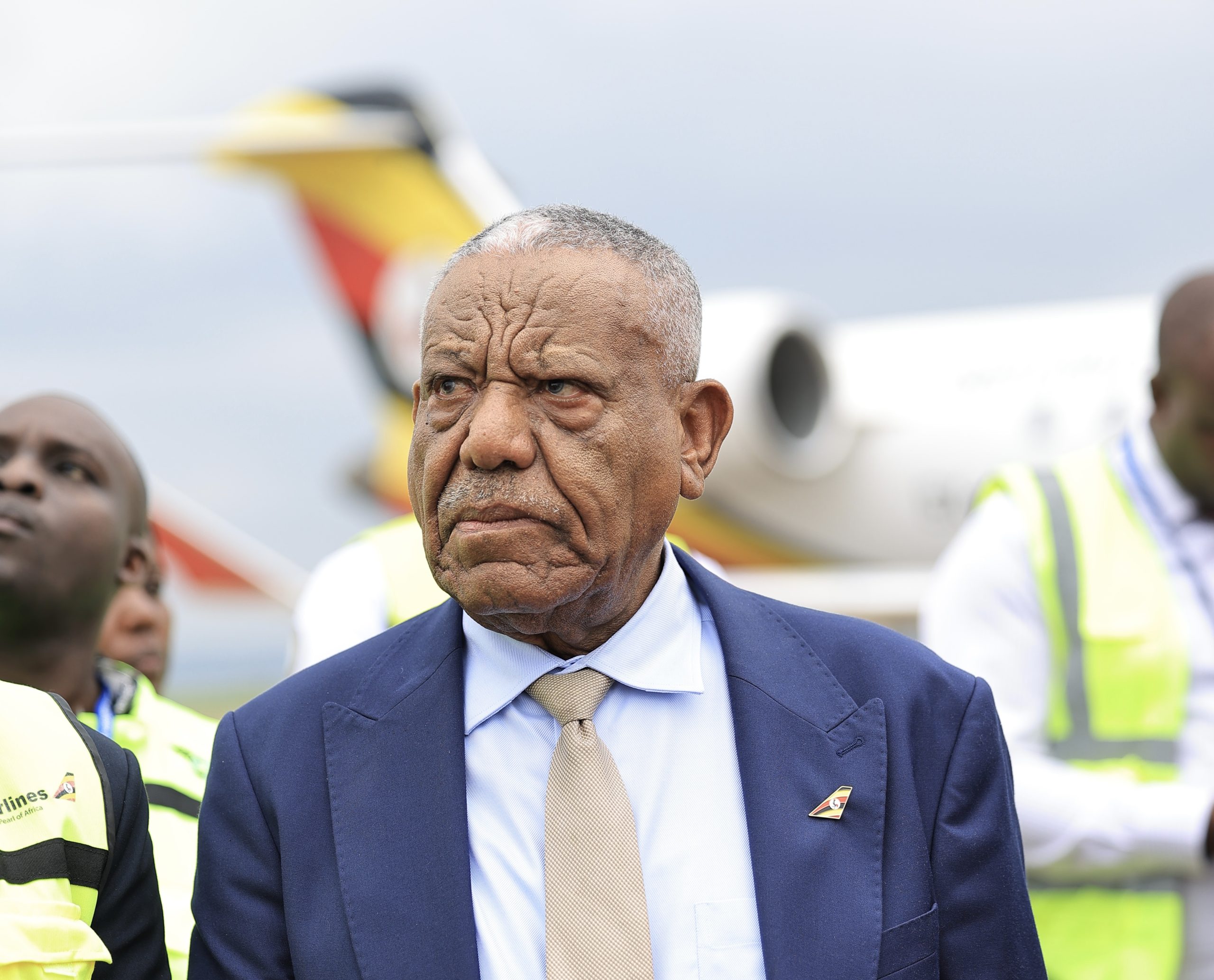
By Samuel Ssenono
Uganda Airlines is targeting annual revenue of between $400 million and $500 million by 2030, but restrictions linked to Uganda’s non-participation in the Single African Air Transport Market are limiting its ability to carry passengers between some foreign destinations.
Chief Executive Officer Girma Wake says Ghana has granted the airline fifth-freedom rights to carry passengers between Accra and Lagos. The carrier is, however, yet to use those rights because Nigeria has not approved the arrangement.
Speaking to UBC in Accra following the launch of commercial services to the Ghanaian capital, he said the airline was negotiating with Nigerian authorities while working with the Ugandan government to address the wider question of participation in the Single African Air Transport Market, or SAATM.
The restrictions come as Uganda Airlines seeks to increase passenger traffic by between 12 and 15 per cent annually, expand cargo operations and reach break-even by 2031 before moving into profitability.
Ghana’s approval awaits Nigeria’s agreement
Uganda Airlines initially serves Accra through Lagos, combining passengers from both West African markets on a four-times-weekly operation.
Ghana’s approval would allow the airline to sell tickets between Accra and Lagos as part of the service originating in Entebbe. These fifth-freedom rights require agreement from both countries before the airline can carry passengers on the sector.
“From Accra, they allowed us to carry passengers to Lagos or from Lagos to Accra. Accra has no problem. They granted us. Nigeria refused. Now we are negotiating with Nigerians,” Wake said.
According to the chief executive, Nigeria has cited Uganda’s non-participation in SAATM as a reason for withholding permission.
Until that approval is secured, the carrier cannot use Ghana’s authorisation to sell the regional sector.
A similar difficulty has affected efforts to carry passengers between Harare and Johannesburg. Zimbabwe agreed to the arrangement, but South Africa did not, he said.
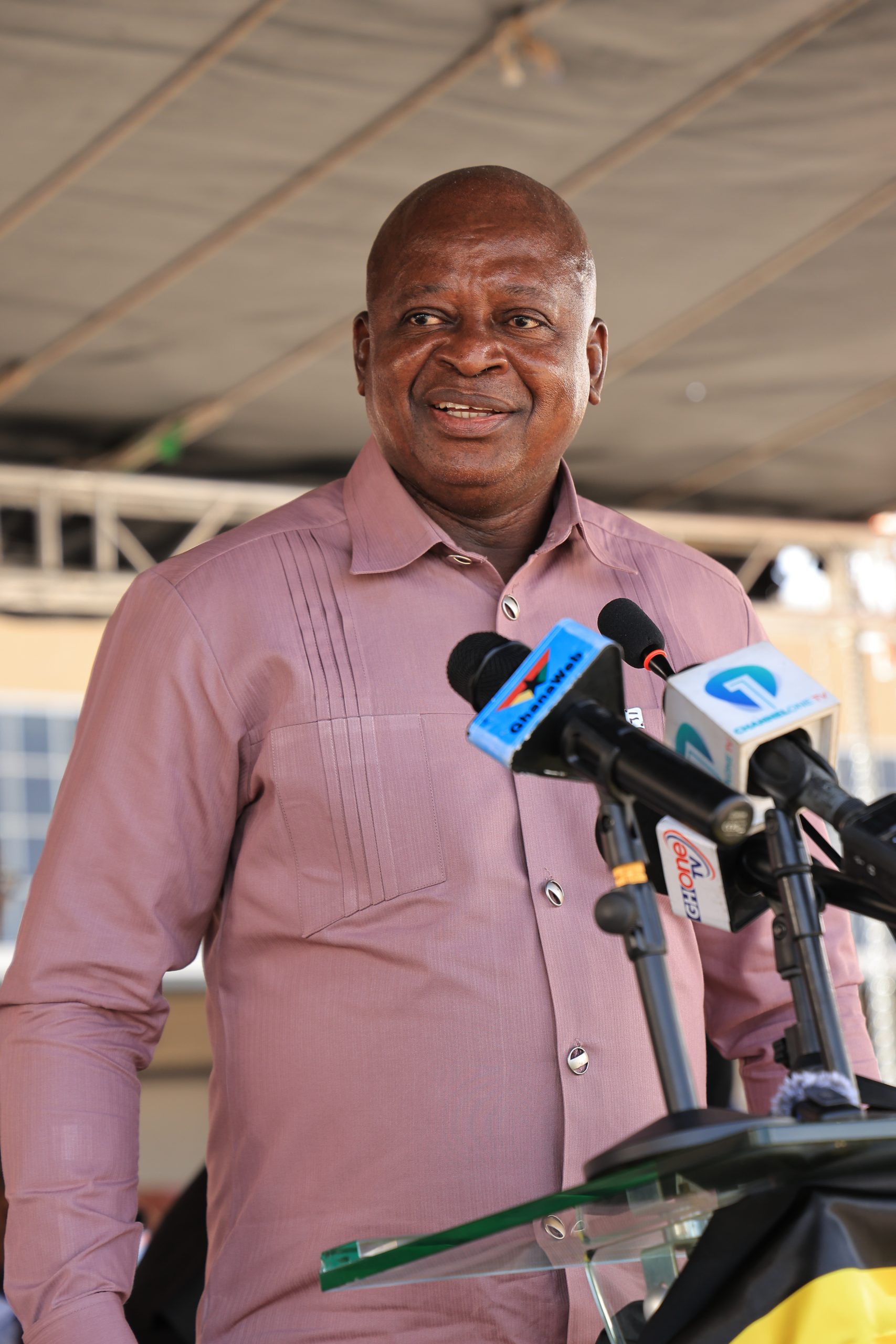
SAATM position becomes an obstacle to growth
SAATM seeks to liberalise air services among participating African countries, allowing airlines greater access to markets across the continent.
Uganda’s position outside the arrangement was intended to protect its national carrier, according to Wake. He argued, however, that this had not delivered the expected protection because Uganda had continued allowing other airlines access to its market.
“So that protection was artificial. It did not exist. But it is becoming a problem for Uganda airline now. It wants to grow because everybody says, since you are not a signatory, we will not give you,” he said.
The airline is working with the Ministry of Works and Transport, the Ministry of Finance and other government institutions to resolve the matter.
For management, obtaining these rights is part of making regional services commercially viable. It would allow the airline to attract passengers travelling between foreign cities, alongside those beginning or ending their journeys in Uganda.
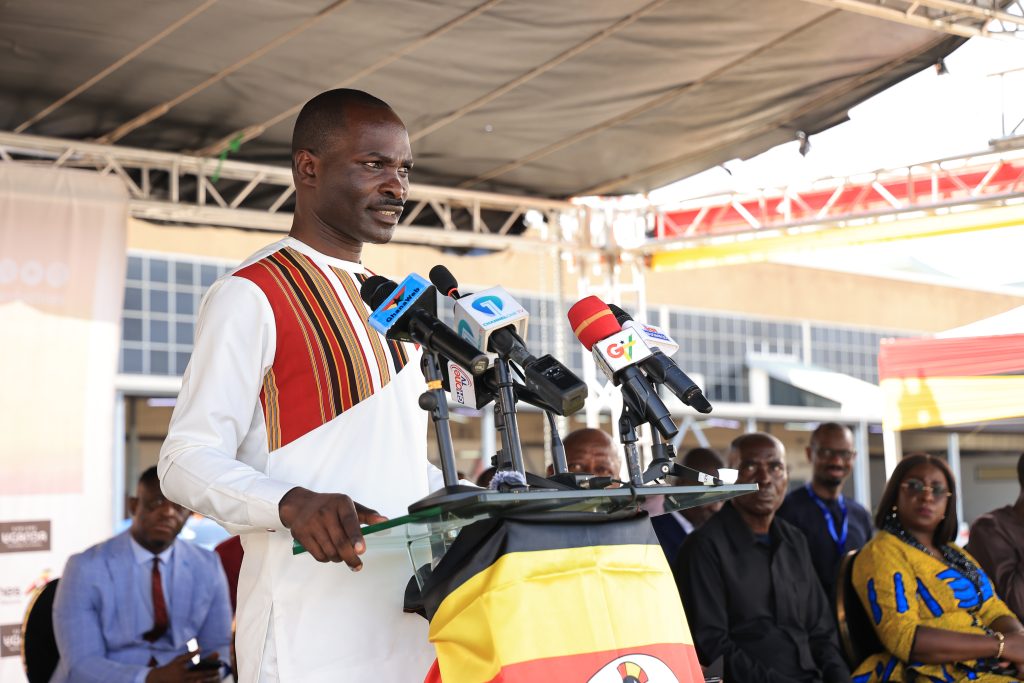
Accra and Lagos to build traffic together
The combined Lagos–Accra operation is intended to develop demand before Uganda Airlines commits separate aircraft capacity to each destination.
Lagos had taken time to grow, partly because the flight schedule did not provide suitable connections.
“But we said Lagos alone may take time, so let us connect it to Entebbe with Accra. So the flight comes Entebbe, Lagos, Accra and goes back Accra, Lagos, Entebbe,” he explained.
The arrangement is expected to continue for about a year to a year and a half, depending on demand. The intention is then to separate the routes and gradually increase frequencies towards daily services.
More frequent flights would give passengers greater flexibility over travel dates and onward connections.
Before separating the services, however, the airline needs more destinations beyond Entebbe to attract connecting traffic from both markets.
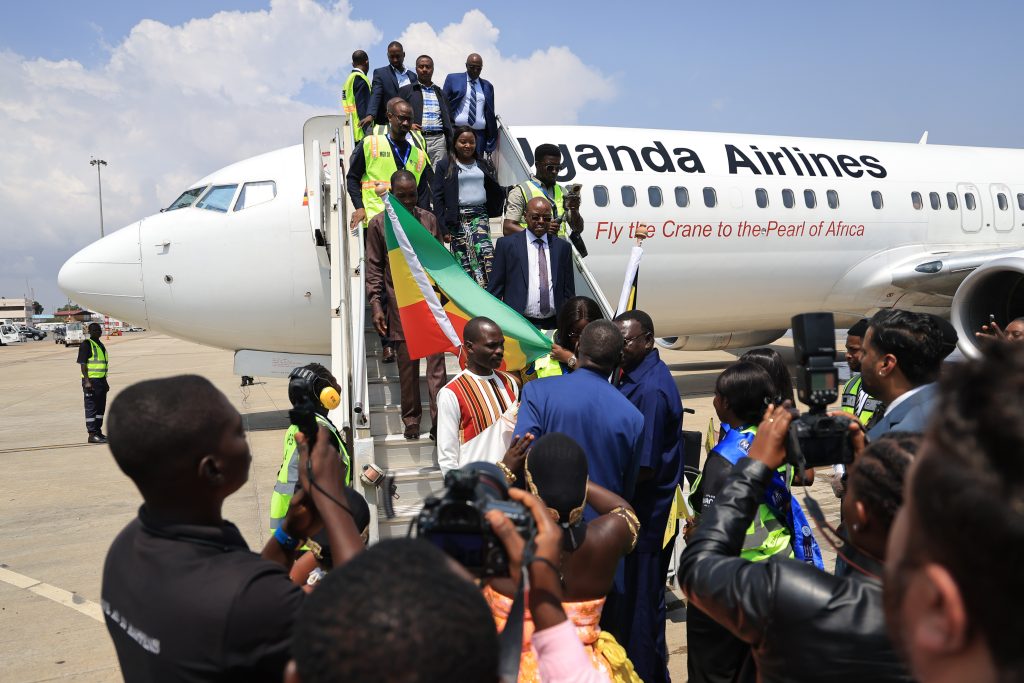
Regional connections to support long-haul routes
Additional destinations in East and Southern Africa are intended to feed passengers into the airline’s longer services.
Kigali is among the planned additions, while schedule changes linking Harare and Lusaka with London illustrate how existing routes can support one another.
The expansion approach would broadly pair three additional African destinations with one new destination outside the continent.
Shorter regional flights would help generate the passenger volumes needed to sustain more expensive long-haul operations.
A future China service, for example, would require sufficient connecting traffic from Africa and at least three widebody aircraft to support the operation.
Aircraft shortages limit immediate expansion
The network plans remain dependent on aircraft availability.
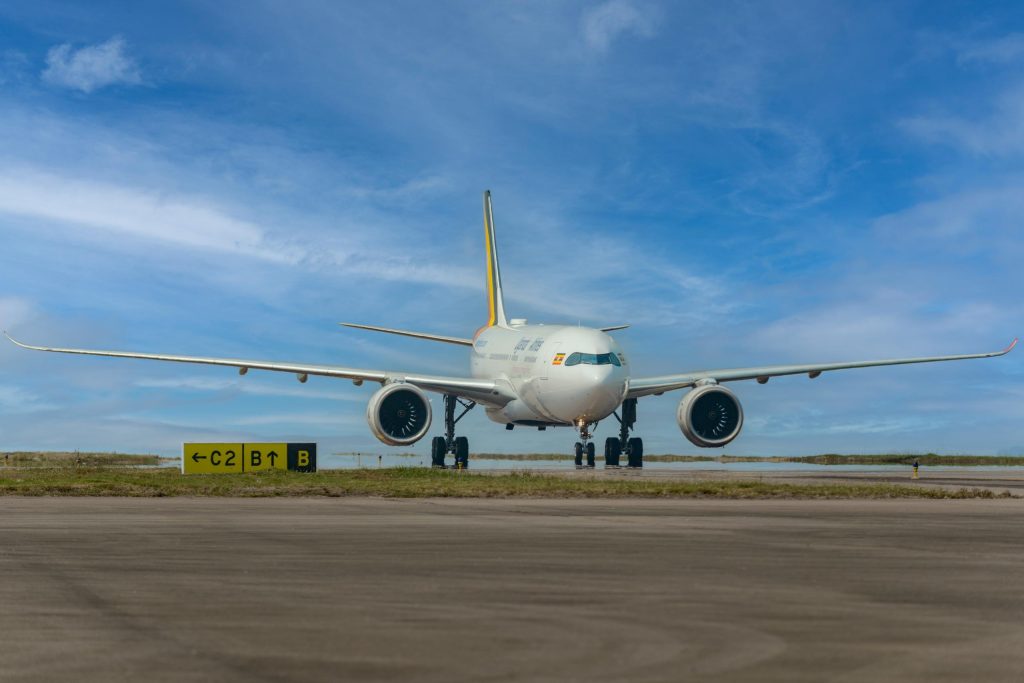
The Boeing 737 used for the Accra launch was on a lease due to run until November 10. Management intends to extend the arrangement until March because the airline’s own aircraft will not all be available before then.
Plans also include obtaining another leased aircraft from Europe in November.
“So we will extend that until March,” the chief executive said of the Boeing 737 arrangement. “By March, we should be able to have the A330, the second A330, flying. When that happens, we will see how to expand to more points. But at the moment, we are really, really limited in aircraft number.”
Revenue target and the path to break-even
The financial recovery plan combines passenger growth with cargo revenue, lower operating costs and additional aviation services.
“We hope to increase between 12 and 15% every year,” Wake said of passenger traffic.
Annual revenue is targeted to reach between $400 million and $500 million by 2030. The carrier then expects to reach break-even by 2031 and move into profitability thereafter.
Achieving that will require the airline to earn more from its network while reducing expenditure on services it could eventually provide itself.
Proposed investments include a passenger lounge, catering, ground handling and a maintenance hangar.
“We are depending on somebody else’s lounge. We don’t even have our own catering. We have to buy food from other people to put on our airplane,” he said.
For the airline, developing these capabilities over the next two to three years would reduce payments to external providers. The airline could also sell the services to other operators.
Cargo demand could support a dedicated freighter
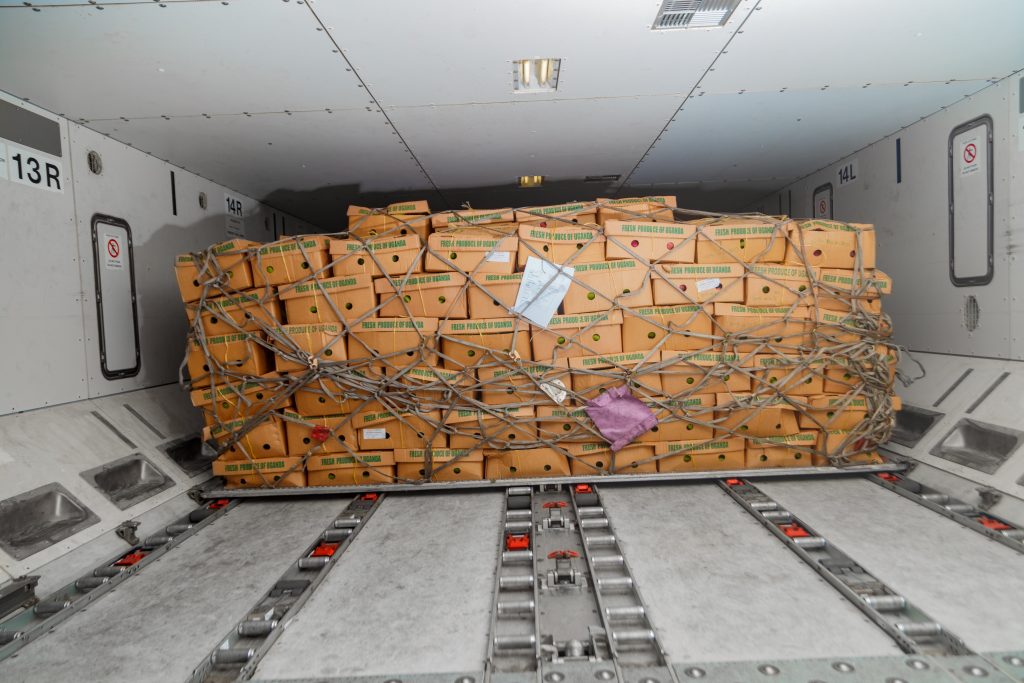
Agricultural exports are expected to play a larger role in the airline’s revenue.
The Lagos service is already carrying between two and three tonnes of dairy products and meat per flight. Developing demand in Ghana would provide another market for Ugandan producers.
“And at the moment Ghana also starts buying, from there we build the traffic, and in a year we believe we’ll have 15, 20 tonnes per day coming this way,” he said.
At those volumes, management expects to make a case for a dedicated freighter serving the West African corridor.
The London service is carrying between 17 and 20 tonnes of cargo per flight, while Dubai also provides a market for agricultural exports.
Supplier debts affected maintenance and access to parts
Outstanding payments have complicated the airline’s relationships with suppliers, including providers of aircraft parts and engine maintenance.
The chief executive distinguished these obligations from blocked funds, where an airline cannot repatriate money earned in a foreign market.
Uganda Airlines’ blocked-funds difficulty concerned Burundi, and that situation had improved, he said. Supplier debts were a separate problem.
“We did not pay our fuel money properly on time. We did not pay for aircraft spares. We did not pay for the engine,” he said.
Three engines were in Singapore for maintenance at the time of the interview. Earlier payment delays had made negotiations difficult, including in cases where outstanding money had subsequently been paid.
Government assistance, including support from the Ministry of Finance, has helped reduce obligations from roughly $70 million–$80 million to about $30 million.
Tourism to influence future destinations
Tourism demand will help determine where the airline expands beyond its existing network.
Germany and France were identified as potential source markets alongside the United Kingdom.
The carrier is also working with tourism stakeholders on onward air access from Entebbe to wildlife and historic areas, including discussions about airports serving those destinations.
The aim is to make it easier for international passengers to continue to attractions within Uganda, linking route development with the country’s tourism business.

Training Ugandan pilots and other personnel
The airline plans to recruit and train more Ugandan graduates as it builds the workforce needed for expansion.
For pilots, the approach includes gaining experience across aircraft types, progressing to larger aircraft as first officers and developing towards command positions.
The airline has also held discussions about assignments across the fleet, including a return to smaller aircraft where operational requirements demand it.
Wake said developing local personnel would reduce the risks associated with relying too heavily on staff from outside the country.
“Things are not always going to be good for any country. There are times when things go against you. When that happens, if you are depending on outsiders, the outsiders go, they leave you with an empty hand,” he said.
“It is good to develop your own people as much as possible.”