Kolwezi, DR Congo
A horn blasted and the old rails started to vibrate as a train laden with copper set off from Kolwezi in the Democratic Republic of Congo, bound for the distant port of Lobito in Angola.
The Lobito Corridor aims to develop the rail infrastructure to transport huge quantities of critical minerals extracted from the southern DRC and northern Zambia to Angola and onward by sea.
The megaproject is often pitched as the United States’ and Europe’s answer to Chinese dominance in the much coveted African mining sector.
Backed by more than $2.7 billion in pledged investment, the huge rail link however remains a work in progress, particularly on the Congolese side.
In August, the government in Kinshasa signed a concession agreement with Portuguese firm Mota-Engil to modernise the Congolese section of the rail tracks but work has yet to get under way.
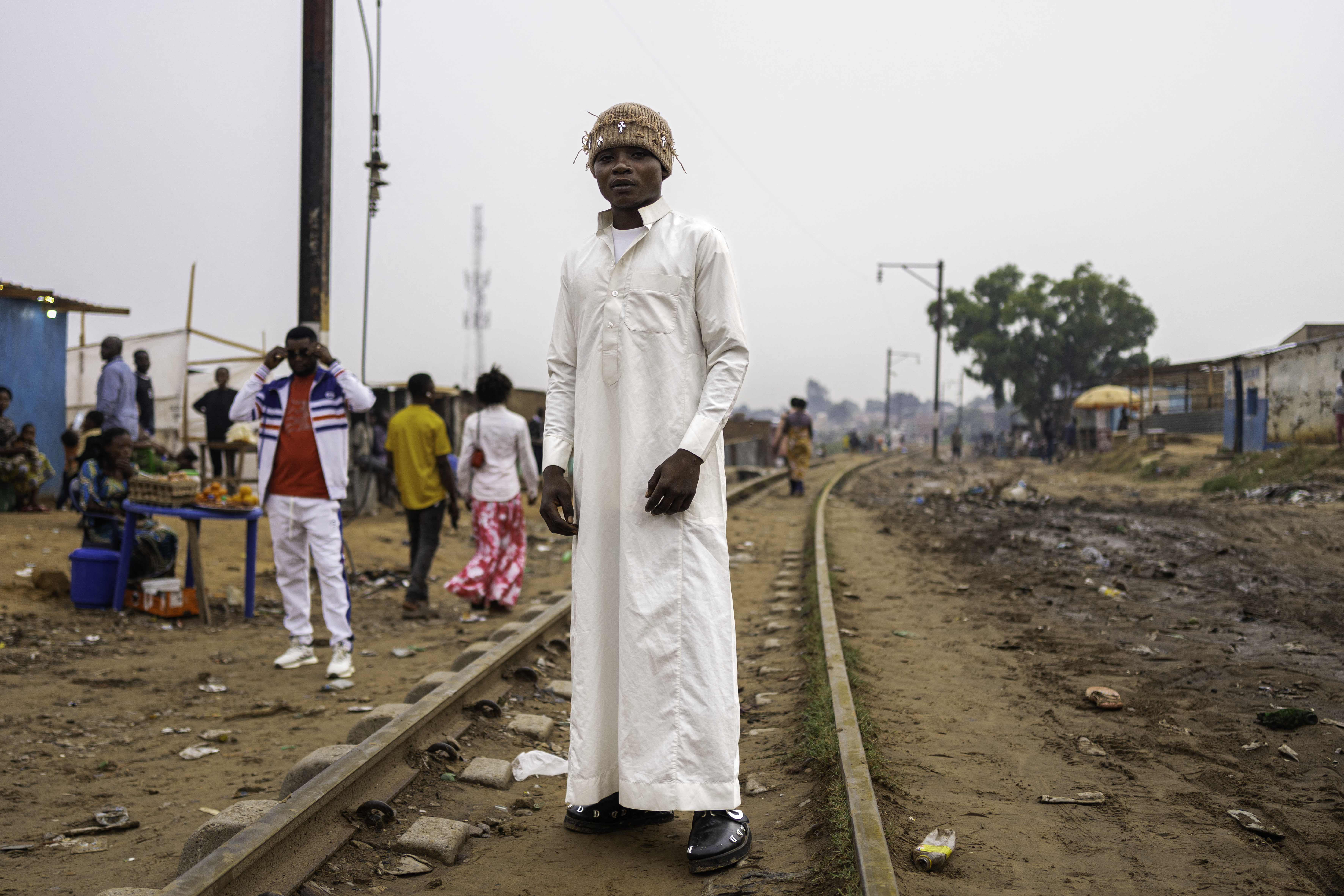
In Kolwezi, the vast central African country’s mining capital, brick houses and shacks line the narrow rail track, still in its original state and used by locals for lack of a proper path.
No sooner had the train passed by than dozens of young people set off again on foot, while women washed laundry in a puddle and shopkeepers reopened their stalls.
The transit of a cargo of minerals barely drew a second glance.
As for the Lobito Corridor megaproject, “I’m not aware of it,” said Nathan Mbuyi, a 24-year-old mechanic, whose home is about 10 metres (30 feet) from the tracks.
“I hope we won’t have to move,” he added, expressing concern about the risk of the government taking over the house where he has lived for 10 years to radically expand the railway.
Game changer
Kolwezi is a global hub for the production of copper and cobalt, vital to the energy transition and highly sought after by major industrial powers.
The mining city is rapidly expanding and lies at the heart of the corridor project.
Mota-Engil Africa plans to rehabilitate, modernise and operate the 1,000-kilometre (620-mile) Dilolo-to-Sakania line, which also passes through the major mining cities of Tenke and Lubumbashi before reaching the Angolan border.
A majority European consortium, Lobito Atlantic Railway (LAR), initially secured funding through a $500-million loan from the US International Development Finance Corporation (DFC).
It won a 30-year concession to operate the railway line, handle the transport of the minerals and manage the new mineral terminal at Lobito.
The aim is to reduce costs, increase volumes and decrease transport time.
Currently, most Congolese minerals are transported by road to ports in southern Africa and the Indian Ocean.
The journey between Kolwezi and Lobito takes seven days by train — compared to 28 days by road to Dar es Salaam in Tanzania and 31 days to the South African port city of Durban.
“In economic terms, it’s a game changer,” said one official in the mining sector in Kolwezi, who asked not to be named.
Local concern
LAR rejects the idea that the massive project is an instrument serving Western interests.
“We are totally apolitical,” its director-general, Frenchman Nicholas Fournier, told AFP in May.
He said that “70 percent of mines in the DRC are Chinese”, pointing out that some are already using the corridor to export their copper.
States involved in the project and the European Union aim to turn the corridor into a tool for the economic development of the regions the line passes through, by means of agricultural projects or training initiatives for the local workforce.
“It’s a very good opportunity for shopkeepers who go as far as the border,” said Horly Mbelo, who lives near the line but was still unaware of the project.
Donat Savu, from the local NGO Afrewatch in Kolwezi, however, was wary.
“The precedent is of mines which have provided no benefit to the local population,” he said.
“When we see that no one knows about the project, there is a fear that this could happen all over again.”