By Wadulo Arnold Mark
KAMPALA – As Uganda enforces its landmark Employment (Amendment) Act 2026, the country’s hospitality sector is moving to overhaul its human resource practices, confronting widespread abuses in casual labor, refugee integration, and foreign worker recruitment.
The statutory reform assented to by the President on 29 April 2026 and commencing on 5 June 2026 overhauls Uganda’s 2006 labor law by extending constitutional protections to all workers. Key provisions strictly cap casual employment at six continuous months, mandate sexual harassment prevention policies across all enterprises regardless of size, criminalize workplace harassment and intimidation under Section 6A, and empower the Ministry of Gender, Labour and Social Development under Section 91B to gazette specific job roles restricted from migrant workers.
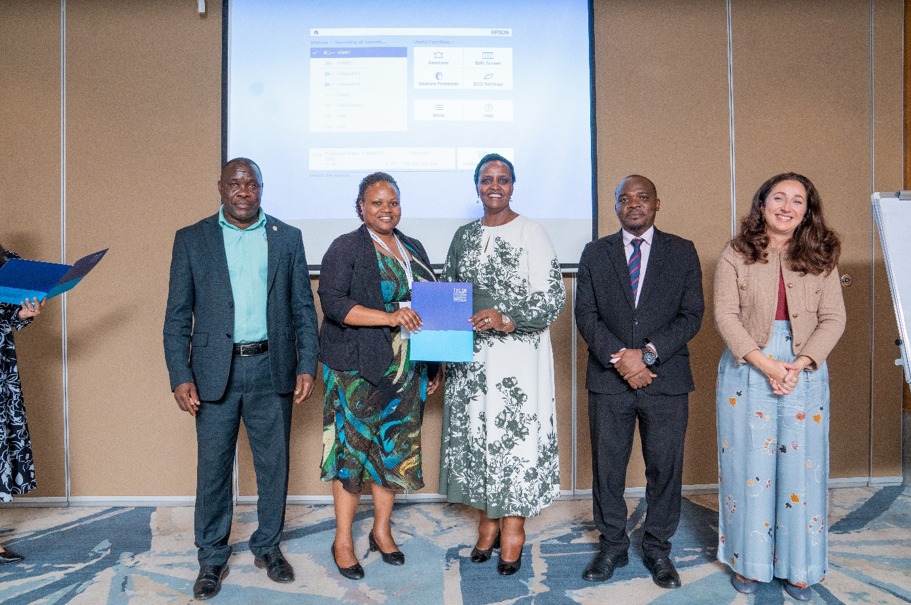
Against this backdrop of heightened legal liability and statutory penalties where general breaches attract fines up to 10 million Ugandan Shillings and repeat offenses draw up to 14 million Shillings or seven years’ imprisonment the Uganda Hotel Owners Association (UHOA), in partnership with the International Labour Organization (ILO), convened a national policy workshop in Kampala to establish a sector-wide Human Rights Due Diligence Toolkit.
Leading the institutional commitment, UHOA Chairperson Susan Muhwezi announced that the human rights due diligence toolkit will be integrated directly into member properties’ operational manuals. “As Uganda Hotel Owners Association, we have a duty to uphold human rights across our membership,” Muhwezi declared. “Once that toolkit is finalized, we will ensure that it is incorporated into the human resource manuals at all our member hotels”. Muhwezi promised that UHOA would engage hotel owners directly to enforce compliance, acknowledging that hotel proprietors often override technical HR advice.
The urgency for formal labor standards comes as Uganda’s hospitality industry expands ahead of hosting major continental events and welcoming international hotel chains. UHOA Chief Executive Officer Jean Byamugisha emphasized that embedding human rights due diligence is vital for sustainable growth, particularly following the success of the ILO Prospects apprenticeship program, which integrated refugees and host community youth into formal hotel jobs.
“We realize we need to include components of human rights as we employ refugees, as we employ young people, as we employ young women,” Byamugisha stated. “We want to make sure that issues of human rights are really incorporated within our operations so that we are on the right side of the law of humanity as well as of global employment trends”.
However, workshop deliberations exposed sharp discrepancies between statutory provisions and workplace realities. Union leaders and HR practitioners raised alarms over systemic casualization. Moses Mauku, representing the Hotel, Tourism and Allied Workers Union (HTS) and also serving as the treasurer of the National Organisation of Trade Unions (NOTU), exposed conflict-of-interest schemes where senior HR managers establish private recruitment agencies to supply their own hotels with casual labor.
“The casual people come and they work for even 5 years and they are still called casuals,” Moses revealed, noting that such workers are denied NSSF social security, PAYE tax contributions, and standard employee benefits. “They work while complaining all the time and you cannot achieve good productivity of these persons,” Moses warned. Other participants highlighted rampant working-hour violations, where staff work 12-hour shifts without overtime compensation due to employer expectations to simply get the job done.
The workshop also sparked intense debate over the regulation of foreign workers. A hotel HR Manager James Birungi Rwabogo questioned why hotels continue importing expatriates for entry-level roles such as cleaning or HR management—roles local Ugandans are qualified to perform. While Section 91B of the 2026 Amendment Act empowers the government to gazette restricted jobs to protect local employment, HR professionals warned that bureaucratic restrictions could create skill shortages, while union leaders exposed instances of employers illegally seizing the passports of foreign workers from India and Ethiopia.
Outlining the technical framework of the toolkit, ILO Facilitator Alix Nasri explained that the initiative provides practical tools for HR managers to conduct human rights due diligence across the entire worker journey from recruitment to onboarding. Nasri emphasized that fair recruitment must eliminate conflicts of interest, safeguard refugee rights regarding tax registration and social security, and enforce human rights standards on third-party casual labor agencies and subcontractors.
As the government prepares operational regulations under the 2026 Act, the ultimate test for Uganda’s labor market rests on whether employers will genuinely embed these human rights tools into daily operations or treat compliance as a mere paper exercise.