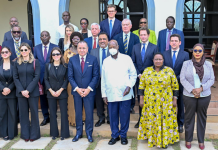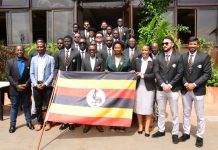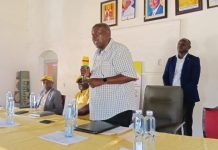
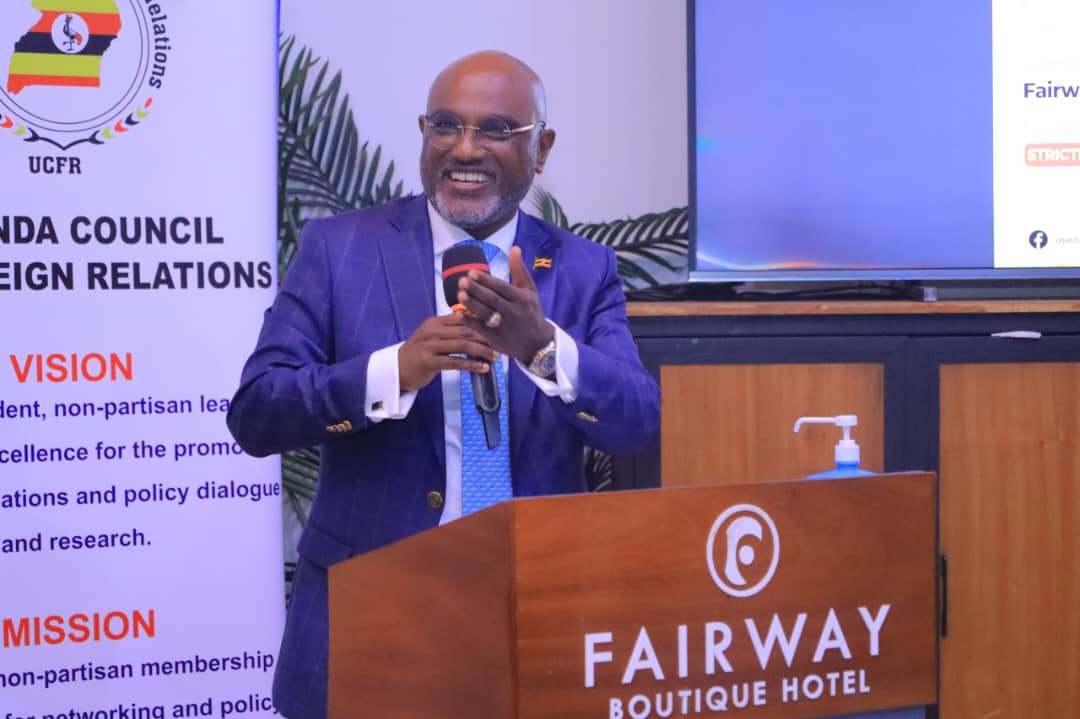
Hon. Adonia Ayebare, The Minister of Foreign Affairs has called for strengthened collaboration between Government, academia, independent policy institutions and other stakeholders in shaping Uganda’s foreign policy and advancing the country’s national interests. The Minister made the call while delivering his first annual address to the Uganda Council on Foreign Relations (UCFR) at Fairway Hotel, Kampala, during celebrations marking the Council’s tenth anniversary.
Established in 2016, UCFR is an independent, non-partisan and membership-centred institution established to promote informed dialogue on international affairs and contribute to Uganda’s foreign policy development through research, policy engagement and knowledge exchange. Over the past decade, the Council has provided a platform for diplomats, policymakers, academics, business leaders and civil society to engage on matters including regional peace and security, integration, trade and investment, climate change, migration and Uganda’s participation in multilateral institutions.
Addressing the gathering, Hon. Ayebare reaffirmed that Uganda’s foreign policy is anchored in Objective XXVIII of the 1995 Constitution and guided by the principles of good neighbourliness, Pan-Africanism, regional integration, peaceful coexistence, non-alignment and respect for international law. “These principles have served us well and will continue to guide our diplomacy in the coming decades,” he said.
The Minister emphasised the importance of regional peace and security, highlighting Uganda’s participation in mediation initiatives and African peace support operations, as well as its commitment to regional integration through the East African Community and the African Continental Free Trade Area. He also reiterated Uganda’s position on reforming global governance institutions, particularly the United Nations Security Council, to secure permanent African representation.
On Economic and Commercial Diplomacy, Hon. Ayebare underscored the need to translate Uganda’s international relations into tangible development opportunities. “Diplomacy for us, today and tomorrow, must become increasingly responsive to the economic aspirations of our people,” he stated.
He reaffirmed the Ministry’s commitment to aligning diplomatic engagements with Uganda Vision 2040, the National Development Plan and the Tenfold Growth Strategy. He further identified emerging technologies, artificial intelligence, climate change, the energy transition, public health and diaspora engagement as priority areas requiring sustained diplomatic attention. He disclosed that the Ministry was finalising a new diaspora policy to strengthen engagement with Ugandans abroad and harness their contribution through remittances, skills and investment.
The Minister called upon UCFR to strengthen independent research, identify emerging global trends, develop policy options and preserve Uganda’s diplomatic institutional memory. He welcomed closer collaboration between the Ministry and the Council through regular policy dialogues and consultations on issues of strategic importance.
The UCFR Chairman, Gen. (Rtd) Ivan Koreta, described the anniversary as a milestone in promoting broader national participation in foreign policy discourse. He conveyed greetings from the Council’s Patron, Hon. Sam Kutesa, who was unable to attend, and reaffirmed his continued commitment to the Council.
Reflecting on its founding vision, Gen. Koreta observed that Uganda’s international engagement should draw on the collective knowledge and experience of its people. “Uganda’s place in the world should be shaped not only by government, but by informed dialogue, by independent thought, and by the collective wisdom of its people,” he said. He reaffirmed the Council’s commitment to promoting a foreign policy that advances Uganda’s interests while contributing to international peace, justice and prosperity. He also highlighted the Council’s Five-Year Strategic Plan 2026–2030, launched in June 2026.
The Chief Executive Officer of UCFR, Amb. Francis Katana, noted that the Council was established to create structured opportunities for civil society, business and academia to contribute to foreign policy discussions. “The makers and executors were mainly the Executive and Parliament, but there was no direct input from civil society, business people and academia. So we thought we should have a forum that provides for this interaction,” he explained.
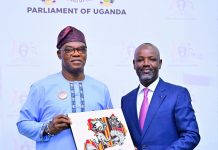
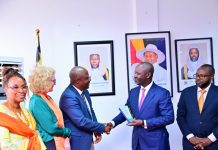
The anniversary celebrations also recognised individuals and institutions whose contributions have supported the Council’s establishment and development. Hon. Sam Kutesa was recognised through the Founder’s Award, alongside Amb. Francis Katana, Amb. James Mugume, Prof. Mbabazi Mugumya, Amb. Fred Bayendeza, and Gen. (Rtd) Ivan Koreta, King Ceasor received recognition under the Pillars of Support category, while Cavendish University Uganda received the Academic and Think Tank Partners Award.
The tenth anniversary reaffirmed the importance of constructive engagement between Government and independent policy institutions in strengthening Uganda’s foreign policy, advancing national development priorities and promoting the country’s interests regionally and internationally.