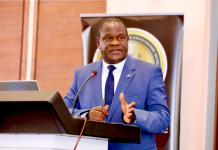
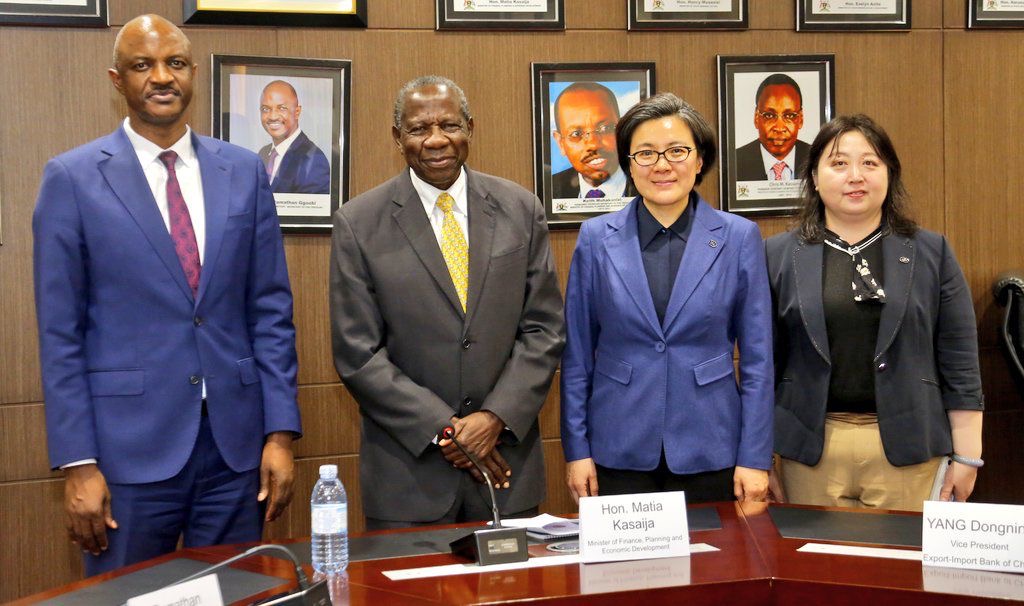
Finance Minister Matia Kasaija has held talks with a delegation from the Export-Import Bank of China led by Vice President Dr. Yang Dongning, aimed at strengthening cooperation and unlocking new investment opportunities.
The China EXIM Bank team is in the country to advance discussions on financing and partnerships to support Uganda’s industrialisation and long-term economic transformation.
Kasaija said Uganda’s next phase of growth will be anchored on the ATMS strategy, with emphasis on agro-industrialisation, export expansion, and value addition in key sectors. These include coffee, cotton, tea and other agricultural products, as well as minerals, oil and gas, tourism, and science, technology and innovation.
He noted that Uganda is positioning itself to leverage China’s zero-tariff policy by shifting from exporting raw materials to processing, manufacturing, and higher-value exports.
The Minister, accompanied by the Permanent Secretary and Secretary to the Treasury Dr. Ramathan Ggoobi, expressed appreciation to the Government of China for continued technical and financial support across sectors such as transport, energy, and health.
In a move to boost investment flows, China EXIM Bank committed to support the organisation of a “Uganda Day” in China, a platform expected to showcase Uganda’s opportunities, connect Ugandan enterprises with Chinese manufacturers and financiers, and attract new investment.
The initiative is part of efforts to strengthen economic diplomacy, deepen private sector linkages, and position Uganda as a competitive investment destination.
Both sides agreed to scale up support for industrial parks, with focus on improving land access, utilities, and logistics infrastructure to enhance productivity and attract large-scale investments.
China EXIM Bank reaffirmed its commitment to Uganda’s development priorities through a range of financing options including trade finance, blended financing models, equity investments, and syndicated funding arrangements.
Kasaija emphasised the need for flexible and innovative financing structures to accelerate implementation of priority projects.