Government banks on oil, exports and domestic revenue, but fuel taxes, debt refinancing and higher household costs will test the economy
By Samuel Ssenono
Uganda’s 2026/27 Budget is a large fiscal bet on production, oil, tax collection and public investment.
The spending plan stands at Shs84.39 trillion, up from the revised Shs81.61 trillion for the 2025/26 financial year. That is an increase of Shs2.78 trillion, coming at a time when government expects the economy to move into double-digit growth on the back of commercial oil production, exports, infrastructure and private sector activity.
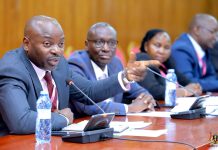
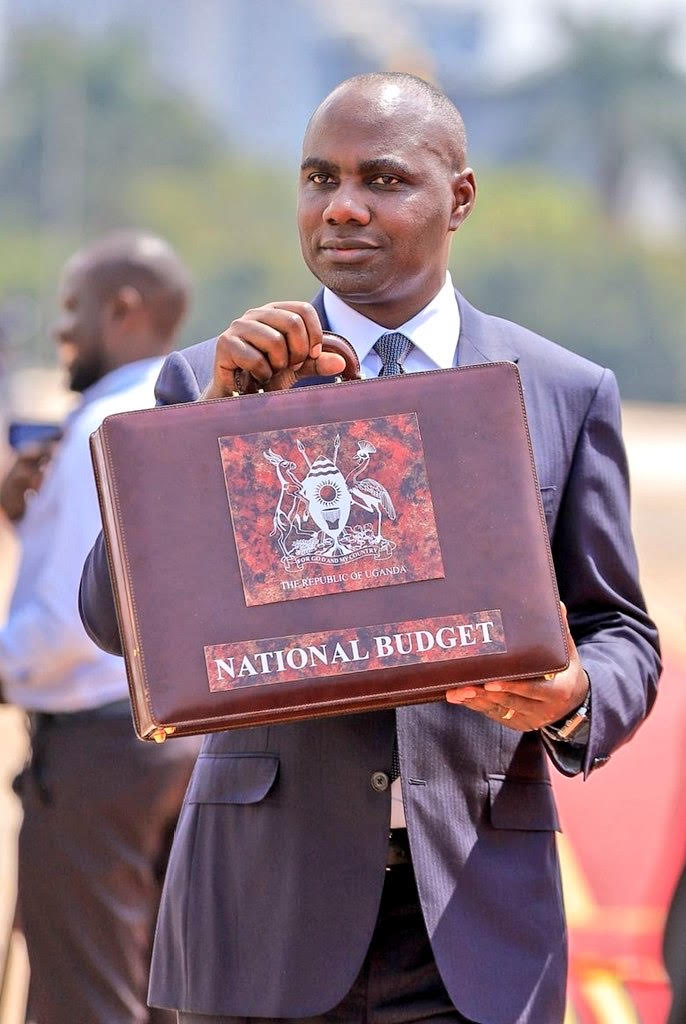
The Budget was presented by Finance Minister Henry Musasizi under the theme of full monetisation of the economy through commercial agriculture, industrialisation, services, digital transformation and market access. Stripped of the political language, the fiscal argument is clear: government wants more output, more exports, more jobs and a wider tax base.
The economy is estimated to grow by 6.4 percent in 2025/26, while growth is projected at 10.2 percent in 2026/27 as commercial oil production starts. The size of the economy is projected at about USD69.3 billion, or Shs250.4 trillion, by the end of June 2026. Inflation is estimated at 3.8 percent, while exports of goods and services reached USD18.04 billion in the twelve months to March 2026.
Those numbers give government room to present an expansionary budget. But the financing mix shows the pressure beneath the headline.
Domestic revenue is expected to contribute Shs45.96 trillion. Of this, tax revenue will account for Shs40.16 trillion, non-tax revenue Shs4.02 trillion, petroleum revenue Shs1.44 trillion and local government revenue Shs339.8 billion. Government will also borrow Shs11.97 trillion domestically, refinance Shs13.97 trillion of domestic debt, take Shs1.22 trillion in external borrowing for budget support and receive Shs11.27 trillion in external project financing.
That means nearly half of the Budget will come from domestic revenue, but borrowing and debt refinancing remain central to the fiscal framework. The Budget therefore rests on two questions: can Uganda collect more taxes without weakening consumption and business activity, and can public investment generate enough growth to carry the debt load?
Public debt stood at USD34.86 billion, about Shs126.19 trillion, by December 2025. External debt was USD15.84 billion, while domestic debt stood at USD19.02 billion. The debt-to-GDP ratio was estimated at 53 percent. Government argues the debt remains sustainable, but the composition matters. Domestic debt is now larger than external debt, meaning government is borrowing heavily from the local market. That can affect credit conditions for private firms if not carefully managed.
On the expenditure side, wages and salaries will take Shs9.709 trillion. Non-wage recurrent spending will take Shs33.276 trillion, including operational funds, wealth creation programmes, science and technology investments, grants for education and health, medicines, infrastructure maintenance and interest payments. Development expenditure has been set at Shs22.054 trillion. Debt refinancing alone takes Shs13.967 trillion, while debt amortisation takes Shs4.181 trillion.
This is the Budget’s first big economic tension: government is spending heavily on development, but a sizeable part of the envelope is also being used to roll over and service debt.
The tax package is the second tension.
Government has raised the PAYE threshold from Shs235,000 to Shs335,000 per month, giving some relief to low-income workers. It has also raised the annual VAT registration threshold from Shs150 million to Shs300 million, easing compliance pressure on smaller businesses. There is also a tax holiday for developers of hotels and ultra-luxury tourism facilities investing at least USD10 million for foreign investors and USD5 million for Ugandan investors.
Excise duty on petrol and diesel has been increased by Shs200 per litre, expected to raise Shs450 billion. This is the tax measure likely to be felt fastest across the economy because fuel feeds into transport, food distribution, construction, manufacturing and general logistics.
Other increases are spread across household and industrial consumption. Excise duty on selected spirits rises from Shs1,700 to Shs3,500 per litre. Motorcycles at first registration move from Shs200,000 to Shs500,000. Single-use plastics rise sharply from 2.5 percent or USD70 per tonne to 25 percent or USD1,500 per tonne. Cooking oil doubles from Shs200 to Shs400 per litre, cement rises from Shs500 to Shs750 per 50kg bag, and sugar rises from Shs100 to Shs200 per kilogram.
Government has also introduced excise duty on paints, varnishes and cooking fat. Stamp duty on first registration and transfer of vehicles has been set at Shs30,000 for motorcycles, tricycles and quadricycles, and Shs200,000 for other motor vehicles. The environmental levy on imported used clothing has doubled from 15 percent to 30 percent of CIF value, while betting tax has been raised from 20 percent to 30 percent.
Economically, this is a broad-based revenue strategy. Government is not relying on one major tax. It is collecting from fuel, transport assets, alcohol, plastics, food inputs, building materials, imported second-hand clothing, gaming and selected manufactured goods.
The downside is inflationary pressure. Even if headline inflation remains low, taxes on fuel, cement, cooking oil and sugar can move quickly into transport fares, retail prices, construction costs and household spending. For small firms, the VAT threshold relief may help, but higher input and transport costs may eat into margins.
On investment, the Budget is built around productive sectors.
Agro-industrialisation receives Shs2.26 trillion, the highest allocation to the programme. The money is targeted at agricultural research, irrigation, water for production, extension services, quality inputs, post-harvest handling, agro-processing, certification and market access. The economic objective is to move from raw commodity exports to processed agricultural products.
Tourism receives Shs567.32 billion, with spending aimed at destination marketing, infrastructure, hospitality standards, conservation, health tourism and economic diplomacy. This comes after tourism receipts rose to USD1.86 billion in 2025, above the pre-pandemic level of USD1.4 billion recorded in 2018/19.
Minerals, mining, oil and gas receive Shs473.51 billion. The focus is mineral exploration, capitalisation of the Uganda National Mining Company, mineral markets and buying centres, EACOP operationalisation and development of the oil refinery. This is where the Budget’s oil growth story sits.
Science, technology, innovation, ICT and creative industries receive Shs1.140 trillion. Priorities include commercialisation of Kiira Motors vehicles, coffee innovations, Dei BioPharma drugs and vaccines, banana products, a Hi-Tech City, research and development, digital infrastructure, business process outsourcing and intellectual property protection.
The industrial policy line is also clear. Government says the number of formal factories has risen to 10,437, with 690 located in industrial parks. It is also capitalising Uganda Development Corporation, which has invested more than Shs1.5 trillion in textiles, agro-processing, pharmaceuticals and construction. Manufacturing receives Shs1.03 trillion in 2026/27, focusing on industrial parks, plug-and-play facilities, value addition, special economic zones and industrial incubation hubs.
Transport remains one of the largest allocations at Shs8.79 trillion. The priorities include the Malaba-Kampala Standard Gauge Railway, rehabilitation of the Metre Gauge Railway, roads, bridges, ferries, ports, Kabalega International Airport, regional aerodromes and expansion of Uganda Airlines.
Energy receives Shs2.07 trillion, targeting the 380MW Kiba hydropower plant, floating solar at Isimba, 500MW of utility-scale solar in Elgon and Acholi, preparatory work for nuclear energy at Buyende, transmission lines, rural electrification and industrial power connections.
Human capital remains a major spending area. Health receives Shs5.23 trillion, education Shs6.66 trillion, water and sanitation Shs1.013 trillion and social protection Shs173.55 billion. Overall, government says Shs13.56 trillion has been allocated to investments directly linked to people through health, education, water and social protection.
Security, governance and rule of law receive Shs10.21 trillion. This covers UPDF modernisation, border security, counterterrorism, regional peace support operations, community policing, crime intelligence, CCTV, immigration services, NIN and ID enrolment, anti-corruption work and cattle restocking.
For the private sector, the Budget creates openings in construction, logistics, agro-processing, tourism, oil services, ICT, manufacturing, energy, health, education and financial services. But it also raises the cost base through fuel and indirect taxes.
For households, the PAYE adjustment gives some relief to low-income earners, but taxes on fuel, cooking oil, sugar and transport-related items may cancel part of that gain through prices.
For government, the Budget is a race between growth and cost. If oil production starts on schedule, exports keep rising and infrastructure spending unlocks private investment, the larger Budget can be defended as a growth push. If revenue underperforms or domestic borrowing tightens credit, the same Budget becomes harder to carry.
The business reading is therefore simple: this is an investment-heavy Budget funded by tougher domestic revenue collection, fresh taxes and continued borrowing.