Parliament has passed a resolution urging the Government to review its undergraduate sponsorship programme and increase the number of sponsorship slots under the District Quota Scheme to improve access to higher education for students from poor, disadvantaged and rural communities.
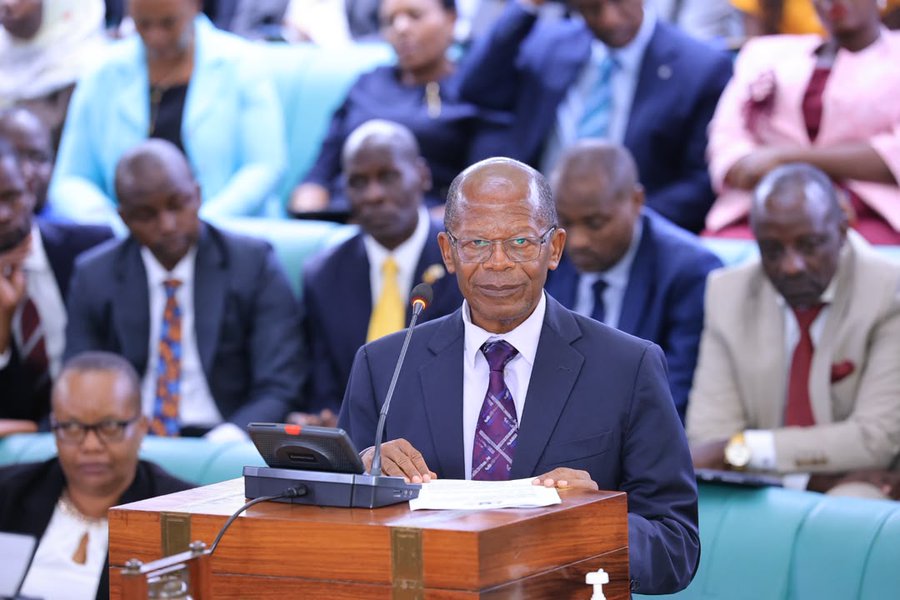
The resolution was passed during Tuesday’s plenary sitting chaired by Deputy Speaker Thomas Tayebwa after a motion moved by Hon. Martin Ojara Mapenduzi (NRM, Bardege-Layibi Division).
Mapenduzi argued that the current government sponsorship allocation no longer reflects Uganda’s growing student population and has failed to address inequalities in access to public university education.
He noted that although between 60,000 and 80,000 students qualify for admission to public universities each year, government sponsorship has remained capped at 4,000 students over the past five years.
Under the current arrangement, 3,000 sponsorships are awarded through the national merit scheme, while the remaining 1,000 affirmative action slots are shared among the District Quota Scheme, the Sports Scheme and the Special Needs Scheme.
Parliament resolved that Government should review the distribution of these sponsorships, with particular emphasis on increasing the allocation under the District Quota Scheme to enable more students from disadvantaged backgrounds to access government-funded university education.
During debate on the motion, Members of Parliament amended its title to explicitly include the Sports Scheme and Special Needs Scheme, after concerns that the two affirmative action programmes had been omitted despite being addressed in the motion.
Hon. Alex Ndeezi, the representative for Persons with Disabilities, welcomed the proposal and called for stronger consideration of students with disabilities and beneficiaries under the sports scheme. He also urged Government to implement the proposed changes within the current admission cycle.
Similarly, Hon. Laura Kanushu, the Female Representative for Persons with Disabilities, emphasized the need to prioritise learners with disabilities, saying they are among the most vulnerable students seeking higher education opportunities.
“There can never be a vulnerable student more than that with special needs. If there are people who need a sponsorship at the universities more than anyone else, it is the students with disabilities,” she said.
Kanushu also proposed that priority be given to students who studied in government schools under the Universal Primary Education (UPE) and Universal Secondary Education (USE) programmes.
Rubanda County West MP Hon. Bruce Balaba argued that students admitted from rural schools through the District Quota Scheme have consistently performed well at university despite joining with comparatively lower entry grades.
He further proposed that half of the district quota sponsorships be reserved for science programmes, noting that the majority of current beneficiaries pursue humanities courses. Balaba also called for an increase in the district quota allocation while reducing the proportion of sponsorships awarded through the national merit scheme.
Deputy Speaker Thomas Tayebwa directed that implementation of the resolution should follow Parliament’s Rules of Procedure, which require the responsible ministers to submit an action-taken report to Parliament within 60 days.
The District Quota Scheme was introduced in 2004 to improve access to higher education for students from disadvantaged districts. However, Mapenduzi argued that its current allocation formula, which is based on district population, continues to disadvantage smaller rural districts and limits opportunities for underprivileged learners.
With the resolution now adopted, Parliament is urging Government to review the sponsorship programme to ensure that more students from poor and rural communities benefit from publicly funded university education.