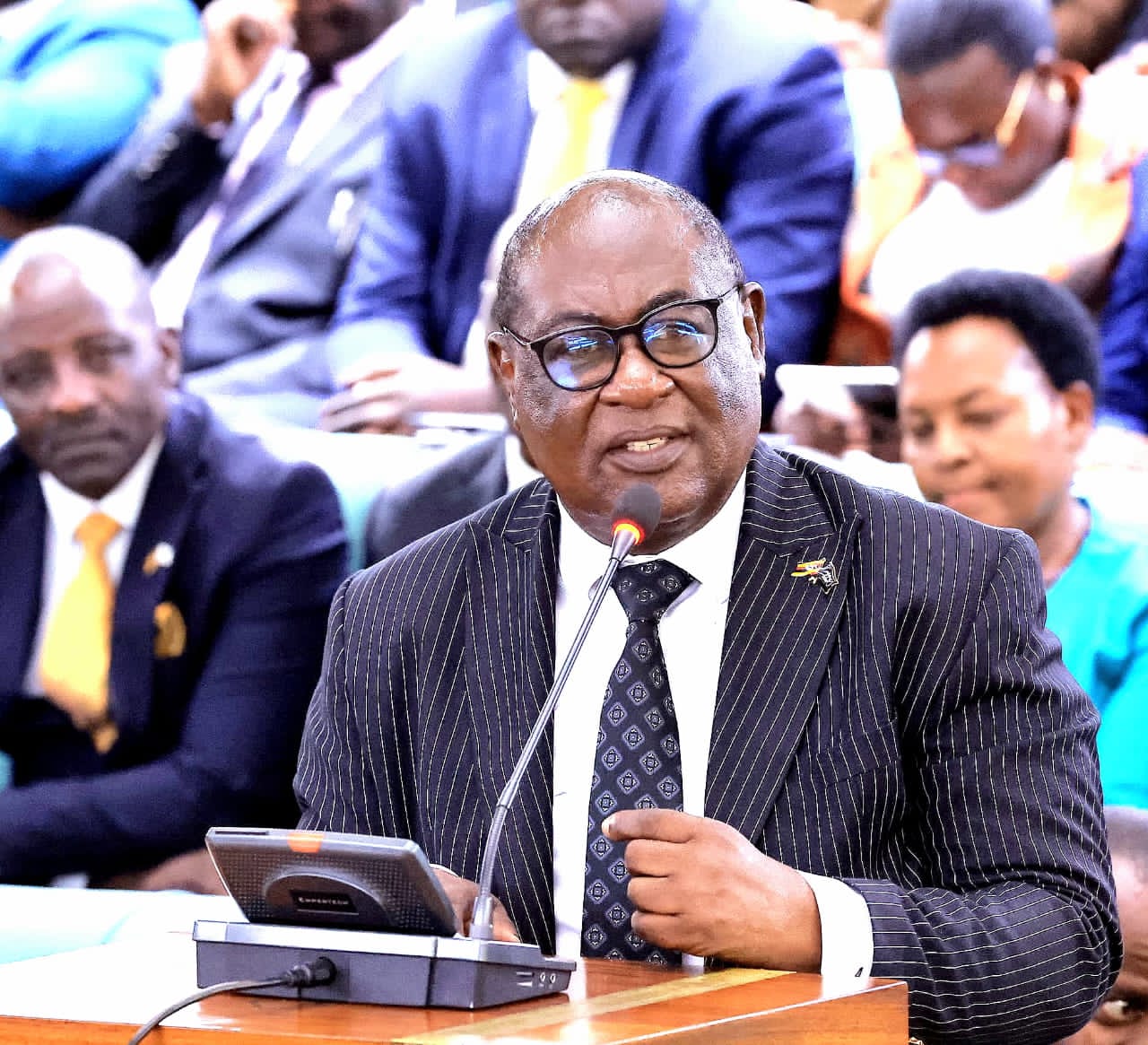
The Attorney General, Hon. Sam Mayanja, has told Parliament that a notice expressing an intention to resign by the Chairperson of the Uganda Human Rights Commission (UHRC), Mariam Fauzat Wangadya, does not constitute an actual resignation.
Mayanja said Wangadya remains the substantive Chairperson of the Commission because, under established legal practice, a resignation only takes effect after a formal resignation letter has been submitted and accepted by the appointing authority.
“As matters stand, she remains the substantive Chairperson of the Commission,” Mayanja told Parliament.
He made the remarks during Wednesday’s plenary sitting chaired by Speaker Jacob Marksons Oboth, while responding to concerns over the status and functionality of the human rights body.
The Attorney General also defended the operational integrity of the UHRC, dismissing suggestions that the Commission had become ineffective due to an ongoing investigation by the Inspectorate of Government (IGG).
He said the Commission remains fully operational and continues to carry out its constitutional mandate without interruption.
The statement followed concerns raised by Kalungu County West MP, Hon. Joseph Ssewungu, who questioned the effectiveness of the Commission in protecting and enforcing human rights amid reports of investigations into the institution.
Mayanja said the Commission continues to provide remedies to victims of human rights violations, including compensation awards, injunctive relief and other forms of legal redress.
He further noted that the Commission is fully constituted with seven members, including the Chairperson, whose terms of office are staggered to ensure institutional continuity and preserve institutional memory.
Established under Article 51 of the Constitution, the Uganda Human Rights Commission is mandated under Article 52 to investigate human rights violations, either on its own initiative or following complaints from individuals or groups.
Its functions are further provided for under the Uganda Human Rights Commission Act, Cap. 26.