By Samuel Ssenono
The World Bank has retained Uganda in the low-income category for the 2027 fiscal year, even as the government maintains that the country has attained lower-middle-income status.
The World Bank’s latest Country and Lending Groups classification places Uganda among 25 low-income economies, defined as countries with a Gross National Income (GNI) per capita of US$1,175 or less based on 2025 data. Uganda is listed alongside Rwanda, Ethiopia, the Democratic Republic of Congo, South Sudan, Somalia and Malawi.
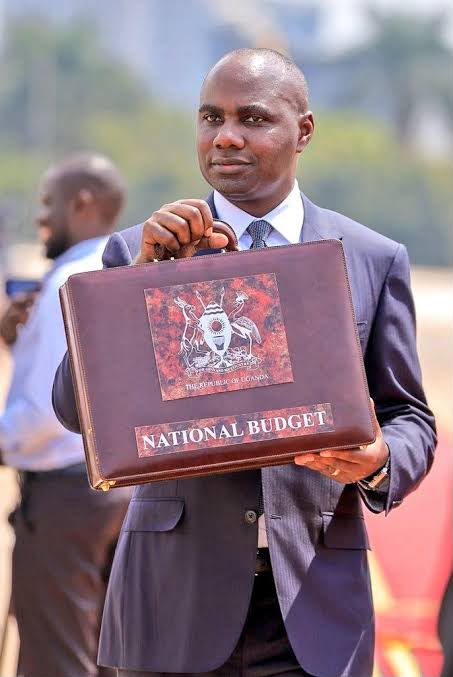
The latest assessment comes barely a month after the FY2026/27 Budget Speech, in which the government said Uganda had surpassed the lower-middle-income threshold, with Gross National Income per capita rising to US$1,389 from the previous benchmark of US$1,136.
In the Budget Speech, Finance Minister Henry Musasizi argued that Uganda enters the new financial year “from a position of strength”, citing sustained economic growth, low inflation, a stable exchange rate, rising exports and increasing investment. Government estimates the economy will grow by 6.4 per cent in FY2025/26 before accelerating to 10.2 per cent this financial year following the commencement of commercial oil production.
The minister also told Parliament that Uganda’s economy is projected to reach US$69.3 billion (Shs250.4 trillion) by the end of June 2026, while exports of goods and services have more than tripled over the past five years to US$18.04 billion. Foreign direct investment stood at US$3.2 billion, remittances increased to US$2.8 billion, and the country recorded a Balance of Payments surplus of US$2.47 billion, the highest in 15 years.
The World Bank, however, assigns countries to income groups using its Atlas Method, which relies on internationally comparable data and smooths exchange-rate movements before calculating Gross National Income per capita.
For the 2027 fiscal year, economies with a GNI per capita between US$1,176 and US$4,635 qualify as lower-middle-income, while those below US$1,176 remain in the low-income category.
Uganda will therefore continue to qualify for financing under the World Bank’s International Development Association (IDA), which provides concessional loans and grants to low-income economies.
Across East Africa, Kenya and Tanzania remain lower-middle-income economies, while Uganda and Rwanda continue to be classified as low-income.
Globally, the World Bank’s latest update classifies 25 economies as low-income, 47 as lower-middle-income, 59 as upper-middle-income and 87 as high-income economies.