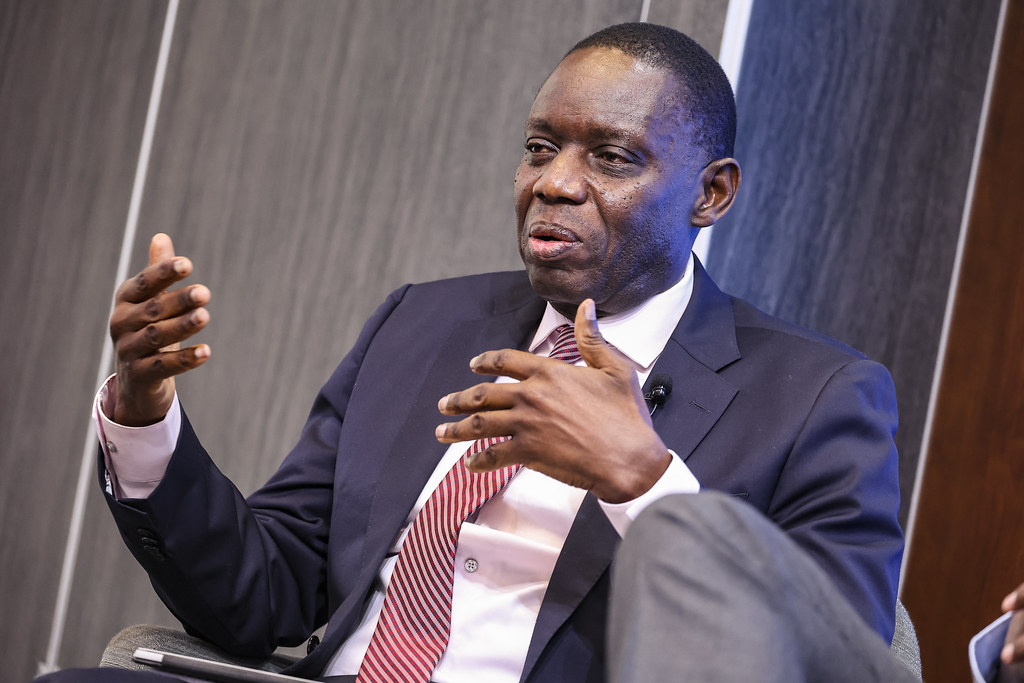
Bank of Uganda Governor Michael Atingi-Ego has warned that higher-than-planned government borrowing could push up interest rates and limit access to credit for the private sector.
Atingi-Ego was appearing before Parliament’s Budget Committee on Monday, September 21, 2026, to present the central bank’s assessment of Uganda’s Charter of Fiscal Responsibility.
The Governor described the Charter as broadly credible, but said its projections depend on government maintaining fiscal discipline, managing petroleum revenues prudently and keeping domestic borrowing within the projected levels.
He said the government plans to raise about Shs12.7 trillion in net domestic financing for the 2026/2027 financial year, equivalent to 4.6 percent of non-oil GDP, down from Shs15.1 trillion borrowed domestically in the previous financial year.
Atingi-Ego said improved liquidity in the banking system, lower yields on government securities and continued investor demand for Treasury securities indicate that the domestic financial market has sufficient capacity to absorb the planned borrowing without disrupting private-sector financing.
However, he cautioned that borrowing beyond the projected level could place upward pressure on interest rates and crowd out private-sector borrowers.
The Governor said private-sector credit grew by 16.1 percent year-on-year to June 2026, with average monthly growth during the financial year standing at about 11.5 percent. He projected average private-sector credit growth of about 13 percent in 2026/2027.
Atingi-Ego also said interest rates could gradually decline if government maintains fiscal consolidation, while major deviations in government spending or taxation could put pressure on inflation and financial markets.
On petroleum revenues, the Governor clarified that the Petroleum Revenue Investment Reserve remains a government asset, although it is operationally managed by the Bank of Uganda.
Meanwhile, Budget Committee Chair Gabriel Okumu urged Parliament’s Finance, Budget and National Economy committees to closely scrutinise government borrowing and advise government appropriately.
MPs also raised concerns about the assumptions underlying the fiscal framework, including possible delays in oil revenues and the management of domestic arrears.