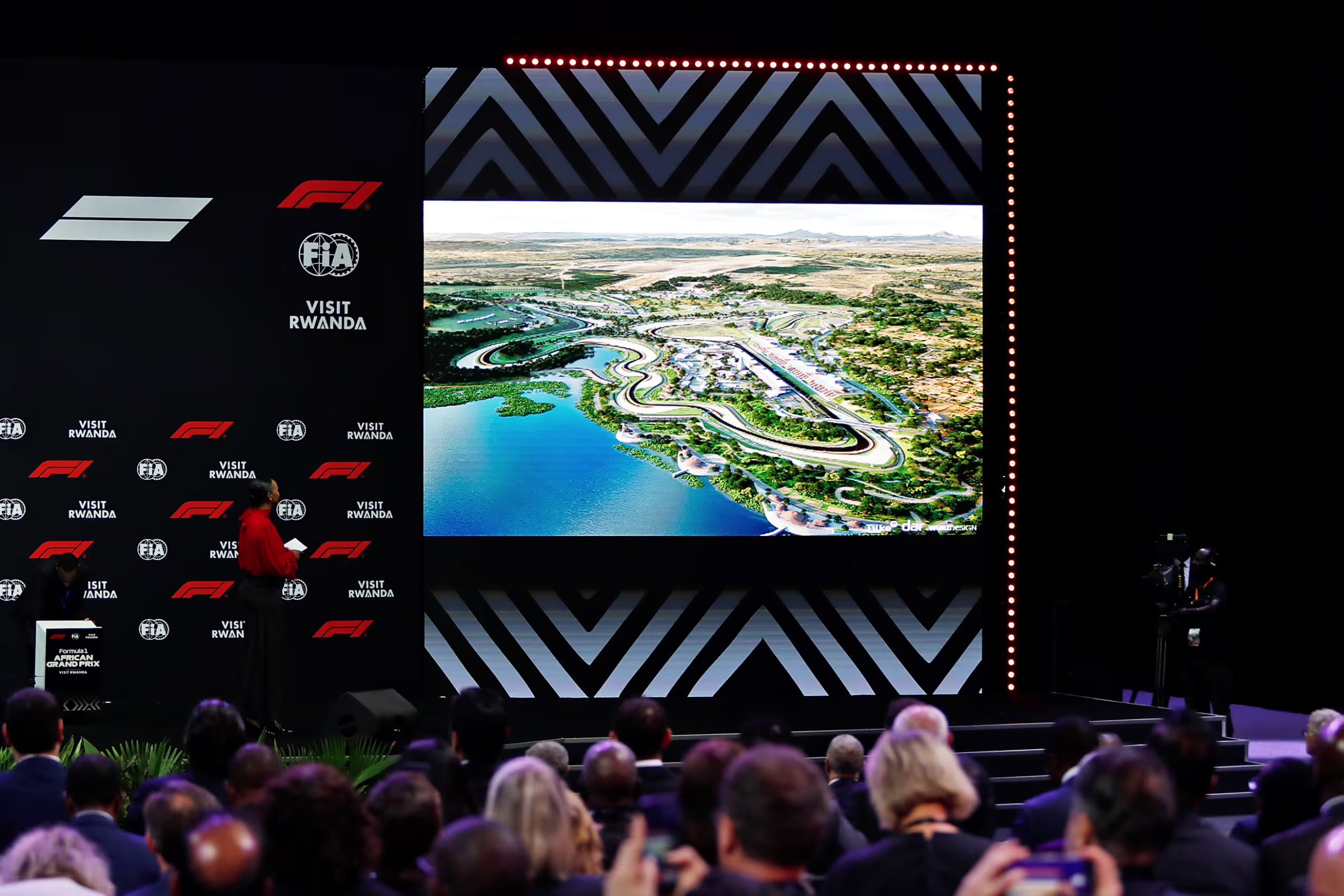
A 6km circuit featuring 17 corners, steep hills and a lakeside setting will be built in Bugesera under a 10-year agreement with Formula 1.
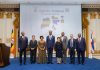
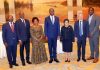
Rwanda has unveiled plans for a Formula 1 circuit in Bugesera District as the country prepares to host the African Grand Prix from the early 2030s, bringing the motorsport championship back to the continent after nearly four decades.
The country has secured a 10-year agreement with Formula 1, with the proposed circuit to be constructed near the new Bugesera International Airport, southeast of Kigali.
The 6km anti-clockwise track will feature 17 corners, steep climbs and descents, with an elevation change of 197 metres across a lap. Its design takes advantage of Rwanda’s hilly terrain and a nearby lake.
The project is being developed by Tilke Engineering and Wurz Designs, led by circuit designer Carsten Tilke and former Formula 1 driver Alex Wurz.
Wurz said several locations were considered, including a street circuit and the site of Kigali’s existing airport, before the designers settled on Bugesera.
He said the hills and lake offered a natural setting for a racing circuit, allowing the track to follow the landscape rather than requiring extensive changes to the terrain.
Tilke described the proposed layout as a roller coaster, with corners designed to challenge drivers while providing opportunities for overtaking.
The designers have also considered spectators, with viewing areas intended to bring fans closer to the racing action.
The circuit will sit at a high altitude, with Kigali approximately 1,500 metres above sea level. This will affect the aerodynamic performance of Formula 1 cars because of the thinner air, a factor already being considered in track simulations.
Beyond Formula 1, the facility will include a karting track, a driving experience centre and off-road courses. It will also accommodate concerts and other major events.
The paddock buildings will incorporate elements of traditional Rwandan architecture.
Kagame wants African participation
President Paul Kagame said Rwanda’s decision to host Formula 1 is part of the country’s wider investment in sports, tourism and international events.
He said the race would not be treated as an exclusively Rwandan event, but as an opportunity for other African countries to participate.
“We are not looking at just Rwanda alone, we are looking at Rwanda in the context of a continent,” Kagame said.
He argued that African athletes have contributed enormously to international sport, yet the continent has received relatively little of the commercial benefits.
Kagame said hosting major competitions would help African countries participate more directly in the global sports economy.
Rwanda Development Board Chief Executive Officer Jean-Guy Afrika said the decision to name the event the African Grand Prix rather than the Rwanda or Kigali Grand Prix was deliberate.
“We want to make it bigger than just Rwanda,” Afrika said.
He expressed hope that the event would encourage more African countries to pursue Formula 1 races in the future.
Formula 1 returns after nearly four decades
Africa last hosted a Formula 1 World Championship race in 1993 at the Kyalami Circuit in South Africa.
South Africa staged 23 championship Grands Prix, while Morocco hosted one race at the Ain-Diab circuit in 1958.
Rwanda will become the third African country to host a Formula 1 World Championship Grand Prix.
Formula 1 President and Chief Executive Officer Stefano Domenicali described the agreement as one of the most significant developments in the championship’s history.
The race will also add to Rwanda’s growing calendar of international sporting events.
Kigali hosted the FIA Awards in 2024, while Rwanda became the first African country to stage the UCI Road World Championships in 2025.
According to Formula 1, races at newer host destinations typically generate more than £100 million in annual economic activity, although the eventual financial impact in Rwanda will depend on attendance, tourism spending and the costs of hosting the event.