The Secretary to the Office of the President, Hajji Yunus Kakande, has advised public servants to start preparing for retirement early by saving, investing and taking care of their health.
Kakande says officers should not wait until their final years in service to plan for life after retirement.
“Public service is a career with a beginning and an end. Plan early for life after service. Save, invest and look after your health. Do not wait for the last year of service to begin preparing,” he said.
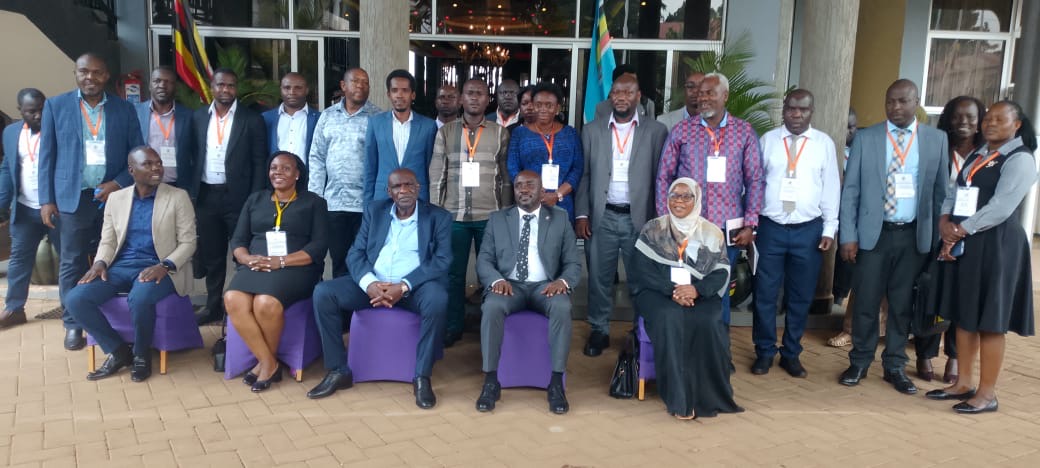
Kakande was speaking on Friday, November 13, 2026, while closing the five-day Third Policy Analyst Cadre Forum at Hoima Resort in Hoima City.
The forum, organised by the Office of the President, was held under the theme, “Promoting Professionalism in Public Policy Management for Effective Public Service Delivery.”
Kakande cautioned public servants against starting businesses they may struggle to manage after retirement, particularly trading ventures. He advised them to consider activities such as farming and cattle rearing.
“Quite often, I have seen officers who are retiring asking me what they should do next, and we obviously counsel them. Do not go into trade when you are retiring because it is something that needs to be started when you are young. When you start late, you may fail to manage its dynamics,” he said.
He said the forum had given policy analysts an opportunity to share experiences and discuss ways of improving government policy formulation and implementation.
The discussions covered public policy in Uganda, governance, performance management, diplomacy, protocol, retirement planning, personal development and mental health.
Kakande asked policy analysts to take their responsibilities seriously and ensure their advice to government is based on facts, research and professional judgement.
He encouraged them to read widely, conduct research and learn from experienced public servants to keep up with developments across government.
He also urged officers to remain honest and impartial when advising government, even when their recommendations may be unpopular.
Kakande asked policy analysts to accept transfers to other ministries, departments and agencies, saying such movements would help them understand how different government institutions operate.
“All ministries, departments and agencies belong to one government. As policy analysts, you are supposed to move around ministries and departments and familiarise yourselves with their mandates. You should be able to understand what is happening across the government,” he said.
He explained that working in different government institutions would help officers identify policy gaps and develop proposals for consideration by the relevant authorities.
Kakande said policy development was not the responsibility of political leaders alone, noting that public servants also have a duty to identify problems and propose solutions.
He asked participants to brief their accounting officers on the forum’s resolutions and follow up on their implementation.
“The forum is only as good as what happens after it. Take the resolutions of this forum back to your accounting officers and ensure they are implemented,” he said.
Kakande cites government projects in Bunyoro
Kakande also praised the government for investments in the Bunyoro sub-region, citing Hoima City Stadium, Kabalega International Airport and oil and gas projects.
He said the projects had changed Hoima and created opportunities for the region.
“What has Bunyoro gained from the NRM Government? We have Kabalega Airport, Hoima Stadium and oil is coming out any time. Hoima is now different,” he said.
Kakande said the Banyoro had long complained about marginalisation dating back to the colonial period, but argued that government investments were addressing some of the region’s development concerns.
He thanked President Yoweri Museveni for supporting development projects in Bunyoro.
The Assistant Commissioner for Human Resource Management in the Office of the President, Samali Ibanda, said policy analysts have an important role in improving how government policies are developed and implemented.
She said the forum had addressed professional conduct, accountability, technical skills and cooperation among policy analysts.
“We have managed to achieve these objectives,” she said.
The Acting Assistant Commissioner for Policy Analysis in the Office of the President, Hafsa Namirembe, thanked Kakande and the Office of the President for supporting the forum.
“We don’t take that for granted. We are really appreciative. It shows that you have us at heart,” she said.
Namirembe said participants had gained knowledge they could apply in their respective institutions.
The Hoima Resident City Commissioner, Hajji Badru Mugabi, thanked the Office of the President for choosing Hoima to host the forum.
He said the meeting had also given participants an opportunity to visit government projects in the area, including Hoima City Stadium.
Mugabi praised the progress of construction works at the stadium.
Public servants advised on mental health
Mental health was also discussed during the forum, with Dr Shafic Mujabi, a senior lecturer, researcher, consultant and trainer, advising public servants on managing stress at work and in their personal lives.
Dr Mujabi said good mental health enables people to think clearly, maintain relationships, handle everyday pressures, solve problems and work productively.
He identified depression, anxiety and psychosis among the mental health conditions that can affect individuals.
He said financial difficulties, changes in leadership, transfers and retirement could also affect the mental wellbeing of public servants.
“An employee is the system, and burnout is real. Protect your peace, normalise looking at the good things, and do not think in black and white. Be prepared for different possibilities in life,” he advised.
Dr Mujabi encouraged officers to prepare for changes in their careers, seek ways of managing stress and avoid allowing workplace challenges to affect their personal lives.
The five-day forum brought together policy analysts from government institutions to discuss professional conduct, policy formulation and ways of improving public service delivery.