
By Wadulo Arnold Mark.
Uganda’s Petroleum Resources Programme has been ranked the best-performing among 20 government programmes under the National Development Plan III, reinforcing the country’s growing confidence in oil and gas as a key pillar for economic transformation.
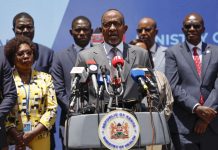
The ranking, contained in the 2024/2025 National Annual Performance Report released at Munyonyo Speke Resort Hotel last week, cites strong implementation of planned activities, alignment with national priorities, and effective coordination across multiple government agencies. The award was presented by Prime Minister Robinah Nabbanja on behalf of the President, with officials describing it as a reflection of the sector’s commitment to delivering value from Uganda’s petroleum resources.
Energy Minister Ruth Nankabirwa credited the achievement to disciplined technical teams and a focus on responsible resource management, while Petroleum Authority Executive Director Ernest Rubondo pointed to sustained professionalism and adherence to global industry standards.
The recognition comes as Uganda accelerates efforts toward first oil production, targeted for the 2026/2027 financial year. Key projects are registering steady progress, with the Tilenga development now over 67 percent complete and the Kingfisher project at 77 percent. The East African Crude Oil Pipeline (EACOP), a critical export route, has reached 84 percent completion, with all required pipes delivered and significant construction milestones achieved across Uganda and Tanzania.
At the same time, the sector is beginning to show tangible economic impact through employment and local participation. Over 21,000 jobs have been created in the oil and gas industry, with 86 percent held by Ugandans. Thousands of these opportunities have directly benefited local communities in project areas, while Ugandan companies have secured contracts worth more than two billion dollars about 30 percent of the total value awarded so far.
Government is also positioning the sector as a skills engine for the wider economy, with initiatives such as the National Oil and Gas Talent Register expected to support knowledge transfer into other sectors including construction, energy, and infrastructure development.
This growing momentum comes at a time when global petroleum markets are increasingly volatile, partly driven by ongoing geopolitical tensions in the Middle East. Disruptions in supply chains, fluctuating oil prices, and uncertainty in major producing regions are already being felt across the globe.
At several fuel stations in Uganda, intermittent shortages have been reported, with some outlets running out of stock before resupply, leaving motorists stranded or forced to seek alternative options.
Officials maintain that fuel and gas supply is sufficient till end of April this year but sustaining high standards, strengthening governance, and maximizing local benefits will be critical as Uganda moves closer to becoming an oil-producing nation.