By Wadulo Arnold Mark
Uganda is seeking to expand its share of the global Information Technology and IT-Enabled Services (IT/ITES) market as government and private sector players develop strategies to position the country as a competitive global outsourcing hub.
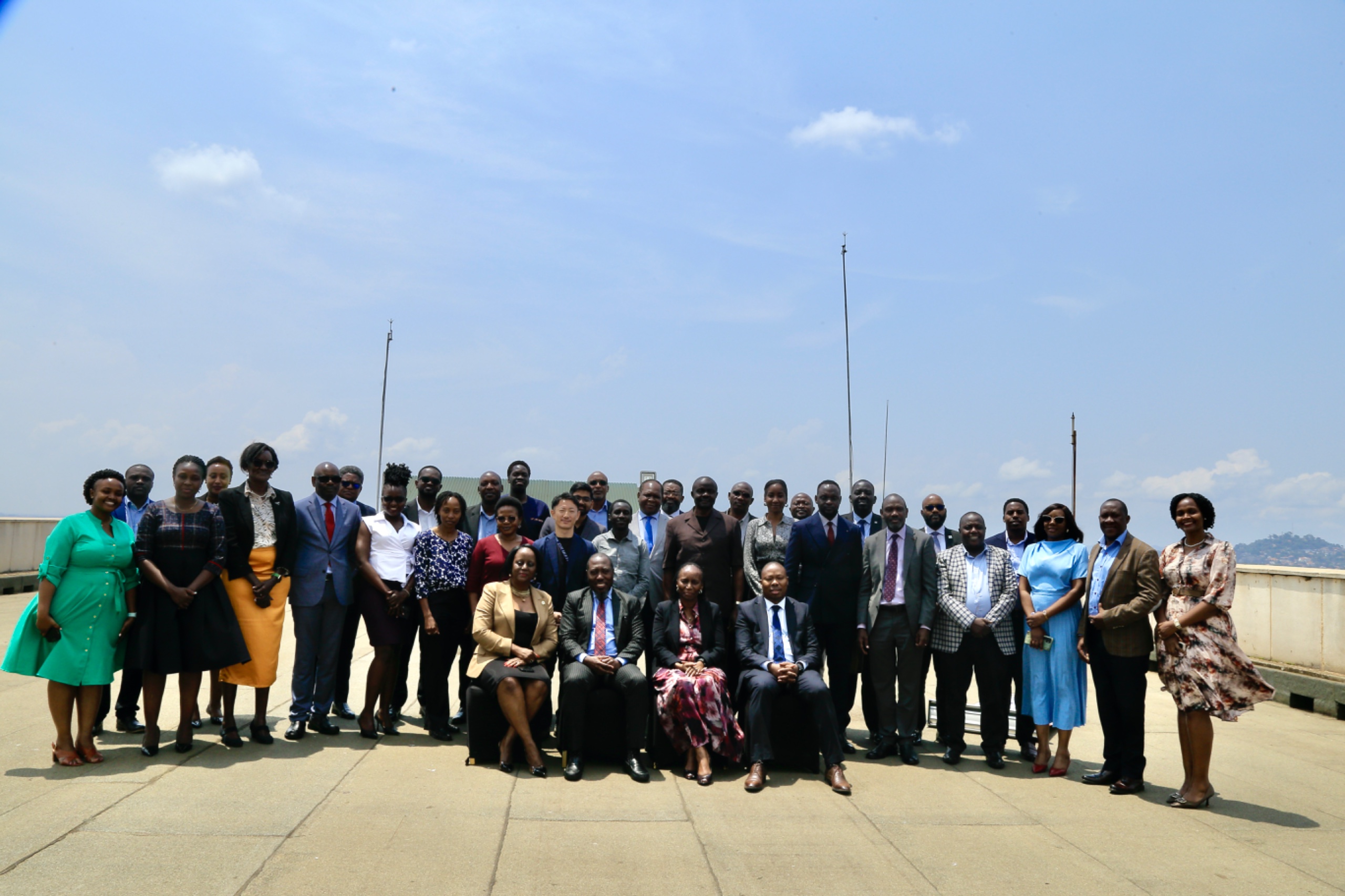
The Uganda Free Zones and Export Promotions Authority (UFZEPA) convened a high-level symposium at the Sheraton Kampala Hotel on Thursday, August 20, 2026, under the theme, “From Potential to Performance: Positioning Uganda as a Competitive Global IT & ITES Export Hub.”
Uganda’s IT and ITES exports currently stand at $48.5 million, compared with a global market valued at $1.57 trillion and an African regional market estimated at $9.2 trillion.
Brenda Kabasinguzi, Manager of Export Marketing Services at UFZEPA, said Uganda’s IT exports peaked at $55.4 million in 2023 before declining to the current level, highlighting the need for stronger support to grow the sector.
She said Uganda remains competitive in the global outsourcing industry, ranking 24th in business process outsourcing (BPO) and 12th in labour competitiveness. The country is targeting an increase in BPO jobs from about 12,000 currently to 150,000 by 2030, with UFZEPA supporting the expansion through specialised BPO hubs, including ICT hubs across the country.
UFZEPA Executive Director Hez Kimoomi Alinda said the shift from physical goods to services presents Uganda with an opportunity to increase its participation in international trade.
He called for reforms in public sector policies, regulations and service delivery to create a more business-friendly environment capable of attracting investment into the sector.
“When we look at our policies, when we look at our regulations, when we act in a more corporate and business-like manner as a government, we’ll be able to attract investment in this space,” Alinda said.
Representing the Minister of Trade, Industry and Cooperatives, Hon. Sanjay Tanna, Commissioner for Business Development and Quality Assurance Patrick Mugisha said the symposium marked the official beginning of implementing Uganda’s 2025 National BPO Policy.
Mugisha described BPO as a major opportunity for employment and trade, particularly given Uganda’s youthful population, and urged the country to maximise opportunities under the African Continental Free Trade Area (AfCFTA) protocol on trade in services.
He also called for greater investment in research and development to build intellectual property and strengthen Uganda’s knowledge economy as the country pursues its long-term economic growth ambitions.
From the private sector, Peter Muhumuza of Roke Telecom called for improved digital infrastructure and the removal of taxation bottlenecks affecting local exporters.
He said Uganda’s English-speaking workforce gives the country an advantage in the global services market, while emerging technologies such as Artificial Intelligence (AI) present new opportunities.
Muhumuza noted that AI data centres require significant amounts of electricity and suggested that Uganda could leverage the power potential of the River Nile to support AI processing centres serving international markets.
He also pointed to the ease of exporting digital services compared with physical commodities, citing a Ugandan company operating remotely from Lira that serves clients in Japan and Europe.
Stakeholders at the symposium agreed that stronger infrastructure, supportive policies, investment in skills and research, and closer public-private collaboration will be critical to transforming Uganda’s existing IT capacity into a globally competitive export industry.