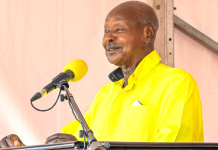
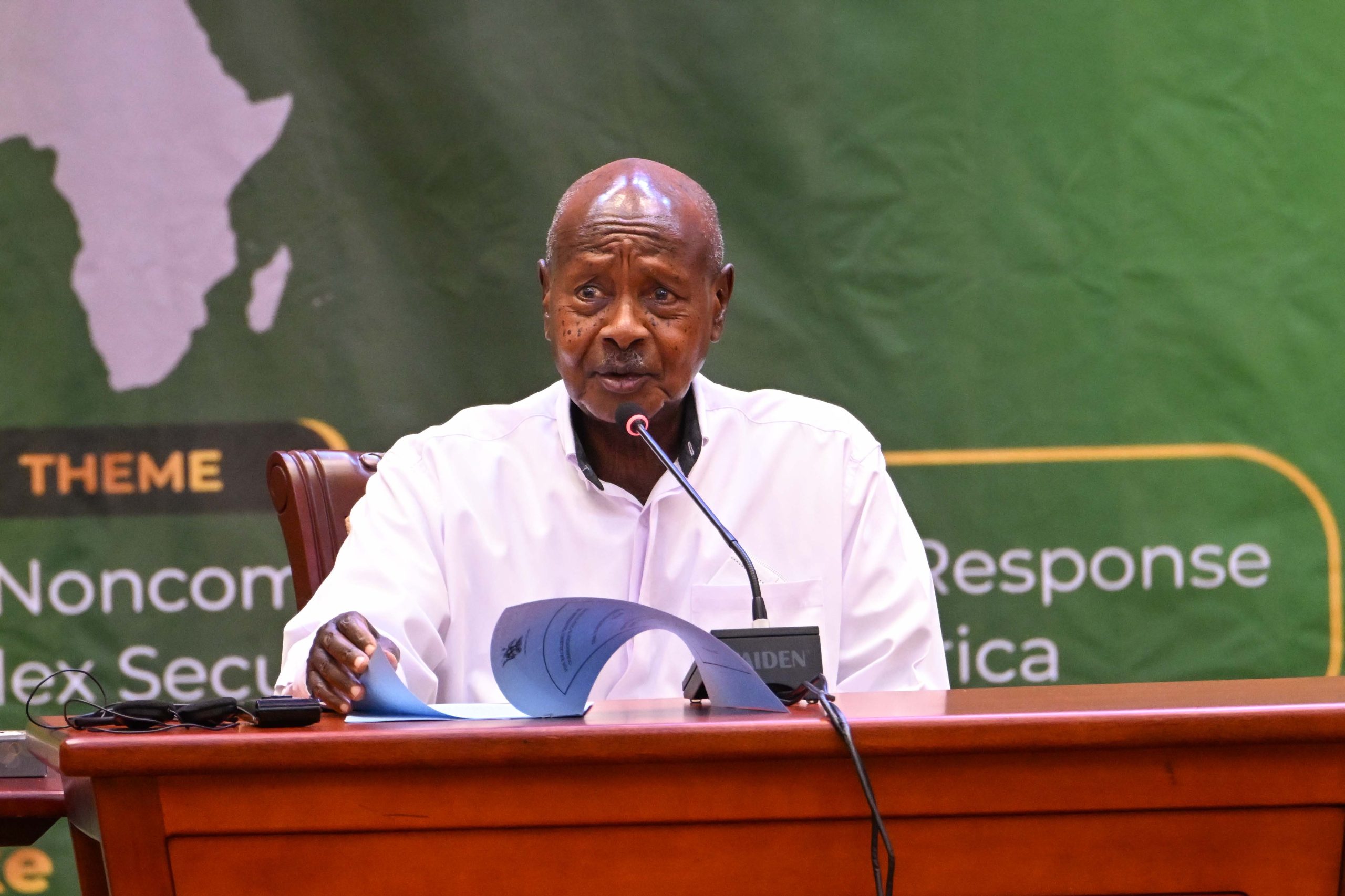
President Yoweri Kaguta Museveni has urged African countries to strengthen their economies, political cohesion and regional integration as critical foundations for national and continental security.
President Museveni, who is also the Commander-in-Chief of the Uganda People’s Defence Forces (UPDF), said Africa cannot effectively address emerging security threats without confronting the fundamental economic, political and geopolitical factors that determine the strength and stability of nations.
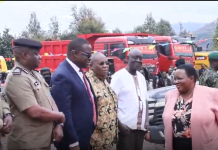
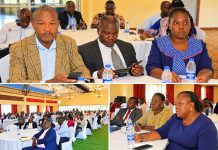
He made the remarks today while closing the inaugural Conference of African Defence Chiefs on Military Operations Other Than War at Speke Resort Munyonyo in Kampala.
The four-day high-level conference, which started on October 5, was hosted by Gen. Muhoozi Kainerugaba, the Chief of Defence Forces and Senior Presidential Advisor for Special Operations.
The conference was held under the theme: “Strengthening Adaptive Noncombatant Military Response to Emerging Complex Security Threats in Africa.”
Addressing defence chiefs, intelligence chiefs and force commanders, President Museveni posed three fundamental questions that he said African strategists must answer.
“Can you have a strong army and a strong and safe country without a strong economy? Can you have a strong defence force and a strong and safe country without cohesive politics? Finally, can you have a strong defence force and a strong and safe country without, in some cases, addressing the issue of geo-strategic location such as being landlocked?” he asked.
He said these questions remain relevant even in times of peace because the strength of a country’s economy, political system and strategic position directly influences its ability to defend itself.
On the economy, President Museveni said a country cannot be strong and secure without a strong economy.
He said economic strength begins with wealth creation through the production of goods and services, guided by careful assessment of the maximum possible returns.
“In the case of Uganda, we have guided our people about the four sectors where wealth is found. These are commercial agriculture, manufacturing and artisanship, services and ICT,” he said.
However, President Museveni said producing goods and services alone is not enough; countries must also secure markets for their products.
He explained that local markets can sometimes be constrained when communities produce similar goods and services, making wider regional and continental markets essential.
“We discovered that people of the same tribe do not buy from one another many times. Why? Most of the time they are producing similar products. Hence A cannot buy from B and B cannot buy from A,” he said.
According to the President, this reality reinforces the importance of patriotism and regional integration, because citizens from different communities and countries can provide markets for one another’s products.
“The people from the other parts of Uganda come to the rescue of A and B by supporting their prosperity with their pockets, ensawo,” he said.
He said this understanding informed the first ideological principle of the National Resistance Army (NRA), the UPDF and the National Resistance Movement (NRM): patriotism.
“Love Uganda. Why? It is because, among many other reasons, you need Uganda for your prosperity,” President Museveni said.
Pan-Africanism and the common market:
President Museveni said Uganda’s economic transformation eventually demonstrated the limitations of relying solely on the domestic market.
As Ugandans increased production of sugar, milk, maize and industrial products, he said, the country needed larger markets to absorb increased production.
He traced the Pan-African movement to the founding of the African National Congress (ANC) in South Africa in 1912, arguing that African unity remains important not only as a political ideal but also as an economic necessity.
“Hence we were able to tell our people about Pan-Africanism, about the East African common market, the CFTA of the whole of Africa and, in some cases, the creation of political federations such as the one of East Africa where possible,” he said.
President Museveni said a common African market would provide wealth creators with a larger and more reliable market while strengthening the economic foundations of African countries.
“The common market of Africa or in its regions would address the issue of the wealth creators’ prosperity by creating a huge and guaranteed market for them,” he said.
He said this economic logic also exposes the limitations of politics based on tribal and religious identity.
“If my tribemates are not able to support my prosperity by buying my goods and services, why do I not treasure the other Ugandans that buy my products?” he asked.
President Museveni further linked economic integration to continental security, arguing that regional political integration would enhance Africa’s collective defence capabilities.
He said the proposed East African Political Federation would not only facilitate trade and economic integration but also strengthen strategic security through collective defence arrangements.
He cited the possibility of a Federal Army of East Africa capable of protecting member states on land, at sea, in the air and in space.
“Uganda alone, even when it is a developed country, may not be able to play such a role. We do not even have access to the sea. Our brothers that are near the ocean may also have their own limitations. Together we can do the task more easily,” he said.
On philosophy and strategy, President Museveni said African countries must clearly identify who should create wealth and why.
“If you do not answer this correctly,” he warned, “the economy will not grow sustainably.”
He said Uganda had identified the private sector as the principal engine of wealth creation, while the government should provide an enabling environment, infrastructure and security.
President Museveni used a biblical analogy from the Book of John to distinguish between an owner and a hired shepherd, arguing that those with a direct stake in an enterprise are more likely to protect and sustain it.
He said answering questions about wealth creation, political cohesion and national strategy correctly is “destiny shaping” for countries, while wrong answers can lead to instability and chaos.
Role of defence forces beyond warfare:
President Museveni also highlighted the role of the UPDF and other defence institutions in supporting national development beyond conventional military operations.
He said the defence forces contribute to infrastructure development, including roads, railways and stadia, as well as wealth creation through agriculture and manufacturing and occasional public health initiatives.
He said the UPDF also constructs military barracks and maintains preparedness through training during peacetime.
President Museveni said the lower costs and quality of some UPDF construction projects should challenge civilian contractors to improve efficiency and workmanship.
He also welcomed the delegates to Uganda and called on investors to come to Africa and support the continent’s growing production by investing in and purchasing African products.
Emerging security threats:
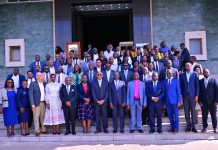
The conference brought together defence chiefs from 18 countries, alongside commanders of the African Union Support and Stabilization Mission in Somalia (AUSSOM), the United Nations Organization Stabilization Mission in the Democratic Republic of the Congo (MONUSCO), the United Nations Interim Security Force for Abyei (UNISFA) and the United Nations Mission in South Sudan (UNMISS).
Participants discussed emerging security challenges, including cybersecurity, artificial intelligence, drones, peace support operations, climate change, disaster management, pandemics, border security and protection of critical infrastructure.
The Minister of Defence and Veteran Affairs, Hon. Kiryowa Kiwanuka, said it was an honour for Uganda to convene the conference at a time when Africa is facing increasingly complex security threats.
He commended Gen. Muhoozi Kainerugaba for conceiving a conference theme that moves beyond conventional warfare to address emerging challenges such as cyber threats and other non-traditional security risks.
“Our theme of ‘Strengthening Adaptive Noncombatant Military Response to Emerging Complex Security Threats in Africa’ is very important because it addresses the security threats that the region continues to face, hence timely,” the minister said.
He said the conference was aimed at strengthening cooperation, information sharing and preparedness among African defence forces.