
Yerevan, Armenia
Governments attending the United Nations biodiversity summit in Armenia have been urged to cut subsidies supporting environmentally harmful industries, amid growing concerns over slow progress towards global nature conservation targets.
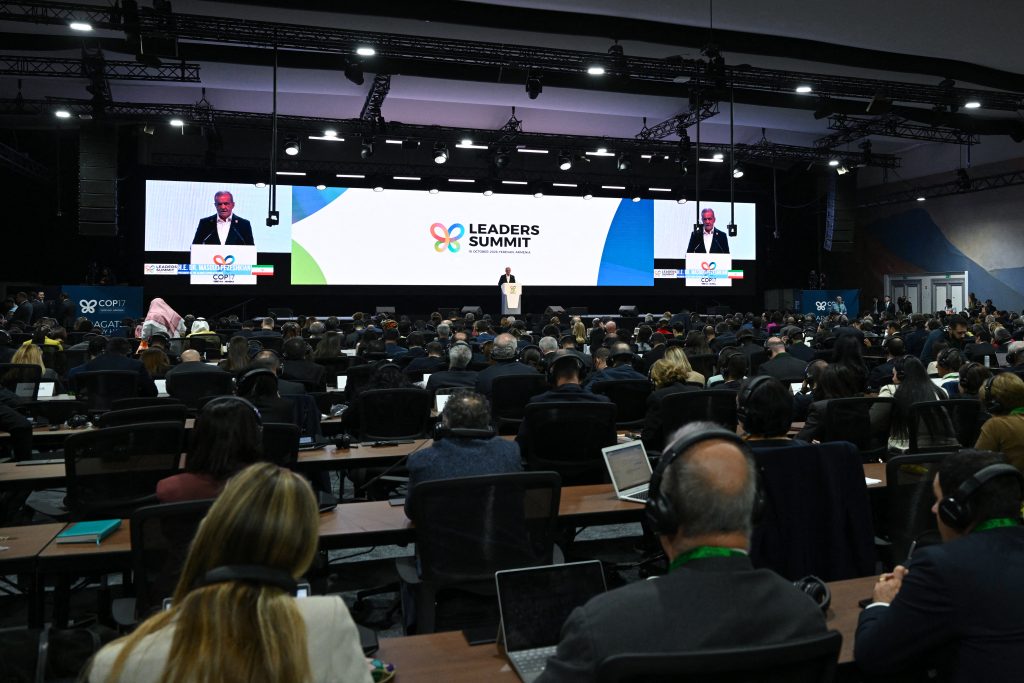
The COP17 summit opened on Monday in Yerevan, bringing together representatives from nearly 200 countries to assess progress on commitments made four years ago to halt and reverse biodiversity loss by 2030.
A UN assessment released ahead of the summit shows that 22 of the 23 targets under the global biodiversity agreement remain off track, raising concerns about countries’ ability to meet their commitments.
UN biodiversity chief Astrid Schomaker said the greatest challenges involve economic and social reforms, particularly the removal of government subsidies that encourage activities harmful to the environment.
Despite commitments to phase out such support, approximately $2.6 trillion in government subsidies continues to flow annually into activities that damage biodiversity, including fossil fuel extraction and industrial agriculture.
Chinese Environment Minister Huang Runqiu called on governments to reduce financial incentives that contribute to biodiversity loss.
Under the global biodiversity agreement, countries committed to reducing harmful subsidies by at least $500 billion annually by 2030. However, progress towards that target remains limited.
Funding gaps threaten conservation efforts
The summit is also examining the shortage of financing for biodiversity protection, particularly in developing countries.
UN Secretary-General António Guterres criticised governments for continuing to finance environmentally damaging activities while failing to meet conservation funding commitments.
He warned that subsidising fossil fuels undermines global efforts to protect the environment.
Conservation organisations say inadequate funding is delaying programmes to reduce pollution, control invasive species and protect at least 30 percent of the world’s land and oceans by 2030.
Celine Beaulieu of the World Wide Fund for Nature (WWF) urged governments to redirect existing financial resources towards conservation rather than activities that accelerate environmental destruction.
“We cannot finance nature with one hand and subsidise its destruction with the other,” Beaulieu said.
Wealthier nations are expected to push for greater financial contributions from emerging economies, including China, while discussions will also explore ways of attracting private investment into biodiversity conservation.
One proposal seeks to encourage companies to contribute a portion of their profits to a UN conservation fund supporting biodiversity projects in developing countries.
Greenpeace representative An Lambrechts warned that commitments made at the summit would have little impact unless governments implemented corresponding policies at home.
Countries pressed to turn pledges into action
Armenia’s Environment Minister Hambardzum Matevosyan, who is presiding over COP17 negotiations, said the summit provides an opportunity for governments to address shortcomings in the implementation of global biodiversity commitments.
The two-week conference is expected to attract up to 15,000 participants, making it one of the largest international gatherings hosted by Armenia.
The negotiations are taking place against a backdrop of strained public finances, geopolitical tensions, armed conflicts and a global energy crisis, all of which have affected governments’ spending priorities.
Speaking ahead of the formal negotiations, Matevosyan said the summit’s success should be measured by the implementation of commitments rather than the number of declarations or resolutions adopted.
Guterres also called for stronger political commitment, warning that continued environmental destruction threatens the planet’s ability to support future generations.
The summit will focus on accelerating progress towards the 2030 biodiversity targets, reforming environmentally harmful subsidies and securing additional financing for conservation efforts.
Make the opening more newsyTighten repeated funding points