By Joseph Mary Buwule
KAMPALA, Uganda — Journalists who have demonstrated commitment to accurate, evidence-based reporting on social protection, climate change and their impact on vulnerable communities have been recognised during the National Social Protection Dialogue 2026.
The dialogue was held under the theme, “The Contribution of Social Protection Towards Attainment of the 10-Fold Growth Strategy,” bringing together stakeholders to discuss how social protection can contribute to Uganda’s socio-economic transformation while strengthening the resilience and livelihoods of vulnerable populations.
The awards were organised by the Social Protection Platform Uganda to recognise the critical role journalists play in amplifying the voices of vulnerable groups and bringing emerging social, economic and environmental challenges to the attention of policymakers.
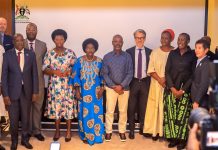
The awards were presented by the Minister of Gender, Labour and Social Development, Lt. Gen. Henry Tumukunde Kakurugu, who emphasised the need for social protection interventions to go beyond providing assistance to vulnerable people.
Lt. Gen. Kakurugu said social protection should also create opportunities that enable vulnerable populations to participate meaningfully in Uganda’s development process.
He stressed the importance of viewing vulnerable people not merely as beneficiaries of government and development programmes, but as active participants who can contribute to economic and social transformation when given the appropriate opportunities and support.
His remarks underscored the broader objective of strengthening social protection systems so that they can address vulnerability while also supporting people to build more resilient livelihoods and participate in national development.
Recognising the role of journalists
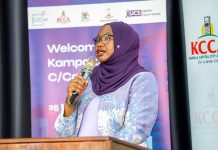
Speaking during the dialogue, Daphine Akampurira, Coordinator of the Social Protection Platform Uganda, said the awards were intended to encourage journalists to produce accurate, well-researched and impactful stories that connect climate-related risks with the need for stronger social protection systems.
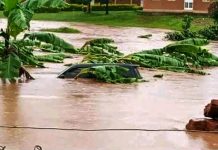
Akampurira said climate change is increasingly affecting communities through events such as droughts and floods, with vulnerable groups often bearing a disproportionate share of the consequences.

“Over time, the weather and the climate have changed, and this comes with effects such as droughts and floods. They affect vulnerable categories in different ways,” Akampulida said.
She explained that quality journalism can help demonstrate these effects and provide policymakers with information that can guide the design of social protection programmes capable of responding to climate-related shocks.
According to Akampurira, the awards therefore focused not only on the visibility of stories but also on the quality of journalism behind them.
She said journalists were expected to demonstrate evidence-based reporting, proper research and credible sourcing rather than relying on hearsay.
“A good story must have a source. It must be well researched and have evidence. You don’t just report on hearsay,” she said.
Akampurira said the ability of journalists to demonstrate the connection between climate change and social protection was another important consideration in selecting the award recipients.
She observed that although climate change and its effects are increasingly being reported, there is still limited understanding among journalists of the intersection between climate-related shocks and social protection.
She said this gap presents an opportunity for the Social Protection Platform Uganda and media practitioners to work more closely to strengthen journalists’ knowledge and skills in reporting the two interconnected issues.
“We noted that the knowledge and skill in reporting the effects of climate change, especially the intersection between climate change and social protection, is not yet fully understood,” she said.
Journalism as a tool for policy change
Akampurira said the organisation intends to engage journalists more closely through training and capacity-building initiatives aimed at improving the quality and impact of reporting.
The objective, she explained, is to ensure that a story does more than simply inform the public.
She said an effective story should provide sufficient evidence and context to enable government officials, programme managers and policymakers to identify gaps and consider appropriate interventions.
“When a government officer, a programme officer or a policymaker reads the story, he or she should be able to know, ‘I should be doing this. Maybe I am not doing it,’” she said.
She said journalists can play a critical role in connecting communities experiencing climate-related challenges with decision-makers responsible for designing interventions.
Through investigative and evidence-based reporting, journalists can document the experiences of vulnerable households, examine whether existing programmes are reaching intended beneficiaries and highlight areas where policy responses may need strengthening.
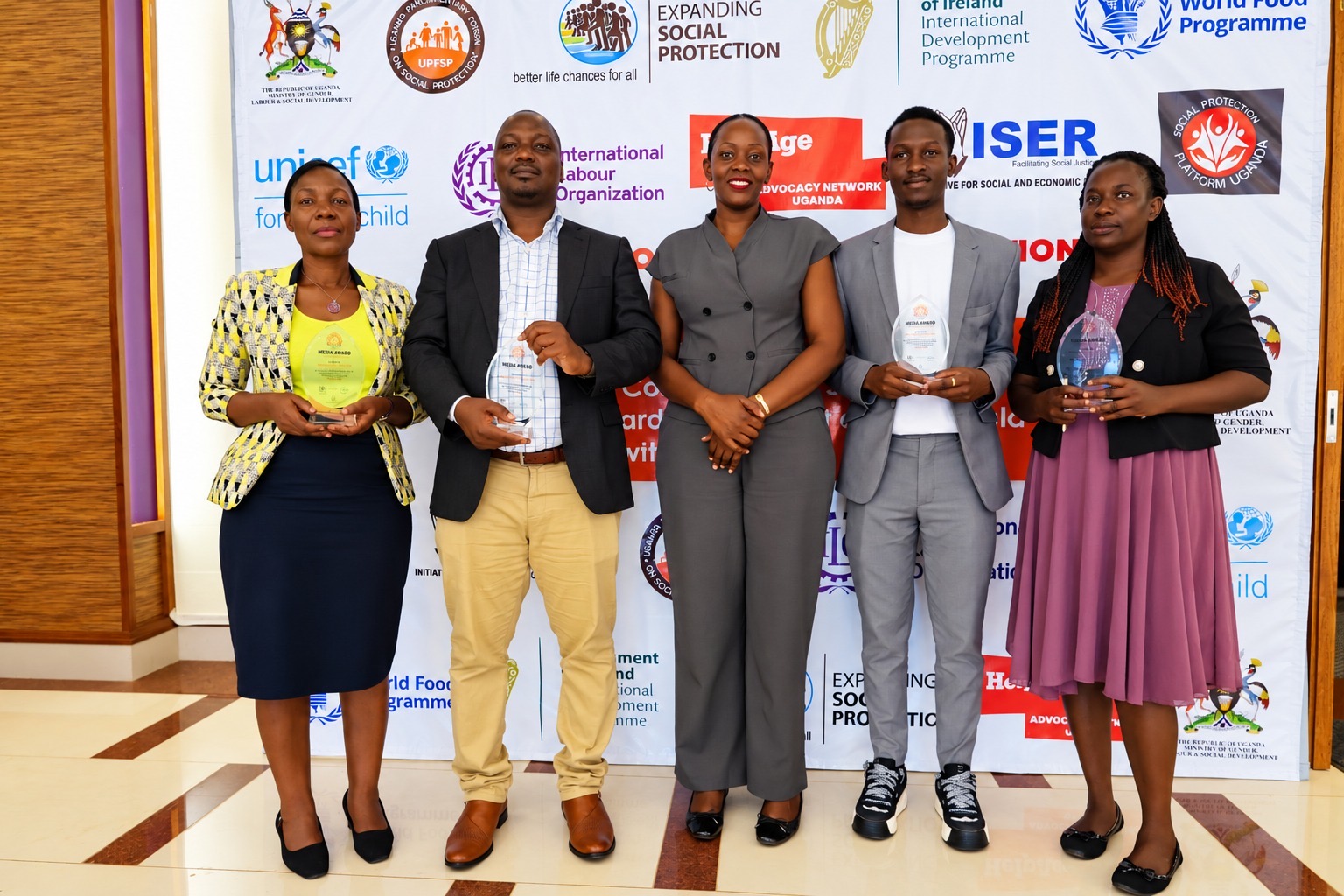
Four journalists recognised
Four journalists were recognised in different media categories for their reporting.
In the radio category, the award went to Paul Kiberu, who works with Bukedde Radio and X FM.
In the print category, Jane Nafula of Daily Monitor was recognised.
Adiah Nakuti of Uganda Broadcasting Corporation (UBC) received recognition in the broadcast category, while Kiva Nelson of New Vision was recognised in the online category.
The recognition is aimed at encouraging journalists across different media platforms to pay greater attention to issues affecting vulnerable populations, particularly those whose livelihoods and wellbeing are threatened by climate-related shocks.
Akampurira said the initiative is also intended to encourage journalists to deliberately investigate the underlying causes and consequences of climate-related vulnerabilities instead of simply reporting individual disasters.
Linking climate change and social protection
Climate change is increasingly creating risks for households that depend on agriculture and other climate-sensitive livelihoods. Droughts, floods and other climate-related shocks can affect household incomes, food security and access to essential services.
For vulnerable households, such shocks can deepen existing challenges and make recovery more difficult.
Akampurira said social protection programmes therefore have an important role to play in helping vulnerable communities prepare for, withstand and recover from such shocks.
She stressed that journalists can contribute to this process by documenting what communities are experiencing, investigating whether existing interventions are reaching those most in need and highlighting gaps that require policy attention.
She also emphasised the importance of responsible reporting, saying journalists need to verify information, identify credible sources and provide evidence to support their stories.
The approach, she said, will help strengthen public understanding while also giving policymakers reliable information on which to base decisions.
Three-year initiative
The journalism awards are part of a broader project being implemented by the Social Protection Platform Uganda with support from a donor.
Akampurira said the project is being implemented over three years and is currently in its second year, leaving one year of implementation.
She said the organisation intends to use the remaining period to deepen engagement with journalists and provide additional opportunities for training and knowledge sharing.
The initiative is expected to strengthen collaboration between social protection stakeholders and the media while encouraging more sustained coverage of issues affecting vulnerable communities.
The recognition of journalists at the National Social Protection Dialogue therefore represents an effort to position the media as an important partner in advancing discussions on social protection, climate resilience and the wellbeing of vulnerable Ugandans.
With the call from Lt. Gen. Kakurugu for social protection to move beyond assistance and create opportunities for meaningful participation in development, stakeholders say stronger evidence-based reporting will remain important in ensuring that the experiences and needs of vulnerable communities inform national programmes and policies.