
By Joseph Mary Buwule
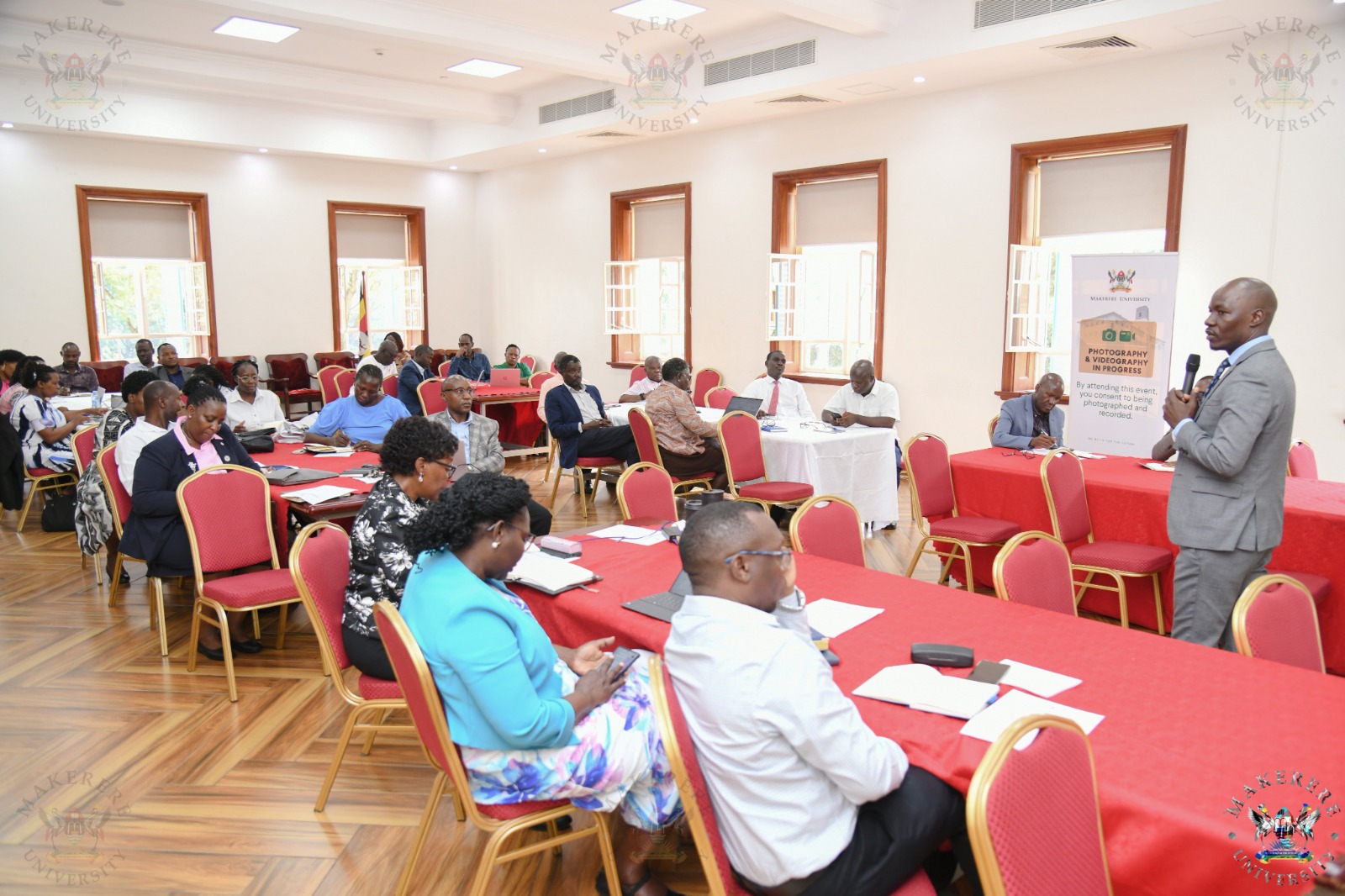
Makerere University has embarked on strengthening the financial management and planning skills of its academic leaders through a specialised training programme aimed at improving the financial and economic appraisal of academic programmes before their approval and implementation.
The training brings together College Principals, Deputy Principals, Deans and Directors to equip them with the knowledge and skills required to develop academic programmes that are properly justified, accurately costed, affordable and aligned with Uganda’s national development priorities.
The initiative is intended to ensure that proposed academic programmes comply with guidelines issued by the Ministry of Finance, Planning and Economic Development, particularly the requirement to obtain a Certificate of Financial Implications (CFI) before approval.
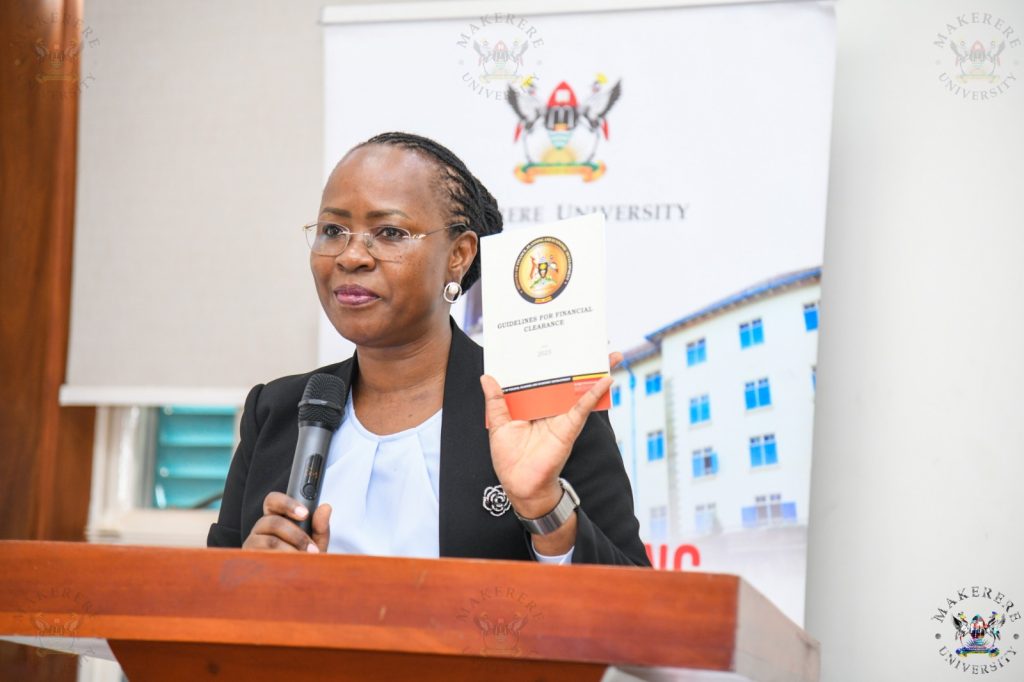
Speaking during the opening of the training, Makerere University First Deputy Vice Chancellor for Academic Affairs, Professor Sarah Ssali, called for stronger collaboration among university departments to ensure effective compliance with the national financial management guidelines.
Professor Ssali said the revised guidelines issued by the Ministry of Finance address challenges experienced under the previous framework and provide an improved approach to assessing the financial implications of proposed academic programmes.
She urged university leaders to work collectively to ensure that programme development and approval processes are supported by sound financial assessments and proper planning.
The training comes at a critical time as Makerere University implements its strategic plan, which seeks to transform the institution into a sustainable, research-led and responsive university capable of addressing national and global development challenges.
Under the new approach, academic programmes are expected to undergo rigorous financial and economic assessment to establish their relevance, sustainability, implementation costs and potential contribution to national development.

The sessions cover several key areas, including an overview of the Certificate of Financial Implications guidelines, the role of Integrated Regulatory Cost-Benefit Analysis in assessing academic programmes, and a practical demonstration of an analytical model to support financial appraisal.
The training is being facilitated by Dr. John Sseruyange and Mr. Hannington Musimenta, who are guiding participants through the technical and practical aspects of evaluating the financial implications of academic programmes.
Professor Ssali also commended the Ministry of Finance, Planning and Economic Development and the Makerere University Public Investment Management Centre of Excellence (MakPIMCoE), hosted at the College of Business and Management Sciences (CoBAMS), for providing technical support to strengthen the university’s compliance with national financial management requirements.
The university expects the capacity-building initiative to strengthen institutional accountability, improve resource allocation and ensure that new academic programmes are financially viable and sustainable.
By equipping its academic leadership with financial appraisal skills, Makerere University is seeking to ensure that academic expansion is guided not only by educational demand but also by responsible financial planning and alignment with Uganda’s development priorities.