By Wadulo Arnold Mark.
KAMPALA –Uganda Development Corporation (UDC) has expanded its investment portfolio from UGX 146 billion to UGX 1.5 trillion since its re-establishment in 2016. Although it recorded a profit of UGX 4.52 billion in FY2021/22, subsequent financial growth has not been consistent.
This comes at a critical juncture for Uganda’s economy, which faces compounding macroeconomic pressures. Fluctuations in the shilling-dollar exchange rate, high commercial borrowing costs, and rising global oil prices triggered by USA–Iran and wider geopolitical tensions in the Middle East which have pushed up fuel, transport, and industrial production costs across domestic supply chains.
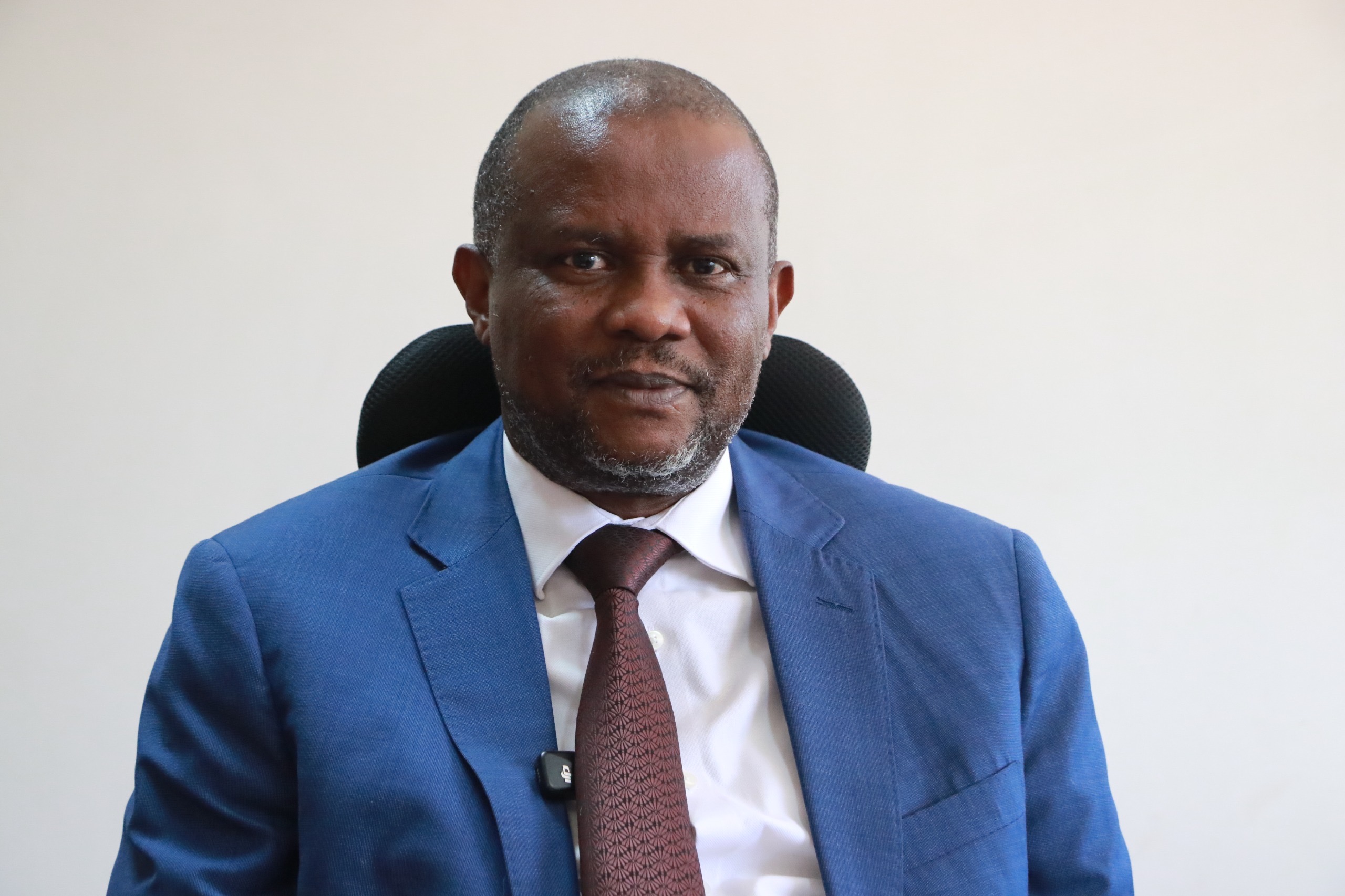
Speaking in an exclusive interview with UBC marking UDC’s decade of revitalisation, Executive Director Dr. Patrick Birungi highlighted the corporation’s transition from a struggling entity with a single active project into a major state investment vehicle.
“Over the last 10 years, we’ve grown our investment value from 146 billion to 1.5 trillion as we speak today and I foresee this increasing to about 5 trillion in the next five or 10 years because now the speed has picked,” Dr. Birungi stated. “In terms of profit, I can confidently confirm that this financial year we have moved to the profit position as Uganda Development Corporation.”
Re-established under the UDC Act of 2016 to lead state co-investment, de-risk manufacturing, and promote import substitution, UDC has rebuilt its institutional capacity to drive Uganda’s Vision 2040 industrial agenda.
“Today we are talking about 29 investments and about 14 of them are running businesses,” Dr. Birungi explained. “We found 20 staff, majority of whom were administrative. So the technical team was thin. Now we have a fullyfledged technical team up to a staff of about 72 as we speak today.”
Despite these operational achievements, governments first independent evaluation of UDC in 2025 since re-establishment, conducted by the National Planning Authority (NPA) for the Ministry of Finance, exposes significant institutional, financial, and governance constraints.
The NPA evaluation reveals that UDC’s development impact is currently falling short of its ambitious 10-year Strategic Plan (2020–2030) targets, which aim to deploy UGX 5.1 trillion to generate 82,300 direct jobs, 80,300 indirect jobs, and over 23,000 induced jobs. Five years into capitalisation, only two out of 18 evaluated projects were generating dividends or loan repayments, while 40% of approved positions remained vacant, leaving frontline technical monitoring critically understaffed.
Financially, over 80% of UDC’s funds rely on unpredictable supplementary government allocations, often earmarked for presidential directives, which crowds out approved pipeline projects. Furthermore, funding turnaround times for greenfield projects drag up to 240 days—nearly double the 120-day benchmark of regional peers like the Kenya Development Corporation.
To shield strategic industries from high market interest rates averaging over 20%, UDC offers concessional shareholder loans at 6% to 10% interest, using the Central Bank Rate as a base. However, global market shocks continue to test this portfolio. A sharp drop in global tea prices, alongside high transport costs and regional trade barriers, severely impacted backed ventures like Mpanga Growers Tea Factory.
Addressing wider pressures from exchange rate depreciation and imported inflation, Dr. Patrick Birungi urged policy makers to focus on expanding productive export capacity rather than relying solely on short-term monetary interventions.
“There is a common saying that never waste a crisis,” Dr. Birungi emphasized. “Bank of Uganda and Ministry of Finance temporary measures stabilize the environment, but ultimately we need long-term solutions and long-term solutions is to allocate adequate resources for investment in exports. If we had more exports now would be smiling instead of crying.”
Under its 2020–2030 Strategic Plan, UDC commits 56% of its portfolio to agro-industrialisation—rescuing vital enterprises like Soroti Fruit Factory, Atiak Sugar, and Budadiri Arabica Coffee—while directing UGX 70 billion to mineral beneficiation partnerships, including iron ore processing in Mbarara and Kabale.
Beyond agro-processing and mining, UDC has invested in infrastructure, hospitality, utilities and manufacturing, accounting for 28 percent of its disbursed funds. Its investments include a 103-billion-shilling stake in Speke Resort Convention Centre at Munyonyo, a 25 percent shareholding in Munyonyo Commonwealth Resort Hotel and full state ownership of Nile Hotel International Limited, which manages the Kampala Serena Hotel concession.
The corporation also holds a stake in Kalangala Infrastructure Services, which provides ferry transport, solar power, water and road infrastructure on Bugala Island, alongside a 36.15-billion-shilling investment in Abubaker Technical Services to boost local road construction capacity.
In manufacturing, UDC supports East African Medical Vitals, which produces surgical gloves meeting about 60 percent of National Medical Stores’ demand, and Sanga Vet Chem, a local veterinary acaricide manufacturer.
The corporation also manages government equity in commercial properties including Amber House, Embassy House and Development House.
As global geopolitical conflicts disrupt raw material imports and freight logistics, UDC’s transition toward self-sustaining development finance will require legal autonomy, digital loan processing, and structured exit strategies to anchor Uganda’s industrial transformation.