
By David Mwanje
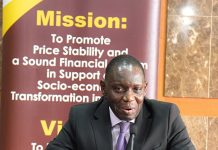
Bank of Uganda deputy governor Prof. Augustus Nuwagaba, has said the country’s long-term growth prospects depend on how effectively global leaders implement the Sevilla Commitment, the landmark agreement on sustainable financing adopted earlier this year.
Prof. Nuwagaba referred to outcomes from the 4th International Conference on Financing for Development, held in Seville, Spain, from June 30 to July 3, 2025 early this year where world leaders endorsed a plan to close the funding gap for the Sustainable Development Goals (SDGs). The conference concluded that developing countries need at least $4 trillion annually to achieve their 2030 development targets.
Prof. Nuwagaba says the Sevilla Commitment, which was backed by 193 countries, offers a realistic framework for tackling debt challenges, reforming the international financial system, and expanding access to long-term development financing.
“Debt sustainability remains one of the biggest obstacles to growth in developing economies,” he said. “Innovations such as debt-for-development swaps and blended finance platforms can help redirect debt repayments toward projects that directly improve livelihoods.”
He explained that debt-for-development swaps allow governments to exchange part of their sovereign debt for investments in social sectors such as health, education, and climate resilience. Blended finance, he added, combines public and philanthropic funds to reduce risk and attract private capital into development projects.
Prof. Nuwagaba revealed that the agreement also highlights new tools to ease debt pressures, including a “Debt Pause Clause”, expansion of multilateral development banks’ lending capacity, and measures to strengthen domestic revenue mobilization.
He noted that taxation can also play a central role in financing sustainable growth, pointing to proposals for a global tax on financial transactions or carbon emissions to raise additional revenue for climate action and development.
He emphasized that the private sector must be central to implementing the Sevilla framework by integrating Environmental, Social, and Governance (ESG) principles into their investment decisions to unlock new growth opportunities.
“Financing sustainable development is not just a moral obligation it is an economic necessity,” he said. “We must reform the global financial system to ensure developing countries like Uganda can access affordable, long-term capital.”
Prof. Nuwagaba added that the success of the Sevilla Commitment will depend on strong governance, transparency, and collaboration among governments, civil society, and development partners.
“The time for action is now,” he said. “We must seize this opportunity to reform the financial system and mobilize resources for sustainable development. Together, we can build a more equitable global economy.”
The Sevilla Commitment, adopted in July, is expected to guide global financing and debt management reforms over the coming decade. For Uganda, it offers a pathway to ease debt pressure, attract new investment, and support inclusive growth.