By Wadulo Arnold Mark
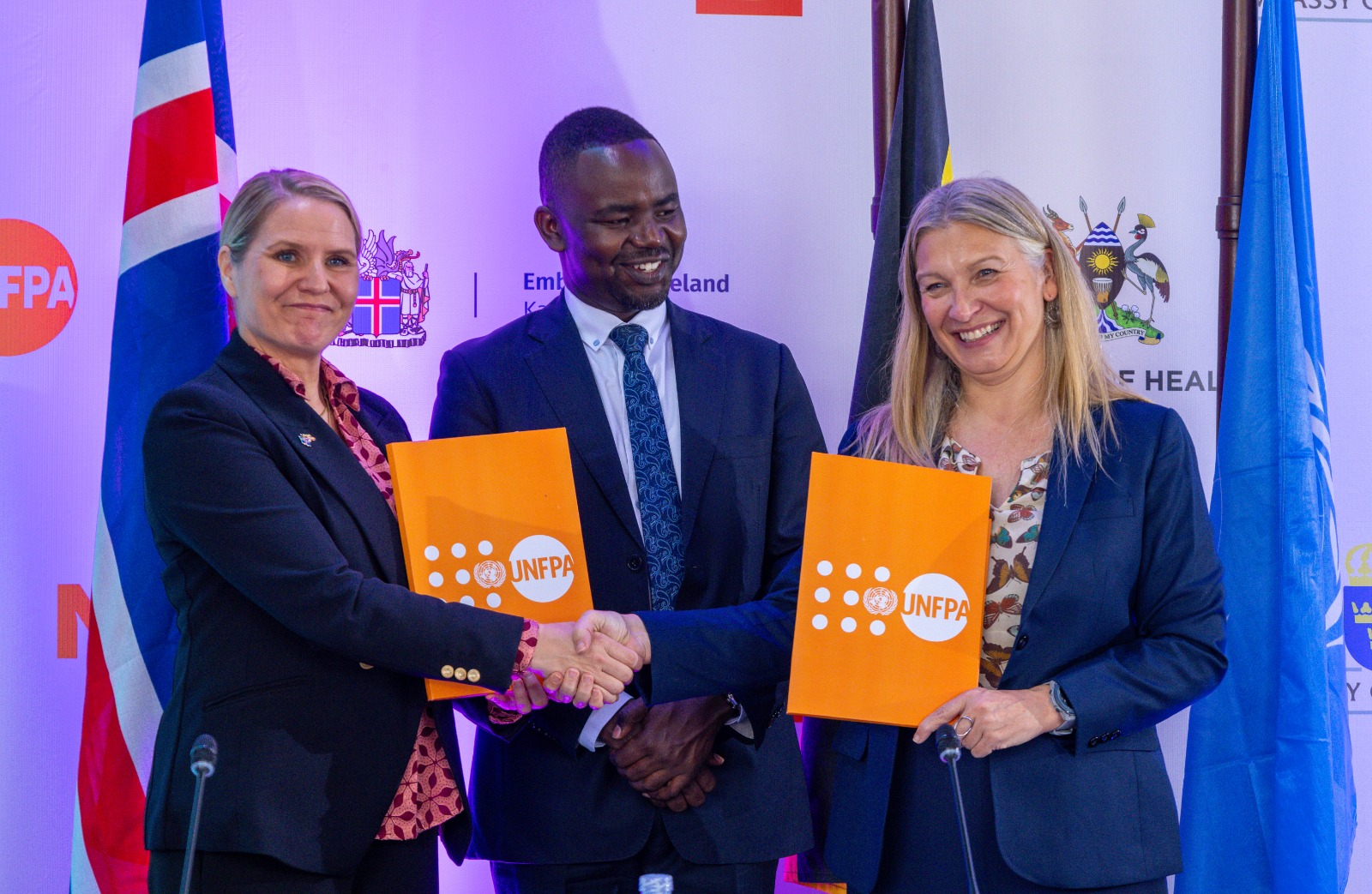
The Government of Iceland, through its embassy, has formally joined Denmark and Sweden as the third donor to the USD 3 million SAY Plus+ sexual and reproductive health programme led by Uganda’s Ministry of Health Uganda and managed by the United Nations Population Fund (UNFPA).
The funding will scale up fistula prevention, treatment, and reintegration services for women and girls across five underserved regions. The three-year initiative targets Acholi, West Nile, Bukedi, Karamoja, and Busoga sub-regions, delivering a comprehensive package that includes sexuality education, youth economic empowerment, community norm transformation, and survivor-centered fistula care.
“There is still a gap in the dissemination of sexual and reproductive health information among most rural communities in Uganda,” says Richard Mugahi, Commissioner for Maternal and Child Health at the Ministry of Health. “Teenage pregnancies remain a major contributor to the statistics,” he adds.
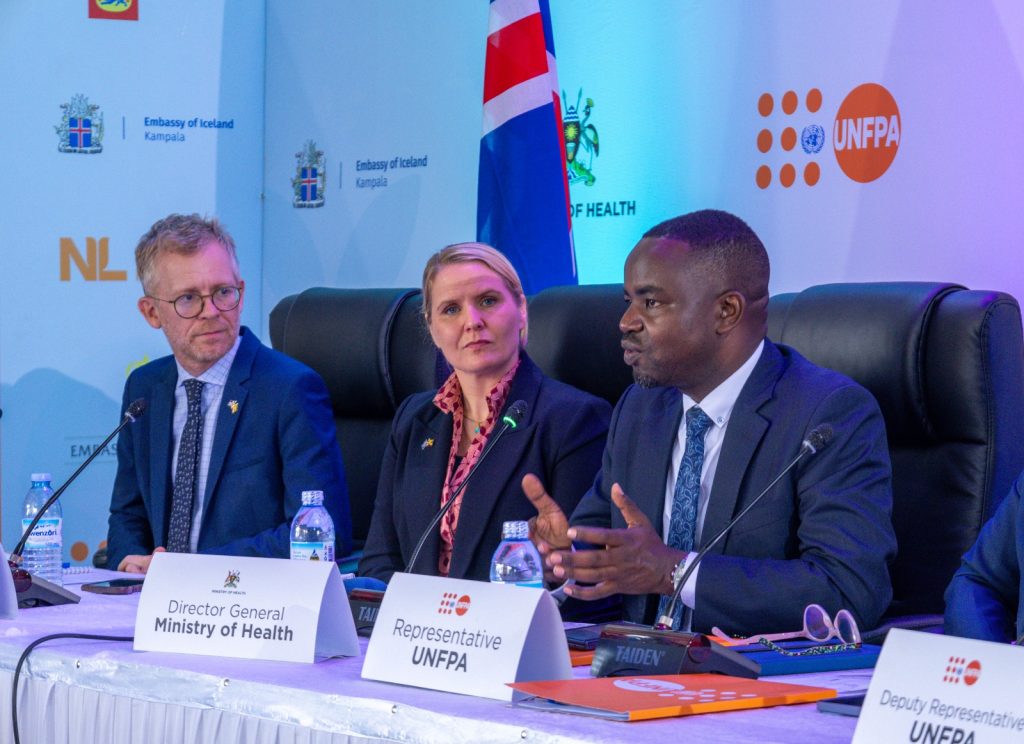
Iceland’s contribution builds on its earlier support to fistula interventions in Uganda and now aligns under a unified results framework. The programme supports Uganda’s National Development Plan IV, particularly its human capital development goals, as well as global targets under Sustainable Development Goals 3, 5, and 10.
Hildigunnur Engilbertsdóttir, Head of Mission at the Embassy of Iceland, says the decision was informed by previous success. “Because we have had strong results addressing fistula in Namayingo District, we wanted to scale this up nationally, and the SAY Plus+ programme aligns well,” she noted.
Obstetric fistula remains a serious childbirth injury caused by prolonged, obstructed labour without timely medical intervention. It results in chronic health complications, social stigma, and economic hardship for affected women.
In Uganda, an estimated 1,900 to 2,000 new cases are recorded annually, with a backlog of approximately 200,000 women living with the condition. While earlier estimates placed prevalence at 2 percent, recent data suggests this has reduced to about 0.6 percent.
By focusing on prevention, timely surgical care, and social reintegration, the expanded partnership aims to restore dignity and economic participation for affected women, while strengthening Uganda’s health systems in hard-to-reach areas.