President Yoweri Kaguta Museveni has today urged the European Union (EU) and Western countries to support Africa’s industrialization and value addition agenda, saying the continent cannot continue exporting raw materials while remaining poor decades after independence.
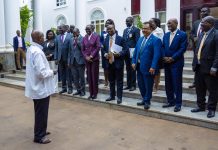
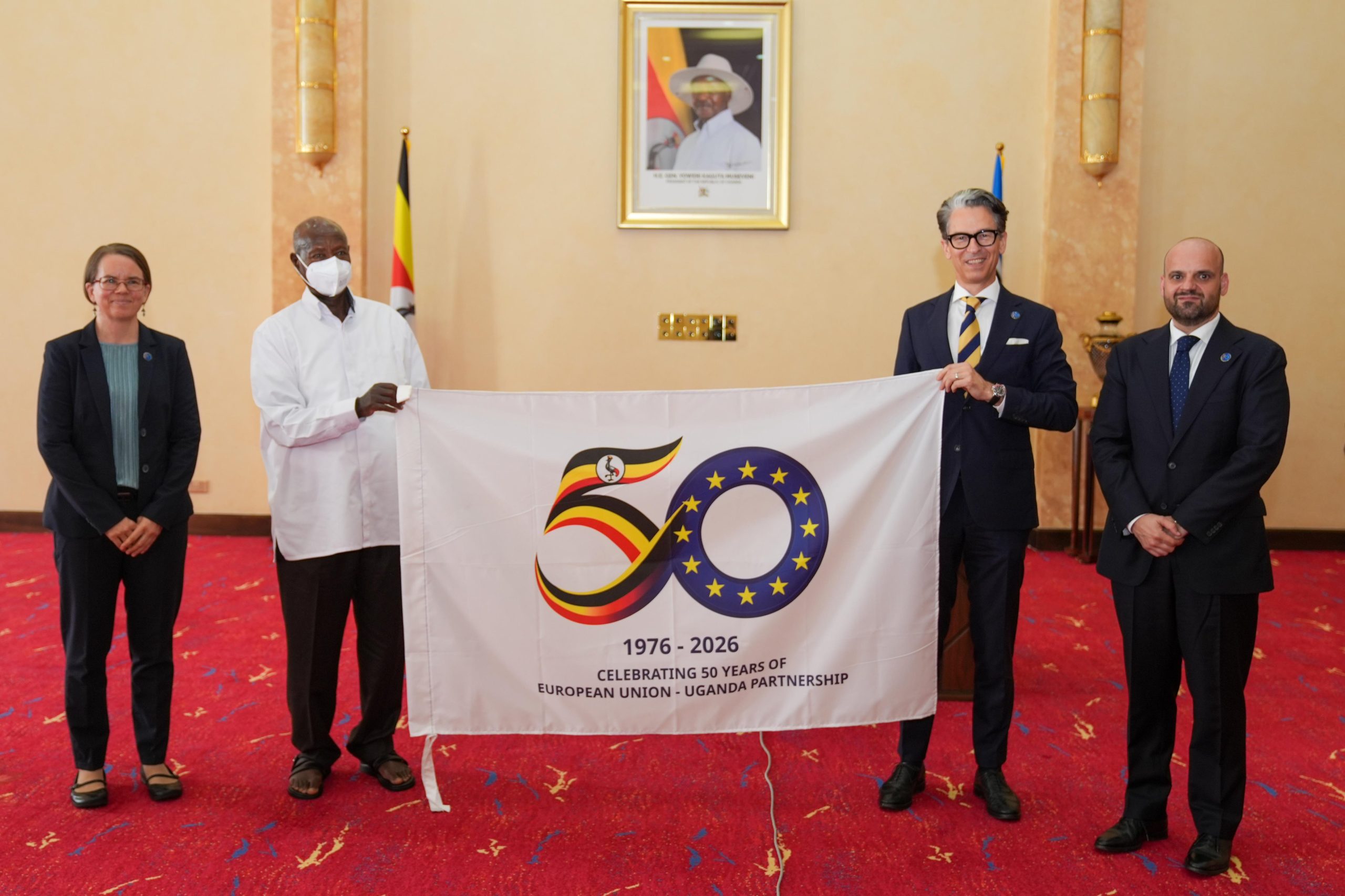
The President made the remarks while meeting the European Union (EU) Ambassador to Uganda, H.E Jan Sadek, and his delegation at State House, Entebbe during a briefing on the Golden Jubilee (50th anniversary) celebration, marking the partnership between Uganda and the European Union.
President Museveni recognised the long-standing relationship between Uganda and the EU, noting that the collaboration stretches back many years, including the period when the European office was opened in Uganda during the Idi Amin era.
“I thank you so much. I am very happy about the 50 years of collaboration between the EU and Uganda,” President Museveni said.
“Although the collaboration was before, I think the 50 years was when the office was opened during Amin’s time. We are very happy with the EU.”
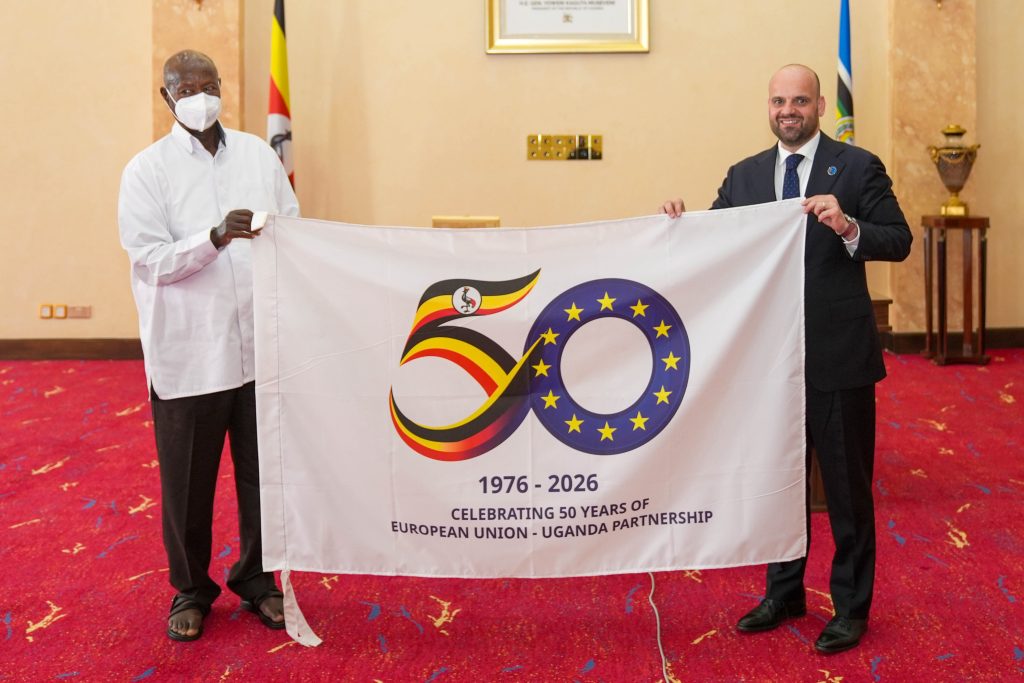
The President, however, used the meeting to emphasize what he described as Africa’s biggest challenge, failure by leaders to prioritize economic transformation through value addition.
“But I want to emphasize what I have been saying, that in the interest of Europe and the US, a more prosperous Africa is very good for business,” he said.
“The total GDP of Africa is only $ 3.6 trillion for a population of 1.5 billion people. This is really not good.”
President Museveni said Africa’s stagnant economic growth is a result of policy mistakes, especially the continued export of unprocessed raw materials.
“On our side, we are quarrelling with our leaders because of being asleep. African leaders here in Africa and other countries are really asleep,” he said.
“The reason why the GDP of Africa is still stagnant is because of the policy mistakes of exporting unprocessed raw materials. This is a very big crime and they will pay historically because it is a betrayal. 70 years after independence, Africans are still exporting unprocessed raw materials.”
The President appealed to Europe and the United States to see Africa as a strategic economic partner whose prosperity would create mutual benefits.
“I would appeal to the EU and the US because I speak English, I don’t speak Chinese, Hindu or Russian. I am your relative culturally,” President Museveni said.
“We can also do a lot of trade with Europe, but Africa needs to be richer. Why should you want to trade with a poor man? Why shouldn’t you want your partner to be rich so that you can both benefit?”
President Museveni noted that Europe possesses strong financial capital, companies and investment funds, while Africa offers a huge market and untapped economic potential.
“The unused potential of prosperity is what is our issue because Europe has got more capital in companies, funds like pension funds and so on, and here in Africa we have the market,” he said.
“The European countries are there, they can make money and we shall make money.”
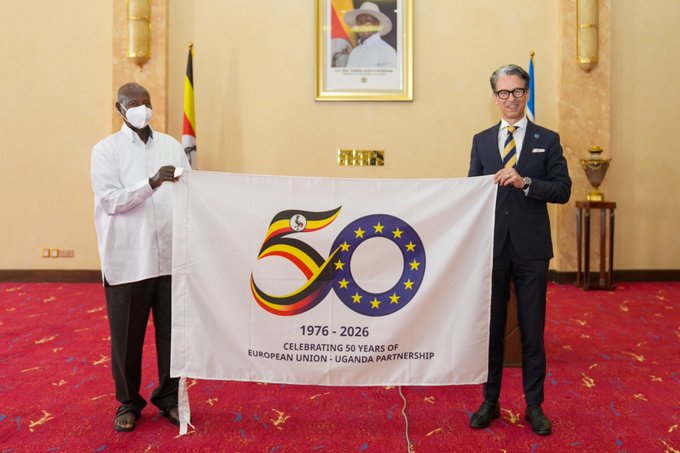
The President assured the delegation that Uganda remains firm on industrialization and value addition policies.
“For us in Uganda, we are very clear. We shall not make those mistakes of stunting the potential of Africa. So, work with us, the others will join us,” he said.
President Museveni also highlighted infrastructure development, especially the railway sector, as another area where Africa and Europe can cooperate for economic growth.
“Other than value addition, the other area is infrastructure, the railway, the meter gauge railway,” he said.
“For competitiveness you need low costs of transport for cargo, electricity and low costs of money in the bank and low costs of labour.”
On governance and international affairs, President Museveni reiterated Uganda’s position on diplomacy and democratic governance.
“On the political side, we believe in diplomacy and multipartism,” he said.
On his part, H.E Sadek, congratulated President Museveni upon his victory and praised Uganda’s growing regional and international influence.
H.E Sadek thanked the President for his commitment to the partnership between Uganda and the European Union for the last 40 years.
“I also want to appreciate the new government that you have formed. We are happy that many of our friends are still in cabinet and happy to see Adonia Ayebare. We are optimistic he will work with the EU-Uganda partnership.”
The Ambassador noted that the EU is this year celebrating its golden jubilee partnership with Uganda and is looking ahead to strengthening cooperation over the next 50 years.
“Once upon a time the European Union was not here physically, but in 1976 we started this relationship and now we are celebrating 50 years,” H.E Sadek said.
“It’s a golden jubilee. We are celebrating many events and trying to look ahead at what we can do in the next 50 years.”
He observed that Uganda and the European Union have both transformed significantly over the decades.
“Uganda was in a difficult period at that time and since then Uganda’s role in the region and continent globally has grown and it has become a voice people listen to in the world,” he said.
H.E Sadek also noted the EU delegation had visited President Museveni to seek his views and guidance on the future of the partnership.
“We wanted to come and brief you that we are celebrating 50 years this year and see if you have any feedback to give around the partnership that we have created and get your guidance and ideas on what we can do in the next 50 years and how we can make sure the partnership remains productive,” he said.
The Ambassador said the EU has supported Uganda in sectors such as roads, hydropower, forestry, tourism and trade, noting that the relationship has evolved beyond donor support.
“Currently our relationship has moved on from a donor relationship to partnership in trade, investments and the economy,” he said.
According to H.E Sadek, trade between Uganda and the EU has grown from 500 million euros to 1.5 billion euros.
He also noted that many Ugandan products have potential in European markets and emphasized ongoing cooperation between governments, the private sector, youth, arts and culture.
“There are very many Ugandans who have produced a lot of products that we would love to market in Europe,” he said.
“This is something we are constantly building on from government to private sector, youths, art and culture. We are everywhere in society and there are links between the European Union and Uganda.”
H.E Sadek further revealed that the EU is supporting Uganda in infrastructure, education, health, sports and the creative industry, among other key areas.
“We are very active in infrastructure like Nalubaale and Kiira hydropower electric plants,” he said.
“We are planning upgrading and construction of about 200 schools, including refugee schools. We are also active in the film industry as a way of creating jobs for young people.”
The Ambassador said the EU will also support Uganda during the upcoming AFCON 2027 tournament.
“We visited Hoima Stadium. That stadium can play an important role not only for AFCON but also in creating enthusiasm among the people of that region,” he said.
“We will be involved in AFCON and we may have people coming from Europe to watch the games.”
H.E Sadek also reaffirmed the EU’s commitment to regional peace and long-term partnership with Uganda.
“We want to remain here for the coming 50 years, reliable and predictable for Uganda in a world that is not always stable. The EU is on a steady course of working with you.”
The Ambassador also announced plans to open a new EU office in Kampala later this year and invited President Museveni to officiate at the event.
During the meeting, H.E Sadek also showcased roasted Ugandan coffee produced in Kisoro, describing it among the best-selling coffee in Europe.