
Central bank cuts economic growth forecast and warns that inflation could reach 7.5% over the next 12 months
KAMPALA, 14 October 2026
The Bank of Uganda has raised its benchmark interest rate from 9.75% to 12%, its sharpest increase in the latest policy decision, as a weakening shilling, rising fuel prices and growing pressure on the country’s external accounts threaten to push inflation higher.
The Monetary Policy Committee, meeting on Wednesday, increased the Central Bank Rate by 225 basis points, signalling tighter borrowing conditions for businesses and households at a time when economic growth is already slowing.
In its October Monetary Policy Statement, the central bank warned that the escalation of conflict in the Middle East had pushed up international oil prices, disrupted shipping routes and increased transport and insurance costs.
These pressures have been compounded by depreciation of the Uganda shilling, making imports more expensive and increasing the cost of fuel and other goods purchased in foreign currency.
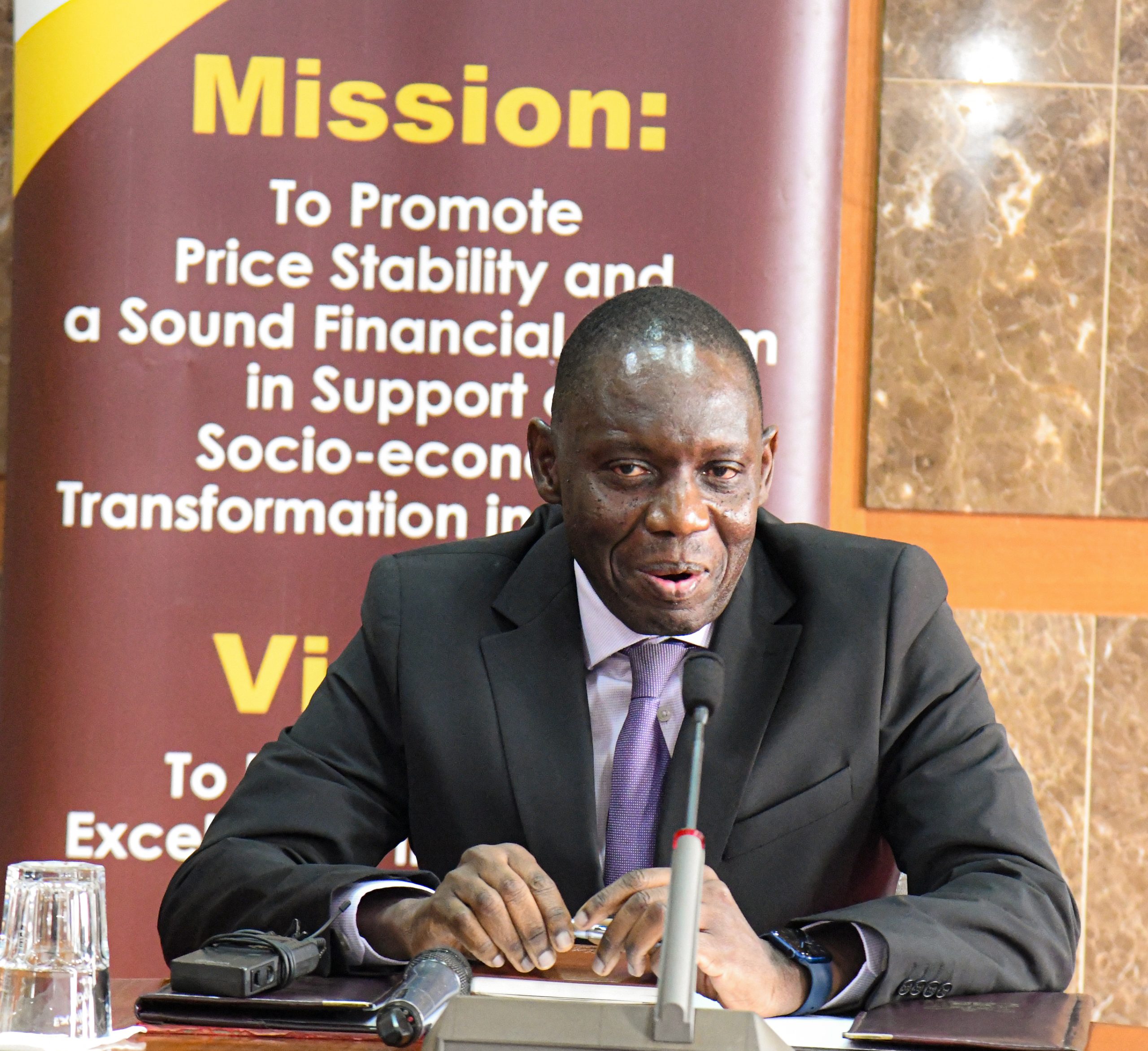
Bank of Uganda Governor Michael Atingi-Ego said the decision was necessary to contain inflation before higher fuel, transport and food costs spread more widely across the economy.
The central bank has revised its inflation forecast upwards, projecting headline inflation to average between 7% and 7.5% over the next 12 months, while core inflation is expected to range between 5.5% and 6%.
Both projections are above the central bank’s medium-term inflation target of 5%.
Inflation rises as fuel and food prices increase
Uganda’s annual headline inflation rose to 4.6% in September from 4.1% in August, driven mainly by higher food crop prices and fuel costs.
Core inflation, which excludes volatile items such as food crops and energy, increased to 3.7% in September from 3.5% in August and 3% in May.
Although inflation remains relatively moderate at present, the Bank of Uganda is concerned that the recent depreciation of the shilling and higher international oil prices could lead to more widespread price increases.
Higher fuel prices affect more than motorists. They increase the cost of transporting agricultural produce, distributing manufactured goods and running businesses that depend on diesel and petrol.
The central bank also warned that adverse weather associated with El Niño could disrupt agricultural production and put further pressure on food prices.
Uganda’s external deficit widens to $4.6 billion
The Monetary Policy Statement also reveals a deterioration in Uganda’s external trade and payments position.
The current account deficit widened by $1.4 billion to $4.6 billion, reflecting lower earnings from agricultural exports, particularly coffee and cocoa, reduced tourism receipts and higher import-related costs.
In the 12 months to August 2026, the goods trade deficit widened to $2.8 billion from $2.4 billion a year earlier.
The services deficit increased from $2.2 billion to $3.3 billion, largely because of higher freight charges, while the primary income deficit rose to $1.7 billion from $1.4 billion.
However, remittances and other secondary income flows improved to $3.1 billion from $2.7 billion, providing some relief to the country’s external accounts.
The widening deficit means Uganda is spending substantially more foreign currency on imports, services and external income payments than it earns from corresponding receipts.
At the same time, higher interest rates in advanced economies have made foreign financial assets more attractive to investors, limiting capital inflows into Uganda and adding pressure on the shilling.
Economic growth forecast cut
The Bank of Uganda has also lowered its economic growth forecast for the 2026/27 financial year from 7% to 7.5% to a revised range of 6% to 6.5%.
The downgrade reflects higher energy costs, tighter financial conditions, exchange rate depreciation and uncertainty in international markets.
Economic growth is estimated at 6.4% for the quarter ending September 2026, compared with 6.8% recorded in the quarter ending June.
Private-sector activity continues to expand, but at a slower pace, while consumer confidence has weakened slightly.
The combination of slower growth and rising inflation presents a difficult policy choice for the central bank. Raising interest rates can help control inflation and support the shilling, but it can also make credit more expensive for businesses seeking to invest or expand.
For households, the higher benchmark rate could translate into more expensive loans, particularly where commercial banks adjust their lending rates in response.
More money tied up in bank reserves
The interest rate increase follows an earlier decision by the Bank of Uganda to raise the Cash Reserve Requirement from 11% to 13.5%, effective 24 September 2026.
The requirement determines the proportion of eligible deposits that commercial banks must hold as reserves rather than use for lending.
By increasing the reserve requirement and the benchmark interest rate, the central bank is seeking to reduce excess liquidity and contain pressure on prices and the exchange rate.
Following Wednesday’s decision, the rediscount rate rises to 15%, while the bank rate increases to 16%.
Despite the immediate pressures, the Bank of Uganda expects economic growth to recover to an average of about 8% over the medium term, supported by private investment, exports, anticipated oil-sector developments and the government’s Tenfold Growth Strategy.
The central bank, however, cautioned that prolonged conflict in the Middle East, persistently high oil prices, further shilling depreciation and unfavourable weather could weaken the outlook.
The Monetary Policy Committee says it remains prepared to take further action if inflation and exchange rate pressures persist.