
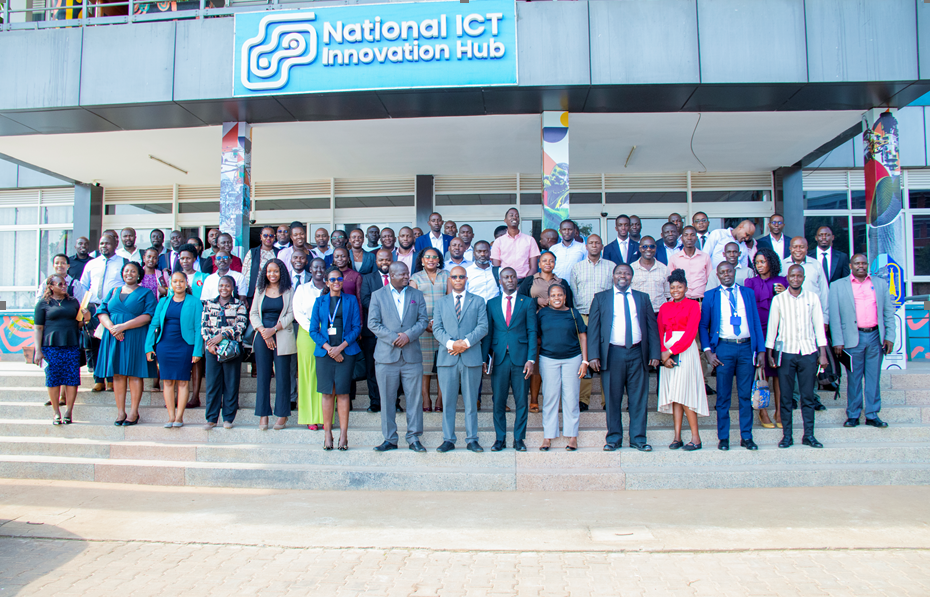
The Government of Uganda has embarked on an ambitious digital transformation agenda aimed at consolidating its technological infrastructure to eliminate waste and prepare for the responsible adoption of Artificial Intelligence (AI). During a recent quarterly meeting of ICT officers from various ministries, departments, and agencies (MDAs), officials revealed a significant overhaul of the current digital landscape to improve service delivery and institutional efficiency,.
A primary focus of the meeting was the revelation that the government currently operates over 700 independent ICT systems. However, research indicates that these hundreds of systems are only addressing approximately 350 unique processes, meaning that nearly half of the government’s digital infrastructure consists of redundant duplications,.
Ambrose Ruyoka, Head of Research at the Ministry of ICT and National Guidance, emphasized the urgent need for a unified approach to management. “There must be one national management system that everyone can do and everyone can deploy,” Ruyoka stated, highlighting that the current fragmentation hinders the government’s ability to communicate across different institutions. He explained that the ongoing efforts are focused on identifying these 700-plus systems and integrating them to ensure they are no longer operating in silos.
Beyond merely reducing the number of systems, the Ministry is pushing for a transition from “partial” to “full” automation. Currently, many government processes are hybrid, requiring citizens to begin an application online but finish it through physical, paper-based interactions. Ruyoka cited the recruitment process in government agencies as a prime example of this inefficiency, where applicants might apply online but are still required to travel long distances for physical interviews and document verification,.
Ruyoka argued that true digital transformation should eliminate the need for physical travel and paper documents entirely. “I don’t have to move from Moroto to come to the Public Service Commission sit for an interview being the deputy CAO. I can remain there, do my interview, and then get selected,” he noted, describing the vision for a truly paperless government. The goal is to move from the current state, where only half of the policies and systems are fully automated, to a future where every government interaction is digital from start to finish.
The consolidation of these systems is a prerequisite for Uganda’s broader Artificial Intelligence (AI) aspirations. The government’s AI strategy is built upon several key pillars: infrastructure, data, standards, governance, research, and innovation. This framework is designed to support 14 priority sectors, including healthcare, agriculture, tourism, mining, banking, and the judiciary.
To ensure this transition is handled responsibly, the Cabinet directed the Ministry of ICT two years ago to develop a National Artificial Intelligence Governance Framework. Since then, the Ministry has completed a landscape study to understand how AI is currently being deployed within the country and is now working to ensure that all digital systems are coordinated and interoperable with both national and international standards.
The success of this digital shift rests heavily on the shoulders of ICT officers within the MDAs. These professionals have been tasked with taking greater responsibility for their respective systems and ensuring they align with the national governance framework.
The meeting also addressed the need for continuous professional development. While the government has already enhanced the salaries of ICT officers by placing them in the “science” category, officials urged these professionals to reinvest in their own growth. “Let us start to invest in ourselves. Investments in IT are expensive. Even skilling is expensive, but for you to remain relevant, we need to skill ourselves,”speakers noted, emphasizing that the enhancement of their value through new skills is essential to driving the transformation agenda forward.