
The Uganda Manufacturers Association (UMA) has called on Parliament to review the monopoly enjoyed by the foreign firm contracted to manufacture Uganda’s digital number plates, citing delays, high costs and disruption to businesses.
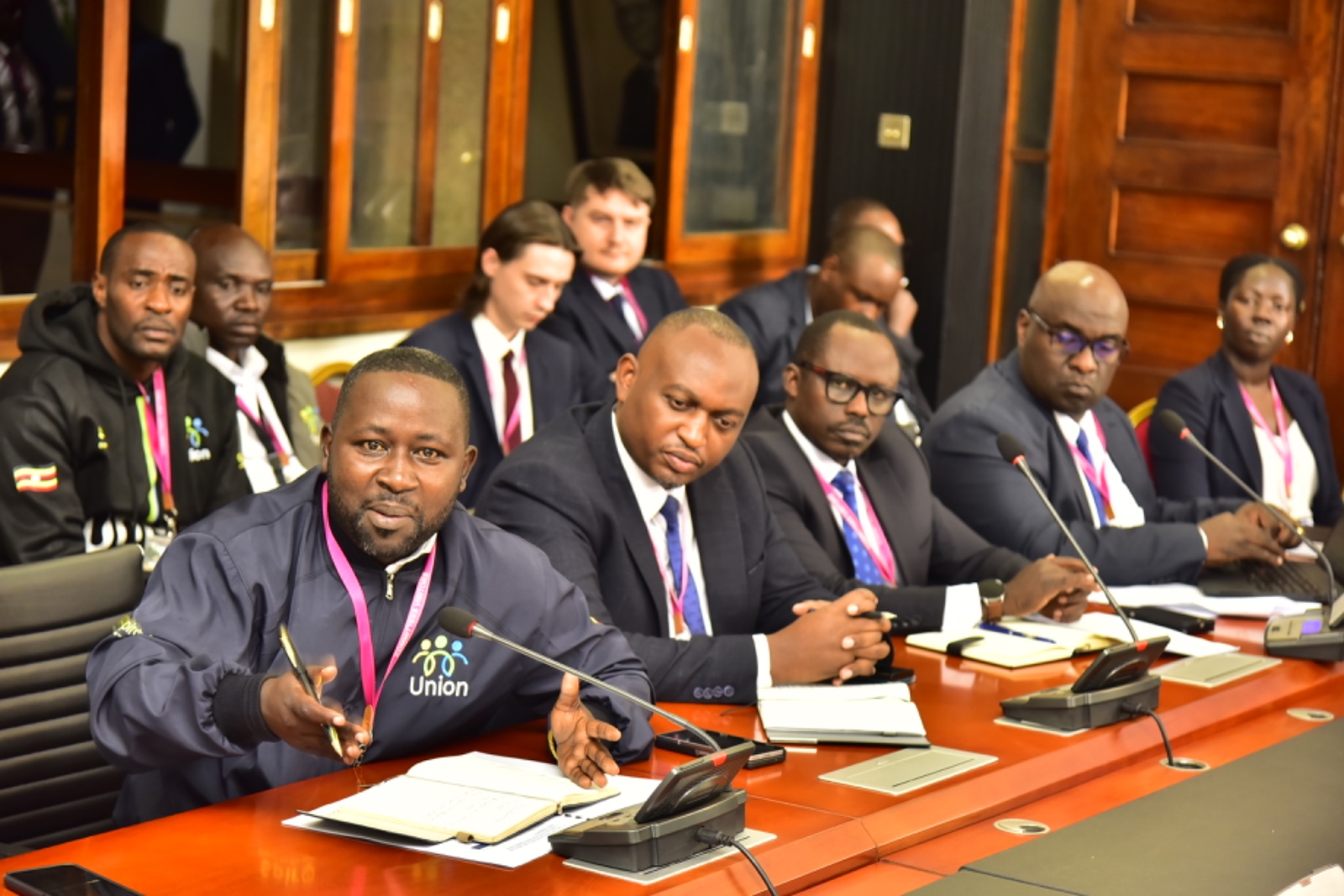
Appearing before Parliament’s Committee on Physical Infrastructure on Monday, 28 September 2026, UMA Board Chairperson Richard Mubiru said the introduction of digital number plates had been intended to address security challenges linked to forged plates, but the anticipated improvements had not yet been realised.
Uganda signed a 10-year agreement with Russia-based Joint Stock Company Global Security in 2021 to implement the Intelligent Transport Monitoring System (ITMS), including the supply of digital number plates. Parliament has previously said the system was intended to improve vehicle identification, tracking, traffic management and revenue collection.
Mubiru told the committee, chaired by Mwine Mpaka, that the current arrangement had also sidelined companies that previously manufactured number plates.
Stakeholders further raised concerns over delays in the issuance and installation of the plates, with some reporting that they had waited for months. Boda boda rider Hassan Ssentongo told MPs that he paid for a digital number plate in July 2025 but had still not received it, while also being asked to make another payment.
National Boda Boda Union Chairperson Frank Mawejje questioned both the effectiveness and cost of the digital plates. He said boda boda riders were being charged more than Shs700,000, compared with the previous Shs125,000, and argued that motorcycle owners should not be subjected to the same charges as car owners.
Mawejje also questioned whether the digital system had helped recover stolen motorcycles, saying that recoveries he was aware of had instead relied on surveillance cameras.
Concerns were also raised by Kezekia Bwire, Vice Chairperson of the Uganda Clearing Industry and Forwarding Association, who told MPs that some clients had struggled to get responses from the service provider and that several vehicles and motorcycles had remained untraced.
Responding to the concerns, Global Security’s Project Manager for the Intelligent Transport Monitoring System, Damir Makhmutov, acknowledged that government had raised concerns over shortages and delays. He attributed some of the delays to disruptions affecting consignments.
Makhmutov said the company had the capacity to carry out up to 1,500 installations per day, but had completed 1,307 installations as of 23 September 2026.
The concerns come amid wider complaints from business associations over shortages and delays in obtaining digital number plates. In an earlier appearance before the same committee, KACITA said prolonged waits were affecting vehicle dealers and businesses.
The Committee on Physical Infrastructure is expected to conclude its inquiry into the digital number plate project and present its report to Parliament.