By Wadulo Arnold Mark
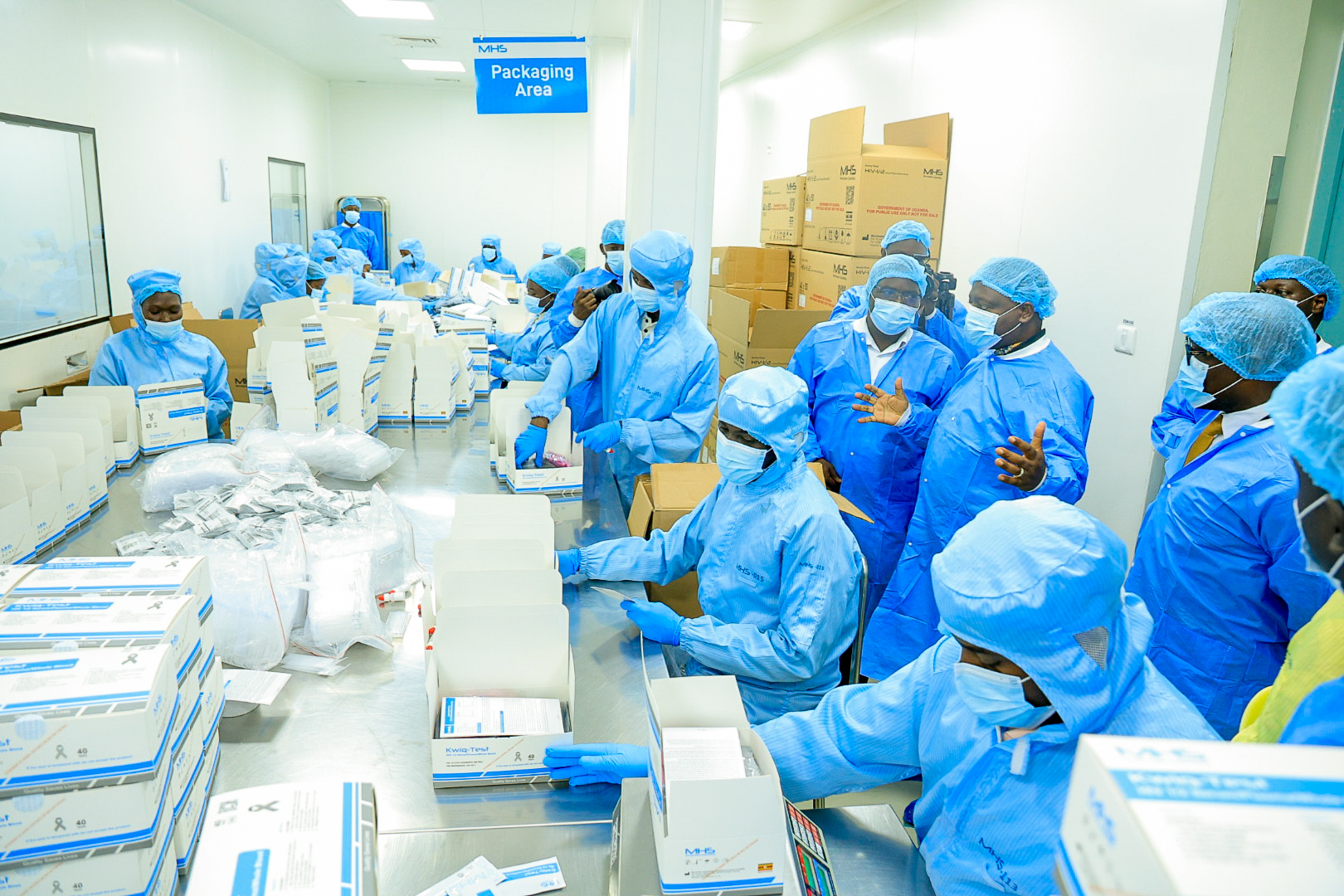
KAMPALA, Uganda — Minister of State for Industry, Hon. David Bahati, conducted an oversight visit to Microhaem Scientifics (MHS) Uganda on September 29, 2026. The tour underscored the government’s commitment to curbing the nation’s heavy reliance on foreign medical supplies through aggressive import substitution, domestic manufacturing, and regional export promotion across the East African Community and the African Continental Free Trade Area. Inspecting MHS’s established manufacturing operations in Ntinda and the ongoing development of its flagship 25-acre biotech park in Naama, Minister Bahati reiterated that protecting capable local producers remains a central pillar of national industrial policy.
To safeguard indigenous manufacturers, Bahati announced that the government is enforcing a 35% import duty on foreign medical products that are already produced locally at sufficient quality, quantity, and competitive pricing. “Our aim is to promote import substitution and export promotion to build an independent, integrated, and self-sustaining economy,” Hon. Bahati stated during the inspection. He noted that under national policy, qualified manufacturing investors receive a 10-year tax holiday to encourage reinvestment and local capacity building. Highlighting MHS’s growth, Bahati added, “MHS started as a supplier and now he is a manufacturer; as a country, we are proud of this progress”. He further pledged government assistance in helping MHS secure long-term patient capital to complete its expanding infrastructure.
The oversight visit brought into sharp focus the stark trade imbalances defining Uganda’s healthcare sector, where the nation currently spends approximately $1 billion annually importing health products from foreign markets such as Japan, India, the United States, and Europe. Out of this total healthcare import bill, diagnostic tools and test kits account for $250 million in annual capital flight. On a broader scale, the African continent spends roughly $50 billion every year on imported health products, relying on foreign producers for 95% to 99% of its total medical supplies. Despite these financial drains, local production is beginning to turn the tide, with MHS saving Uganda an estimated $45 million in capital during the current financial year alone through domestic diagnostic manufacturing.
Addressing the media, Dr. Cedric Akwesigye, Co-Founder and Managing Director of Microhaem Scientifics Uganda, emphasized the urgent economic necessity of prioritizing domestic procurement over foreign reliance. “Uganda spends approximately a billion dollars per year on imported health products leaving our economy,” Dr. Akwesigye explained. Dhe also noted that MHS’s Ntinda plant, which launched in 2023 producing three items, has expanded to manufacture 11 diagnostic products—including test kits for HIV, tuberculosis, Hepatitis B, and malaria—and currently employs 700 workers.
Looking ahead, MHS is advancing construction on its Namanve Biotech Park designed as an end-to-end research and production hub. The Namanve facility will reduce raw material imports, introduce stem cell regenerative medicine, pioneer cancer therapeutics, and provide gene editing treatments for sickle cell disease on the continent.