
By Wadulo Arnold Mark.
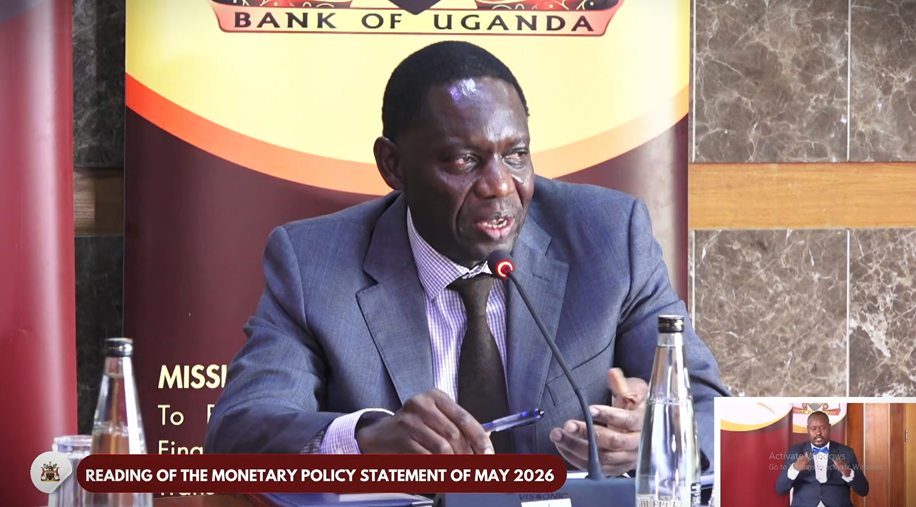
The Bank of Uganda (BoU) Monetary Policy Committee (MPC) announced on Thursday, May 14, 2026, its decision to maintain the Central Bank Rate (CBR) at 9.75 percent. The move comes as the central bank balances steady domestic growth against rising inflationary pressures fueled by geopolitical conflict.
In its latest policy statement, the BoU noted that while inflation remained below the medium-term 5 percent target over the past year, recent global developments have triggered a slight upward trend. Headline inflation rose to 3.0 percent in April 2026, up from 2.8 percent in March, primarily driven by the rising costs of energy, fuel, and utilities (EFU).
The central bank specifically pointed to the conflict in the Middle East as a major disruptor, leading to higher global oil prices and a 5.4 percent depreciation of the Uganda shilling between February and April 2024. Consequently, the BoU has revised its near-term core inflation forecast upward to between 5.0 and 5.3 percent for the next 12 months.
Despite these external headwinds, the Bank of Uganda remains optimistic about the nation’s economic trajectory. Real economic growth for the 2025/26 financial year is projected to range between 6.5 and 7.0 percent.
This growth is supported by broad-based improvements in the agriculture, industry, and services sectors. Looking further ahead, the central bank expects medium-term growth to average 8.0 percent, bolstered by increased investment in the extractive sector and stronger export performance.
To manage liquidity and anchor inflation expectations, the Bank previously increased the Cash Reserve Requirement (CRR) to 11 percent in March 2026. The MPC maintained the CBR band at ±2 percentage points, setting the rediscount rate at 12.75 percent and the bank rate at 13.75 percent.
The BoU warned that the balance of risks to inflation remains tilted to the upside. Prolonged conflict in the Middle East, further currency depreciation, or adverse weather conditions could drive prices higher. Conversely, weaker global growth or favorable weather could help moderate these pressures.
Governor Michael Atingi-Ego emphasized that future monetary policy decisions will remain “firmly data dependent”. The Bank stands ready to take further action as the economic outlook and global risks continue to evolve.